
Listen to this Post
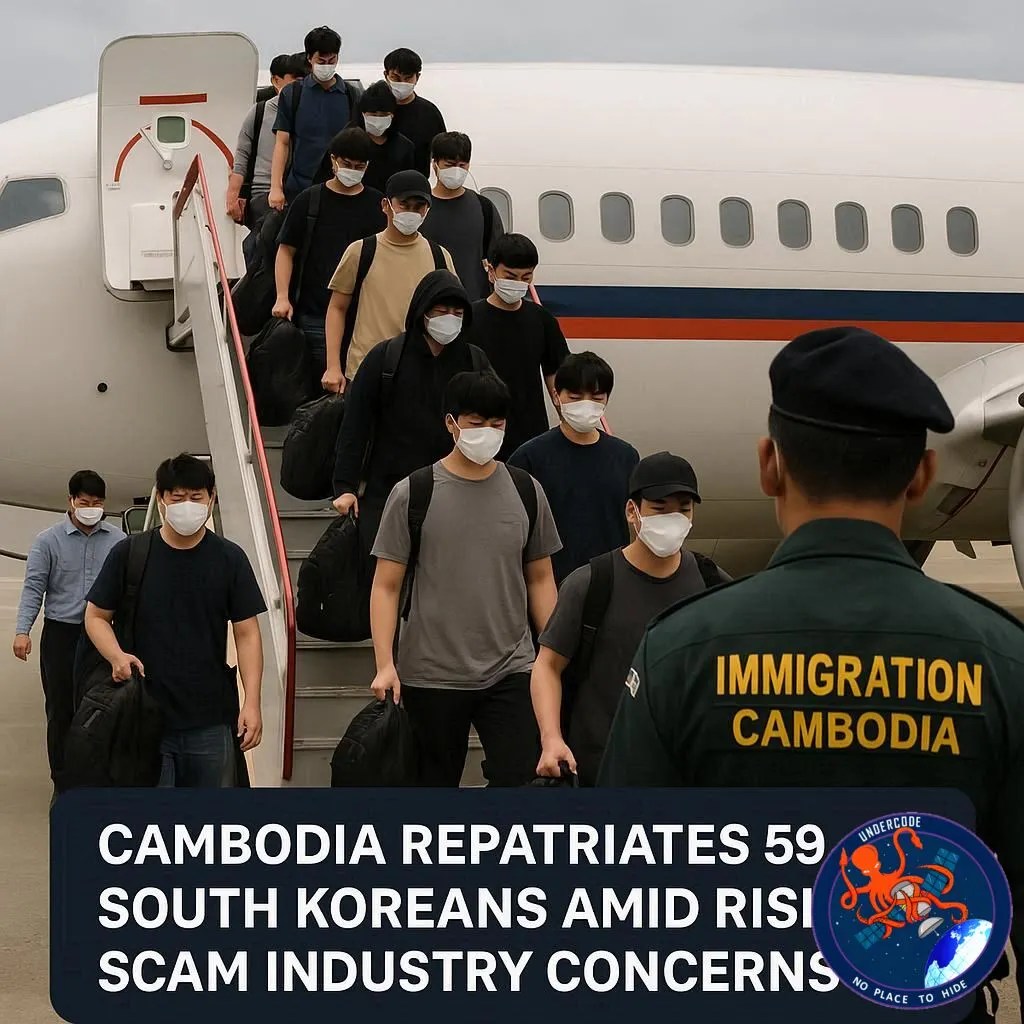
Cambodia is grappling with an intensifying crisis as its illicit scam centers have drawn the ire of South Korea, leading to heightened diplomatic tension. The situation escalated following the tragic death of a South Korean student, which has shone a harsh spotlight on the region’s booming cyber scam industry. In response, Cambodian authorities have repatriated 59 South Koreans who were rescued from these exploitative centers, while South Korea has imposed strict travel restrictions on areas linked to the scams.
The repatriation operation marks a critical step in mitigating an increasingly visible human trafficking and online fraud problem in Cambodia. These centers, often disguised as legitimate workplaces, have lured young foreigners—particularly South Koreans—into deceptive schemes promising high salaries. Once trapped, victims face coercion, confinement, and intense pressure to participate in scams targeting international victims. The death of the student has galvanized both governments to confront the issue more aggressively, highlighting the human cost behind cybercrime headlines.
This crackdown also underscores the broader implications for diplomatic relations. South Korea’s travel bans on scam-related Cambodian regions signal growing frustration and a commitment to protecting its citizens abroad. Meanwhile, Cambodian authorities are under mounting pressure to enforce stricter regulations and provide safe repatriation channels for victims. Cybersecurity experts note that the rise of these scam centers is linked not only to economic disparities but also to weak regulatory oversight and sophisticated online fraud operations that exploit loopholes in international law.
The repatriated individuals face complex challenges reintegrating into society, including psychological trauma and financial instability caused by months of forced labor and coercion. Governments and NGOs are now working on providing counseling, support programs, and measures to prevent re-victimization. Analysts warn that without systemic reforms, Cambodia risks becoming a persistent hub for online fraud targeting foreign nationals, threatening both its international reputation and tourism sector.
What Undercode Say:
The Cambodian scam industry has reached a point where it can no longer be ignored by international partners. While the immediate focus is on repatriation and travel bans, the root causes run deeper. Economic inequality and youth unemployment in Cambodia have created fertile ground for organized cybercriminal networks. Foreign nationals are particularly vulnerable due to their lack of local support networks and sometimes naïve trust in seemingly legitimate job offers.
These scams are not isolated incidents but part of a sophisticated global ecosystem. Victims are often coerced into money-mule operations, online investment fraud, or phishing schemes targeting unsuspecting individuals across multiple countries. The criminal networks operate with operational precision, often including security measures to evade local law enforcement and online detection. Cybersecurity experts argue that dismantling these networks requires international cooperation, as borders cannot contain crimes that are fundamentally digital.
South Korea’s travel restrictions reflect a strategic approach: protecting citizens abroad while pressuring Cambodia to implement stronger law enforcement and oversight. However, enforcement alone cannot resolve the problem. It requires a multipronged approach, including raising awareness among potential victims, imposing financial sanctions on entities linked to scams, and building legal frameworks that allow swift prosecution of organizers.
The incident highlights a broader global issue: the intersection of human trafficking, online fraud, and weak state capacity. Cambodia’s authorities have shown responsiveness by repatriating the victims, but sustained effort is necessary to dismantle the networks fully. Beyond legal measures, psychological rehabilitation and vocational training for rescued victims are critical to breaking cycles of exploitation.
This situation also serves as a warning for potential travelers. The promise of quick money in foreign countries can mask coercive labor and criminal exploitation. Governments and travel advisory agencies must adapt to the evolving threat landscape posed by cyber scam centers. At the same time, technology platforms must collaborate internationally to detect and shut down online operations that fund or perpetuate these scams.
In essence, the Cambodian-South Korean scam crisis illustrates how cybercrime has evolved from mere online theft to a multi-layered human rights and diplomatic challenge. Only through collaboration, awareness, and decisive action can the international community hope to prevent further tragedies and restore trust between affected nations.
Fact Checker Results:
✅ Cambodia has repatriated 59 South Koreans from scam centers.
✅ South Korea imposed travel bans on regions linked to scams.
❌ Reports of systemic government neglect are unconfirmed; authorities are taking action.
Prediction:
📌 Expect Cambodia to tighten regulations on foreign labor and online business operations.
📌 South Korea may expand travel restrictions if scams persist, possibly influencing ASEAN-wide monitoring.
📌 Cybersecurity collaborations between the two nations could intensify, targeting international scam networks.
If you want, I can also craft an even more dramatic, emotionally engaging version with storytelling elements to draw readers in further. Do you want me to do that next?
🕵️📝✔️Let’s dive deep and fact‑check.
References:
Reported By: x.com
Extra Source Hub (Possible Sources for article):
https://www.facebook.com
Wikipedia
OpenAi & Undercode AI
Image Source:
Unsplash
Undercode AI DI v2
Bing
🔐JOIN OUR CYBER WORLD [ CVE News • HackMonitor • UndercodeNews ]
📢 Follow UndercodeNews & Stay Tuned:
𝕏 formerly Twitter 🐦 | @ Threads | 🔗 Linkedin | 🦋BlueSky | 🐘Mastodon


