
Listen to this Post
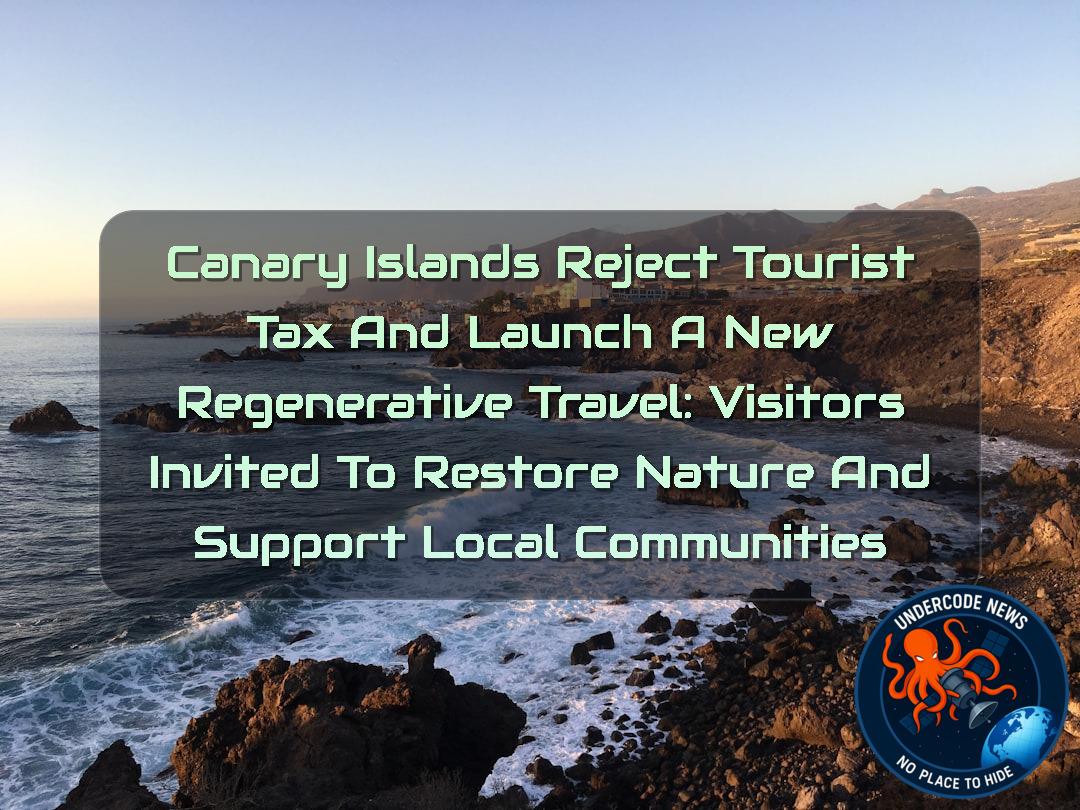
Introduction: A New Vision for Sustainable Tourism
For decades, the Canary Islands have represented the dream of endless sunshine, volcanic landscapes, golden beaches, ocean adventures, and unique ecosystems found nowhere else on Earth. But behind the postcard image lies a growing challenge: how can one of Europe’s most visited island destinations protect its natural beauty while continuing to welcome millions of travellers every year?
Instead of following the path of destinations that have introduced mandatory tourist taxes, the Canary Islands are choosing a different approach. The Spanish archipelago is creating a voluntary contribution system that allows visitors to directly support environmental restoration, community development, and long-term sustainability projects.
The initiative reflects a wider shift in global tourism, where destinations are moving away from simply managing visitor numbers toward creating a relationship between travellers and the places they visit. The goal is not only to reduce the environmental impact of tourism but also to transform tourism into a force that actively repairs and strengthens local communities.
Canary Islands Welcome 18.4 Million Visitors While Searching for a Sustainable Future
The Canary Islands remain one of Europe’s most attractive holiday destinations thanks to their warm climate, dramatic volcanic landscapes, diverse wildlife, and world-famous beaches. Islands including Tenerife, Gran Canaria, Lanzarote, Fuerteventura, La Palma, La Gomera, and El Hierro attract visitors throughout the year due to their natural environment and cultural heritage.
In 2025, the islands welcomed approximately 18.4 million tourists, with visitors staying an average of around nine days. This enormous tourism economy provides significant financial benefits, but it also creates pressure on ecosystems, infrastructure, housing markets, and local resources.
Unlike some other popular Spanish destinations, including areas that introduced visitor charges to manage tourism pressure, the Canary Islands have decided not to impose a compulsory tourist levy. Instead, officials are focusing on voluntary participation, transparency, and direct investment into projects designed to protect the islands’ future.
RegNext Initiative Creates Voluntary Tourism Contribution Model
The Canary Islands Government has introduced the Canary Islands Tourism Regeneration and Nature Restoration Fund, known as RegNext, as a new model for sustainable tourism financing.
Supported by the UK Spanish Tourist Office, the initiative aims to collect voluntary contributions from travellers and businesses that want to help protect the destinations they enjoy. The funding will support environmental projects, social programs, and restoration efforts across all seven major islands.
RegNext represents a move toward what experts call regenerative tourism, a concept that goes beyond reducing damage. Instead of only attempting to make tourism less harmful, regenerative tourism focuses on leaving destinations in a better condition than before.
From Tenerife to El Hierro: Every Island Included in Restoration Plans
The program will operate across Tenerife, Gran Canaria, Lanzarote, Fuerteventura, La Palma, La Gomera, and El Hierro, ensuring that sustainability efforts are distributed throughout the entire archipelago.
The first phase of RegNext will include five pilot projects. One project will be selected for each island experiencing the greatest tourism pressure, while another island-wide social initiative will focus on improving community wellbeing.
According to Canary Islands Tourism, the projects will be selected and managed through a transparent financing structure designed to ensure that contributions reach specific regeneration activities rather than disappearing into general budgets.
Funding Nature Recovery, Climate Protection, and Local Communities
The projects supported by RegNext will focus on measurable improvements, including reducing carbon emissions, restoring damaged habitats, recovering endangered species, improving landscapes, creating green employment opportunities, and reducing social inequality.
The initiative recognises that tourism is not only an environmental issue but also a social and economic one. Millions of visitors depend on local communities that provide hospitality, transport, food, accommodation, and cultural experiences.
The tourism industry has already played a major role in employment across the islands, supporting approximately 280,534 jobs. The challenge now is ensuring that economic growth does not come at the expense of the natural environment that attracts visitors in the first place.
Travel Companies Join the Regenerative Tourism Movement
Several major travel organisations have supported the RegNext initiative, including easyJet holidays, which described the project as an important step toward regenerative tourism.
Other travel companies involved include TUI Group, Expedia Group, and Jet2holidays. The agreement has also received support from UN Tourism.
The companies believe tourism should contribute directly to the places that make travel experiences possible. Instead of seeing visitors only as consumers, the initiative presents travellers as potential partners in protecting destinations.
Why the Canary Islands Chose Contribution Over Tax
A Different Approach to Managing Mass Tourism
Many destinations facing overtourism have chosen mandatory tourist taxes as a way to control visitor numbers or generate additional government revenue. However, the Canary Islands are attempting a more cooperative model.
The voluntary approach could encourage stronger engagement because travellers may feel they are actively choosing to support a cause rather than simply paying another holiday fee.
The challenge will be convincing enough visitors to participate and ensuring that the system remains transparent enough to build public trust.
Deep Analysis: Linux Commands Reveal the Data Behind Sustainable Tourism Decisions
Understanding modern tourism requires analysing large amounts of information, from visitor numbers and environmental measurements to economic indicators. Data-driven decision-making can help destinations understand whether sustainability programs are producing real results.
A tourism analyst working with open datasets could begin by collecting environmental and economic information:
curl -O https://example.com/tourism-data.csv
Large datasets can then be reviewed using Linux tools:
cat tourism-data.csv | head
Filtering visitor information:
grep "Canary" tourism-data.csv
Sorting tourism pressure indicators:
sort -k3 tourism-data.csv
Monitoring changes over time:
awk -F',' '{print $1,$4}' tourism-data.csv
Environmental projects can also use geographic information systems running on Linux servers to track habitat restoration:
sudo apt install qgis
Researchers analysing climate impact may process satellite information:
wget environmental-monitoring-data.zip
unzip environmental-monitoring-data.zip
Machine learning systems can identify tourism patterns:
python3 tourism_prediction.py
A transparent sustainability model depends on publicly available records:
sha256sum project-report.pdf
This allows organisations to verify that reports have not been altered.
The Canary Islands model represents a future where tourism management could become increasingly connected with technology, open data, and measurable environmental outcomes.
The success of RegNext will depend on whether voluntary contributions generate meaningful financial support and whether communities see visible improvements.
A successful system could become a global example for destinations struggling with the balance between economic growth and environmental protection.
What Undercode Say:
The Canary Islands decision represents a fascinating experiment in the future of tourism.
For years, governments around the world have treated tourism as a simple economic equation: more visitors equal more income. However, destinations are discovering that unlimited growth can eventually damage the very attractions that bring people there.
The traditional tourist tax model is designed around collecting money after problems appear. Regenerative tourism attempts to create a preventative approach by encouraging visitors to participate in protecting destinations from the beginning.
The biggest strength of RegNext is psychological rather than financial. People often respond differently when they voluntarily contribute to a meaningful project compared with when they are forced to pay an additional fee.
However, voluntary systems face a serious challenge. Many travellers support sustainability in theory, but fewer actively contribute money when given the option.
Transparency will determine whether this initiative succeeds. Visitors will want clear evidence showing exactly where their contributions go and what improvements they create.
Technology could become one of the strongest tools supporting this project. Public dashboards showing restored habitats, reduced emissions, and community benefits could increase trust.
The Canary Islands also demonstrate that tourism is no longer only about attracting more visitors. The next generation of travel will focus on quality, responsibility, and long-term relationships between destinations and travellers.
Other popular locations suffering from overcrowding will likely watch this experiment closely. If successful, the model could influence tourism policies across Europe and beyond.
The islands have a unique opportunity to prove that tourism growth and environmental protection do not have to be opposing forces.
The future of travel may not be measured only by how many people visit a destination, but by how much positive change those visitors help create.
✅ The Canary Islands welcomed around 18.4 million visitors in 2025.
The destination remains one of Europe’s busiest tourism regions, creating both economic opportunities and environmental challenges.
✅ RegNext is designed as a voluntary sustainability contribution system.
The initiative focuses on funding nature restoration, social projects, and regenerative tourism programs rather than introducing a mandatory tourist tax.
✅ Tourism provides hundreds of thousands of jobs across the islands.
The industry remains a central part of the Canary Islands economy, making sustainable management essential for future stability.
Prediction
(+1) The RegNext initiative could become a global example of how tourism destinations combine economic growth with environmental restoration.
(+1) More travellers may become willing to financially support sustainability projects if they receive transparent evidence of real-world impact.
(+1) Other island destinations facing overtourism pressure may adopt similar voluntary contribution systems.
(-1) The voluntary nature of the program could limit funding if too few visitors choose to participate.
(-1) Without strong transparency and public reporting, travellers may lose confidence in where contributions are being used.
(-1) Rising tourism demand could continue creating pressure on housing, infrastructure, and natural resources despite sustainability efforts.
▶️ Related Video (68% Match):
🕵️📝Let’s dive deep and fact‑check.
🎓 Live Courses & Certifications:
Join Undercode Academy for Verified Certifications
🚀 Request a Custom Project:
Secure, high-velocity infrastructure and disruptive technological engineering. Contact our engineering team for high-tier development and proprietary systems:
[email protected]
💎 Smart Architecture | 🛡️ Secure by Design | ⭐ Trusted by Thousands
References:
Reported By: www.euronews.com
Extra Source Hub (Possible Sources for article):
https://www.stackexchange.com
Wikipedia
OpenAi & Undercode AI
Image Source:
Unsplash
Undercode AI DI v2
🔐JOIN OUR CYBER WORLD [ CVE News • HackMonitor • UndercodeNews ]
📢 Follow UndercodeNews & Stay Tuned:
𝕏 formerly Twitter 🐦 | @ Threads | 🔗 Linkedin | 🦋BlueSky | 🐘Mastodon | 📺Youtube


