
Listen to this Post
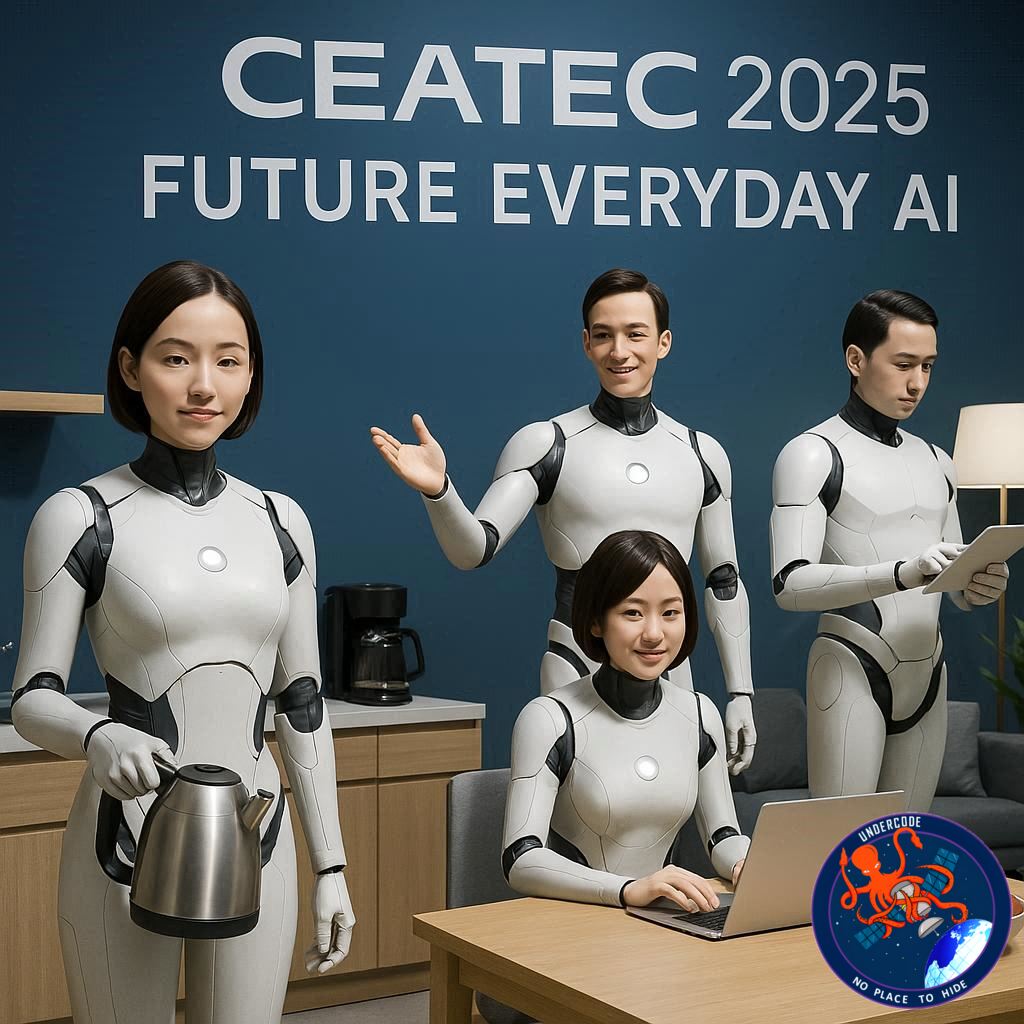
The Dawn of Accessible Artificial Intelligence
Japan’s leading digital technology exhibition, CEATEC 2025, opens its doors on October 14 at Makuhari Messe in Chiba City, setting the stage for a new era where AI is no longer futuristic — it’s personal, accessible, and everywhere. Once famous for showcasing cutting-edge home electronics, CEATEC has transformed into a hub for technological exploration, with artificial intelligence at its very core.
This year’s event features 810 exhibitors, with nearly half focusing on AI-driven technologies. Visitors will find a fascinating range of applications — from AI companions and sports analytics to smart home assistants that intuitively learn from human behavior. The centerpiece, the “AX (AI Transformation) Park,” is entirely devoted to AI innovations, highlighting Japan’s ambition to make artificial intelligence as integral to life as the microwave or smartphone once were.
The 2025 edition builds on the momentum from 2024, where AI presence was already strong but largely confined to concept demonstrations. Now, the narrative has shifted — it’s about real-world integration. Companies are revealing how AI can reduce human workload, enhance comfort, and even enable emotional connections between people and machines. From interactive robots to adaptive learning devices, CEATEC 2025 is shaping the vision of AI as a trusted partner rather than a distant algorithm.
This shift marks a major transition for Japan’s tech ecosystem. Once driven by hardware innovation, the country now positions itself as a pioneer of intelligent systems — merging hardware precision with software sophistication. The focus isn’t just on what AI can do, but how it can coexist seamlessly with daily human experiences.
What Undercode Say:
CEATEC 2025 isn’t merely an exhibition; it’s a snapshot of humanity’s evolving relationship with technology. The once-dominant image of Japan as a maker of world-class home appliances has matured into something far more sophisticated — a nation exploring how intelligence, empathy, and adaptability can merge into everyday tools.
The presence of 810 exhibitors, with over 400 AI-focused showcases, signifies a global acknowledgment that the next wave of competition lies not in manufacturing capacity, but in intelligent capability. From AI agents capable of natural conversation to machine learning systems that predict user needs, the event demonstrates how deeply AI is embedding itself into lifestyle infrastructure.
The AX Park stands as a physical metaphor for this transformation — an “AI town square” where ideas, prototypes, and real products blur together. Here, visitors can interact with machines that remember preferences, respond to moods, and adapt behaviorally. This is not science fiction; it’s the practical manifestation of years of AI evolution.
The Japanese industry’s strategic pivot from devices to intelligence represents a deep cultural and economic shift. In the early 2000s, CEATEC was the global stage for showing off new televisions and washing machines. Today, it’s where the conversation has moved toward data ethics, generative models, and AI-human collaboration.
What’s striking is how consumer-facing AI has become the dominant narrative. The goal isn’t just performance — it’s companionship and trust. Smart homes are learning how to interact emotionally with residents, AI trainers are monitoring athletes’ forms, and healthcare assistants are providing early diagnostic insights.
This democratization of AI also raises critical ethical and social questions. As machines become more “aware,” who controls the boundaries of that awareness? CEATEC 2025 is implicitly inviting that debate — not through lectures, but through tangible experiences. Every interaction with a new AI gadget becomes a micro-experiment in coexistence.
Another point worth highlighting is Japan’s unique role in the global AI landscape. While Silicon Valley focuses on automation and China on scale, Japan is carving a niche in “empathetic AI” — technology designed to understand rather than dominate. This emotional layer could redefine what innovation means in the next decade.
From a business standpoint, CEATEC also acts as a market predictor. Trends showcased here often shape Asia’s tech manufacturing roadmaps for the next few years. The 2025 edition’s emphasis on AI-driven ecosystems suggests that the coming wave of consumer products — from wearables to household devices — will integrate learning algorithms by default.
In essence, CEATEC 2025 marks a philosophical turning point. The conversation is no longer “Can AI do it?” but “Should AI do it — and how should it behave when it does?” This human-centered approach could very well define Japan’s technological identity in the global narrative.
As AI continues to merge into daily living, expect a redefinition of “user experience.” The line between software and sentiment will blur, creating systems that not only execute tasks but understand emotional tone, social context, and even personal values.
If the early 2000s belonged to consumer electronics, the 2020s clearly belong to cognitive electronics — devices that don’t just respond, but reflect. CEATEC 2025 is the proving ground for that evolution, showcasing how deeply AI has infiltrated the once-simple notion of “technology for convenience.”
Fact Checker Results
✅ CEATEC 2025 officially opens on October 14 at Makuhari Messe, featuring 810 exhibitors.
✅ Around half of all exhibitors are focused on AI and AI-related technologies.
✅ The AX Park is confirmed as the event’s AI-focused zone, dedicated to “AI Transformation.”
Prediction
🔮 CEATEC 2025 will serve as the launchpad for Japan’s global AI identity, shifting from hardware production to emotionally intelligent systems. Expect breakthroughs in AI-human interaction models, domestic robots, and ambient intelligence that make daily life more intuitive. Within the next two years, the line between gadget and companion will nearly disappear — and Japan will lead the world in that transformation.
🕵️📝✔️Let’s dive deep and fact‑check.
References:
Reported By: xtechnikkeicom_1445754f007d52edf6b135d6
Extra Source Hub:
https://www.facebook.com
Wikipedia
OpenAi & Undercode AI
Image Source:
Unsplash
Undercode AI DI v2
🔐JOIN OUR CYBER WORLD [ CVE News • HackMonitor • UndercodeNews ]
📢 Follow UndercodeNews & Stay Tuned:
𝕏 formerly Twitter 🐦 | @ Threads | 🔗 Linkedin | 🦋BlueSky | 🐘Mastodon


