
Listen to this Post
Introduction: The Race to Rebuild Trust in AI-Generated Code
Artificial intelligence is no longer a futuristic concept in software development, it is already reshaping how code is written, deployed, and maintained. But as speed increases, so does risk. The challenge facing the industry is no longer just productivity, but trust. At the center of this shift is Chainguard, a security-focused company aiming to redefine how software is built in an AI-driven world. With its latest innovations, Chainguard is attempting to solve one of the most urgent problems in modern development: how to ensure that code generated at machine speed remains secure, reliable, and free from hidden vulnerabilities.
Summary: How Chainguard is Reinventing Secure Software Development
Chainguard is rapidly positioning itself as a leader in securing AI-built software by introducing a new generation of tools and infrastructure designed to eliminate vulnerabilities at scale. At its core is Chainguard Factory 2.0, an AI-powered system that continuously rebuilds software from source, ensuring that applications remain secure and up to date without relying on outdated patch cycles. This system represents a fundamental shift away from traditional methods that often leave software exposed for weeks or months.
The company emphasizes that the future of coding will be dominated by AI agents, with a majority of code expected to be generated by machines within a short timeframe. This transformation requires a completely different approach to security. Instead of reacting to threats, Chainguard focuses on proactive defense by designing systems that are secure from the ground up.
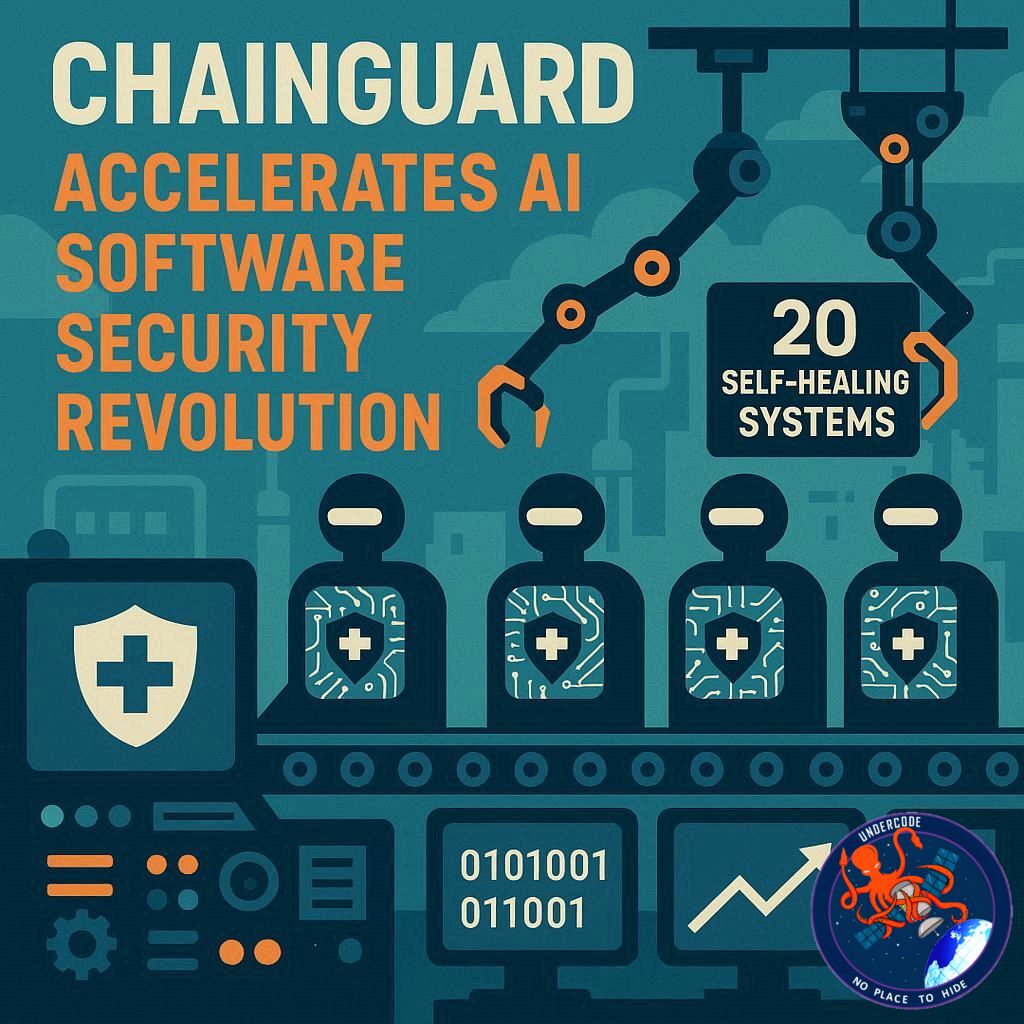
Factory 2.0 operates as a self-healing pipeline, constantly working toward a defined “desired state.” Whether that state involves zero known vulnerabilities, passing strict quality tests, or meeting performance benchmarks, the system continuously adjusts and rebuilds software until those conditions are met. This approach has already proven effective, with the company reporting the removal of over 1.5 million vulnerabilities from production environments, a massive leap compared to previous results.
The underlying technology relies heavily on AI models from multiple providers, including OpenAI, Claude, and Gemini. Early implementations were imperfect, achieving only moderate success rates, but the company leveraged failures as learning opportunities. By feeding unsuccessful outcomes back into the system, performance steadily improved, eventually enabling a more reliable and autonomous workflow.
A major breakthrough came with the development of the Driftless framework, which allows the system to operate in a continuous reconciliation loop. Instead of reacting to individual events, the system constantly compares the current state of software with its intended secure state and makes adjustments automatically. This eliminates the fragility of traditional CI pipelines, which are often complex and prone to failure.
Chainguard has also expanded its ecosystem with a range of new services. Its custom Linux distribution, Chainguard OS, is built entirely from source and avoids dependencies on slower-moving mainstream distributions. This enables organizations to create tailored, secure operating systems without inherited vulnerabilities.
The company’s container catalog has grown significantly, now covering thousands of upstream projects and tens of thousands of packages. To encourage adoption, Chainguard introduced a free starter tier that allows developers to experiment with secure images without initial cost, reinforcing a self-service model that prioritizes speed and accessibility.
Beyond open-source software, Chainguard is entering the commercial space with secure builds for enterprise applications. These offerings provide hardened environments with strict security guarantees while allowing companies to maintain proprietary control over their code.
The company is also addressing risks in software supply chains by securing popular package repositories such as Python, Java, and JavaScript ecosystems. With hundreds of thousands of malicious packages detected annually, this layer of protection is becoming increasingly critical.
To simplify secure development, Chainguard introduced its own repository system, enabling organizations to enforce policies like delayed adoption of new libraries to avoid early-stage malware risks. This reduces reliance on public repositories and improves overall reliability.
Security enhancements extend to development workflows as well. Chainguard Actions provide safer alternatives to commonly used automation tools, while Agent Skills offer curated and secure capabilities for AI-driven development processes. These tools aim to prevent common vulnerabilities and reduce the risk of compromised automation scripts.
One of the most ambitious innovations is Chainguard Gardener, a tool that integrates directly into development environments. It automatically scans repositories, identifies insecure components, and generates updates to replace them with secure alternatives. This creates a continuous improvement cycle that strengthens software over time without requiring constant manual intervention.
Overall, Chainguard’s strategy reflects a broader industry shift toward automation, self-service, and built-in security. As AI continues to accelerate development, the company’s approach suggests that the future of software will depend less on human coding and more on systems that can maintain trust at scale.
What Undercode Say: The Real Battle is Not Speed, It’s Control
The narrative around AI in software development often focuses on speed, efficiency, and cost reduction. But Chainguard’s strategy highlights a deeper and more uncomfortable truth: speed without control is a liability. The analogy of moving from hand tools to power tools is not just clever storytelling, it captures the essence of the current technological moment. Developers are no longer crafting code line by line, they are orchestrating systems that can generate, modify, and deploy software autonomously.
This shift fundamentally changes the threat landscape. In the past, vulnerabilities were often the result of human error, slow patch cycles, or misconfigurations. Now, vulnerabilities can be introduced at machine scale, replicated instantly, and embedded deeply within dependencies that developers may never directly inspect. The scale of risk has multiplied, and traditional security practices are simply not designed to handle it.
Chainguard’s approach of rebuilding everything from source is particularly significant. It challenges the long-standing reliance on layered dependencies and inherited trust. In most modern software stacks, developers depend on countless third-party components, many of which are poorly maintained or compromised. By continuously rebuilding and verifying these components, Chainguard is effectively resetting the trust model of software development.
The concept of a “desired state” enforced by AI is another critical innovation. It moves security from a reactive process to a continuous one. Instead of waiting for vulnerabilities to be discovered and patched, the system actively works to prevent them from existing in the first place. This is closer to how modern infrastructure systems operate, where consistency and predictability are enforced automatically.
However, this model is not without challenges. One major concern is the reliance on AI itself. While AI can improve efficiency and detect patterns, it also introduces new attack vectors. Malicious actors can exploit the same automation tools to create more sophisticated attacks. There is also the risk of over-reliance, where developers trust automated systems without fully understanding their behavior.
Another key issue is ecosystem fragmentation. By introducing proprietary secure builds and curated repositories, Chainguard is creating a controlled environment that may not fully align with the open nature of traditional software development. While this improves security, it could also lead to increased dependency on specific vendors, raising questions about long-term flexibility and interoperability.
The introduction of tools like Gardener signals a future where software maintenance becomes largely automated. This could dramatically reduce the workload for developers, but it also shifts responsibility toward the tools themselves. When something goes wrong, identifying the root cause may become more complex, especially in systems that continuously modify themselves.
There is also a broader cultural shift taking place. Developers are moving from being creators of code to supervisors of systems. This changes the skills required in the industry, placing greater emphasis on understanding systems, security, and automation rather than just writing code.
Ultimately, Chainguard’s vision aligns with a larger trend toward “secure by design” systems. This is not just a technical improvement, it is a philosophical one. It acknowledges that in a world where AI generates most of the code, trust cannot be an afterthought. It must be built into the foundation of every system.
The real question is whether the industry will adopt this approach widely or continue relying on incremental improvements to existing practices. If Chainguard’s model proves scalable, it could redefine how software is built, distributed, and trusted. If not, the gap between speed and security may continue to widen, creating even greater risks in the future.
Fact Checker Results
✅ Chainguard Factory 2.0 reportedly removed over 1.5 million vulnerabilities, aligning with rapid growth claims
✅ AI-generated code is increasing significantly across the industry, supporting the shift described
❌ Fully eliminating vulnerabilities entirely remains unrealistic despite “zero CVE” targets
Prediction
📊 AI-driven “self-healing” software pipelines will become standard in enterprise development environments
📊 Secure-by-design ecosystems like Chainguard may dominate regulated industries requiring high trust
📊 Developers will shift toward system supervision roles as AI takes over most coding tasks
🕵️📝✔️Let’s dive deep and fact‑check.
References:
Reported By: www.zdnet.com
Extra Source Hub (Possible Sources for article):
https://www.medium.com
Wikipedia
OpenAi & Undercode AI
Image Source:
Unsplash
Undercode AI DI v2
Bing
🔐JOIN OUR CYBER WORLD [ CVE News • HackMonitor • UndercodeNews ]
📢 Follow UndercodeNews & Stay Tuned:
𝕏 formerly Twitter 🐦 | @ Threads | 🔗 Linkedin | 🦋BlueSky | 🐘Mastodon


