
Listen to this Post
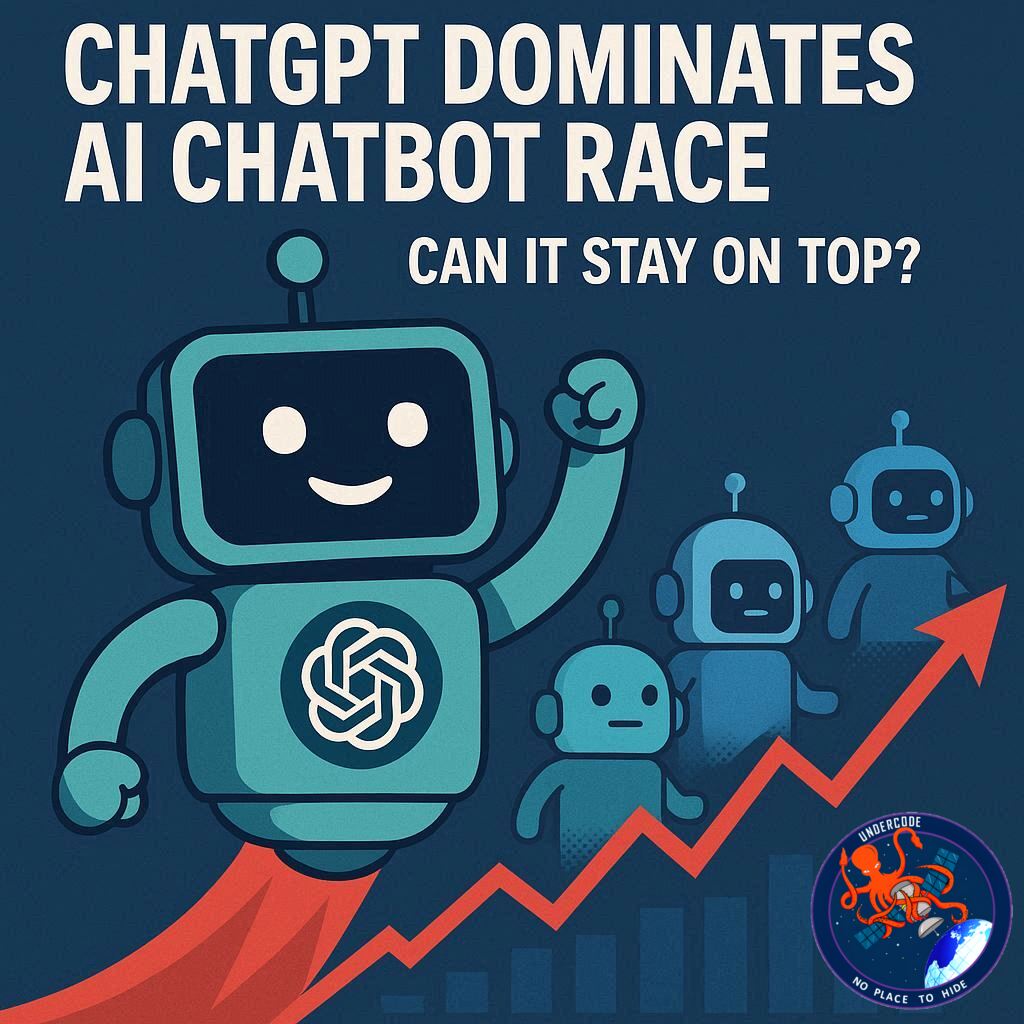
The Rise of ChatGPT
In the rapidly evolving world of artificial intelligence, ChatGPT has emerged as the undisputed leader in the chatbot space. With its intuitive conversational capabilities, wide adoption, and powerful integrations, it has captured the attention of users worldwide. Data from multiple research firms, including Comscore, Statcounter, OneLittleWeb, and TechGaged, consistently show ChatGPT outpacing rivals by a significant margin. However, the AI landscape is far from static. Competitors are innovating, mobile adoption is surging, and history reminds us that early dominance rarely guarantees long-term supremacy.
Comscore Reveals Mobile Growth
Comscore tracks AI tool usage across desktop and mobile platforms, revealing a significant shift toward mobile. Unique mobile users of AI assistants jumped from 69.7 million to 73.4 million in just three months, an increase of 5.3%. Desktop usage, by contrast, dropped 11.1% during the same period. Microsoft Copilot experienced a 175% surge in mobile adoption, Google Gemini rose 68%, and ChatGPT saw a 17.9% increase. Analysts attribute this to ecosystem integration, productivity-focused applications, and AI assistants becoming personal, always-on companions embedded in everyday tools. Beyond chatbots, AI platforms like Canva, Grammarly, Octane AI, and Voicemod also enjoy strong adoption.
Statcounter Highlights
Statcounter, which tracks interactions on over 1.5 million websites globally, reports ChatGPT holding 80.92% of worldwide chatbot usage. Perplexity, integrating live internet search with AI conversation, follows at 8.08%, while Microsoft Copilot captures 5.19%. DeepSeek and Google Gemini occupy smaller shares, illustrating the role of differentiated strategies in carving out market presence. Claude, emphasizing safety and trust, is gaining attention amid a tightening regulatory environment.
OneLittleWeb: Chatbots Versus Search
OneLittleWeb analyzed AI chatbot usage in the context of search trends, revealing an 80.92% year-over-year growth in chatbot traffic. Despite this surge, Google still dominates with 87.57% of search market share. ChatGPT leads AI-first search with 86.32%, while competitors like DeepSeek, Gemini, Perplexity, Claude, and Copilot share the remaining fraction. Notably, smaller players are seeing dramatic growth, with DeepSeek reporting an astronomical 113,007% traffic increase, highlighting the dynamic and rapidly changing AI landscape.
TechGaged Confirms Consolidation
TechGaged’s research mirrors other findings: ChatGPT consolidates market share like Google once did for search. Perplexity’s hybrid model, Copilot’s productivity integrations, DeepSeek’s innovation, and Gemini’s ecosystem presence show that alternatives can gain traction and challenge ChatGPT’s dominance. The market remains competitive, signaling continued opportunities for differentiation and disruption.
The Early Stage of AI Chatbots
Despite ChatGPT’s commanding lead, it’s important to recognize the AI chatbot revolution is still in its infancy. ChatGPT’s launch in November 2022 marked the beginning of a major technological shift, yet three years is a short window for long-term dominance. Historical comparisons, such as the rise and fall of Netscape, Friendster, and MySpace, demonstrate that market leadership can be fleeting. While ChatGPT currently enjoys strong user engagement and adoption, the future remains unpredictable, and innovation from competitors could reshape the landscape.
What Undercode Say: Analyzing the AI Chatbot Battlefield
The current AI chatbot market reflects both consolidation and fragmentation. ChatGPT’s dominance is supported by strong user engagement, brand trust, and extensive integrations across platforms. Its clear lead in Statcounter and TechGaged reports shows that a majority of users gravitate toward a familiar, reliable conversational AI. This early success is also reinforced by mobile adoption trends, highlighting the growing importance of mobile-first strategies in AI deployment.
However, mobile growth figures suggest that competitors like Microsoft Copilot and Google Gemini are closing the gap through ecosystem integration and productivity-focused use cases. Copilot’s massive 175% mobile adoption increase exemplifies how embedding AI tools into widely used software suites can drive user growth. Similarly, Perplexity’s hybrid model combining real-time search with conversational AI caters to users seeking dynamic, up-to-date answers—a segment ChatGPT currently does not fully serve.
Smaller players, including DeepSeek and Claude, illustrate the potential of differentiation. DeepSeek’s meteoric growth indicates that innovation and niche targeting can yield significant gains, even in a market dominated by a single player. Claude’s focus on conversational safety resonates with privacy-conscious users and anticipates regulatory scrutiny that could reshape user preferences.
Historical trends provide a cautionary perspective. Early dominance in tech does not guarantee long-term success. Netscape, Friendster, and MySpace were all market leaders in their early years yet eventually lost prominence due to innovation from competitors and changing user behaviors. ChatGPT may be the “Google of chatbots” today, but shifts in technology, user expectations, and regulatory landscapes could rapidly alter its position.
Moreover, the AI market’s rapid expansion underscores the importance of mobile and integrated experiences. Platforms that optimize for mobile, seamlessly integrate into existing software ecosystems, and address real-time information needs are likely to gain momentum. In essence, while ChatGPT enjoys a commanding lead, the battle is far from over, and agile competitors with strategic differentiation can make substantial inroads.
In conclusion, ChatGPT’s market dominance is impressive, yet it exists in a highly dynamic environment. Success in AI is rarely permanent, and historical patterns suggest that emerging technologies can quickly disrupt incumbents. For stakeholders, this means monitoring competitive trends, investing in differentiated features, and anticipating shifts in user behavior will be crucial to maintaining relevance in the AI chatbot ecosystem.
Fact Checker Results
ChatGPT leads chatbot usage globally with over 80% market share ✅
Mobile adoption of AI tools is rapidly increasing, while desktop usage declines ✅
Competitors like Perplexity and Copilot show significant growth potential, signaling a dynamic market ⚠️
Prediction
The AI chatbot landscape will remain highly competitive over the next 3–5 years. ChatGPT will likely retain a strong position, but emerging challengers leveraging mobile-first strategies, real-time data, and ecosystem integration could erode its dominance. Niche differentiation and regulatory alignment will be key factors determining which platforms thrive in the long term.
🕵️📝✔️Let’s dive deep and fact‑check.
References:
Reported By: www.zdnet.com
Extra Source Hub:
https://www.stackexchange.com
Wikipedia
OpenAi & Undercode AI
Image Source:
Unsplash
Undercode AI DI v2
🔐JOIN OUR CYBER WORLD [ CVE News • HackMonitor • UndercodeNews ]
📢 Follow UndercodeNews & Stay Tuned:
𝕏 formerly Twitter 🐦 | @ Threads | 🔗 Linkedin | 🦋BlueSky | 🐘Mastodon


