
Listen to this Post
 Introduction: A Silent Expansion of Cyber Power Through Everyday Devices
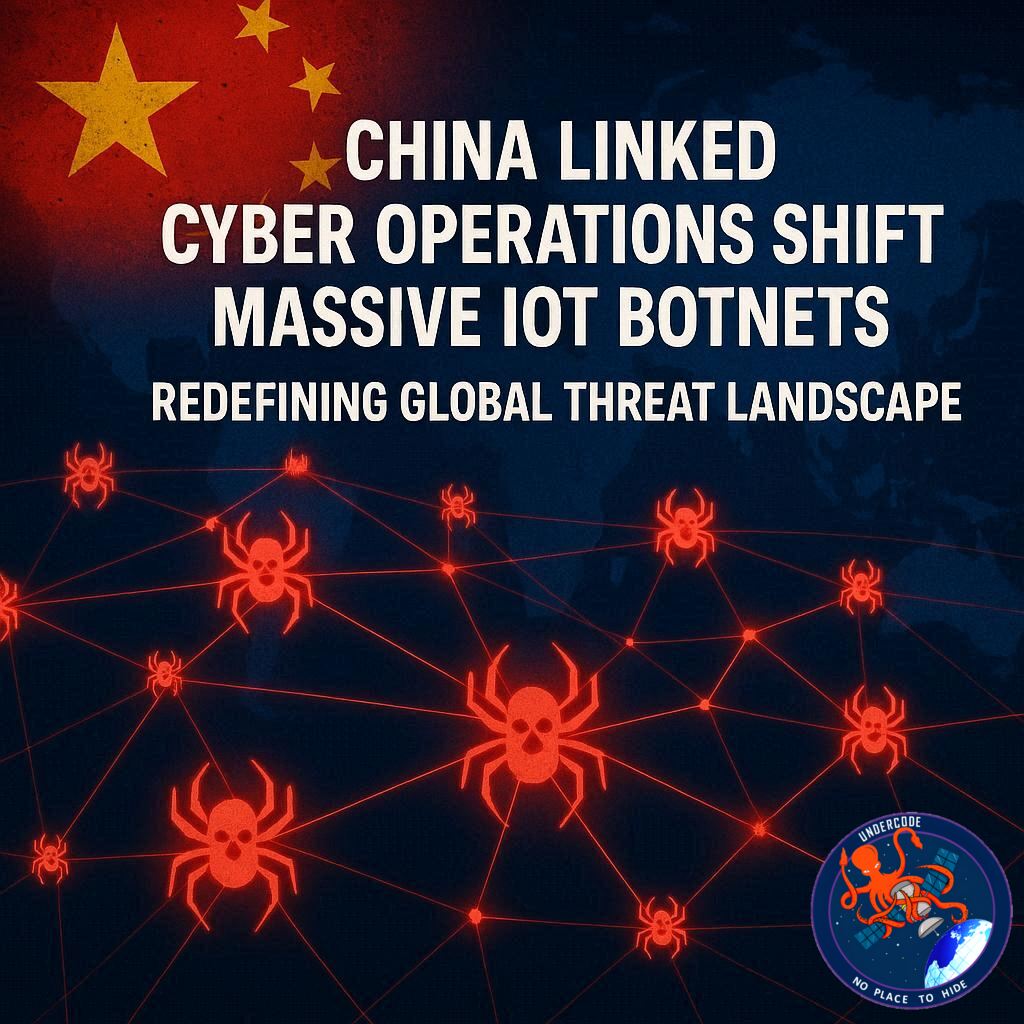
A new wave of cyber threats is emerging, not from sophisticated supercomputers or hidden data centers, but from everyday household and office devices. Security authorities, led by the UK National Cyber Security Centre, have raised alarms over a strategic shift by China-linked threat actors. Instead of relying on small, traceable infrastructure, these groups now exploit vast networks of compromised consumer devices such as routers, cameras, and storage systems. This transformation is not just technical, it represents a fundamental change in how cyber warfare is conducted, making detection harder and attacks more persistent.
Summary: The Rise of Covert Proxy Networks in Modern Cyber Attacks
Cybersecurity agencies and global partners have identified a significant evolution in tactics used by China-affiliated threat groups. These actors are now leveraging large-scale proxy networks composed of hacked consumer-grade devices, including routers, IP cameras, network-attached storage systems, and digital video recorders. By hijacking these devices, attackers create expansive botnets that act as intermediaries for malicious activity, effectively masking their origin and blending into legitimate internet traffic.
This shift replaces older methods that depended on limited and more easily identifiable infrastructure. The new model allows attackers to operate with greater flexibility and deniability, while dramatically reducing operational costs. These botnets are not static, they are constantly refreshed, expanded, and reconfigured, making traditional defense strategies like static IP blocklists increasingly ineffective.
China-linked cyber actors are now using these networks across the entire Cyber Kill Chain. From initial reconnaissance to data exfiltration and potential disruption of critical systems, every stage of an attack benefits from this distributed infrastructure. The dynamic nature of these networks leads to what experts describe as “indicator of compromise extinction,” where traces of malicious activity disappear almost as quickly as they are discovered.
Security agencies emphasize that organizations relying solely on traditional defenses are at significant risk. Static security measures cannot keep pace with constantly evolving proxy networks. Instead, adaptive and intelligence-driven approaches are required to identify and mitigate threats effectively.
To counter these risks, organizations are advised to establish a baseline of normal network behavior, particularly for internet-facing systems and remote access channels such as VPNs. Monitoring deviations from this baseline can help detect suspicious activity early. Additionally, the use of dynamic threat intelligence feeds that include indicators of compromised infrastructure is strongly recommended.
Other defensive measures include implementing multi-factor authentication, enforcing zero trust architectures, applying IP allow lists, and verifying machine identities through certificates. For higher-risk organizations, advanced techniques such as anomaly detection using machine learning, geographic traffic profiling, and active threat hunting are encouraged.
Despite these measures, experts warn that the constantly evolving nature of these covert networks limits the usefulness of static technical descriptions. However, most networks share a common structure: an entry node used by attackers, a chain of compromised devices acting as relays, and an exit node located near the target. Understanding this flow helps defenders identify potential weak points and improve response strategies.
The scale of these operations is illustrated by the discovery of the Raptor Train botnet, a massive network linked to a China-affiliated threat group. Active since at least 2020, this botnet has compromised over 200,000 devices globally, peaking at around 60,000 simultaneously active nodes. It primarily consists of small office and home office devices, highlighting how vulnerable everyday technology has become.
What Undercode Say: The Strategic Implications of Decentralized Cyber Warfare
The shift toward large-scale IoT botnets is not just a tactical upgrade, it signals a deeper strategic transformation in cyber operations. By embedding malicious infrastructure into everyday devices, attackers are effectively weaponizing the global digital ecosystem itself. This creates a battlefield where the line between normal and malicious traffic becomes increasingly blurred.
One of the most critical implications is attribution difficulty. When attacks are routed through thousands of compromised devices across multiple countries, tracing the true origin becomes nearly impossible. This provides state-aligned actors with plausible deniability, reducing the risk of political or economic retaliation.
Another key factor is scalability. Traditional cyber infrastructure requires maintenance, hosting, and operational security. In contrast, botnets built from consumer devices are self-sustaining and continuously replenished. As long as vulnerabilities exist in IoT ecosystems, these networks can grow organically with minimal cost.
There is also a psychological dimension to this evolution. Organizations tend to focus on protecting high-value assets like servers and databases, often overlooking edge devices and consumer-grade hardware. Attackers exploit this blind spot, turning low-priority systems into critical components of their attack chain.
The concept of “IOC extinction” introduces a serious challenge for cybersecurity frameworks that depend heavily on known indicators. If indicators vanish rapidly, then detection must shift from reactive to predictive. Behavioral analysis, anomaly detection, and real-time intelligence become essential rather than optional.
Machine learning and AI-driven security tools are likely to play a central role in this new defense paradigm. However, this also raises concerns about an arms race, where attackers may use similar technologies to evade detection, simulate normal traffic patterns, and automate network expansion.
Another overlooked risk is the global inequality in device security. Many IoT devices are produced with minimal security standards and rarely receive updates. This creates a massive, continuously expanding pool of exploitable systems. Without regulatory intervention or industry-wide standards, this problem will only worsen.
The Raptor Train botnet demonstrates how long these networks can persist undetected. Operating for years and infecting hundreds of thousands of devices, it highlights the limitations of current monitoring systems. It also suggests that many similar networks may still be active and undiscovered.
From a geopolitical perspective, this strategy aligns with long-term cyber dominance rather than short-term disruption. By building resilient, distributed infrastructure, threat actors ensure they can maintain persistent access and influence over global networks.
Defenders must rethink their approach entirely. Instead of focusing solely on preventing breaches, they must assume compromise and design systems that can detect, isolate, and recover from attacks in real time. This includes segmenting networks, reducing attack surfaces, and continuously validating trust.
Ultimately, this evolution reflects a broader trend in cybersecurity: complexity is increasing, visibility is decreasing, and the cost of inaction is rising rapidly.
Fact Checker Results
✅ China-linked groups are confirmed to use IoT botnets for cyber operations
✅ Raptor Train botnet exceeded 200,000 compromised devices globally
❌ Static IP-based defenses alone are sufficient against modern threats
Prediction
📊 IoT-based botnets will exceed 1 million compromised devices within the next few years
📊 AI-driven cyber defense systems will become mandatory for large organizations
📊 Governments will introduce stricter regulations on IoT device security standards
▶️ Related Video (84% Match):
🕵️📝✔️Let’s dive deep and fact‑check.
References:
Reported By: securityaffairs.com
Extra Source Hub (Possible Sources for article):
https://www.stackexchange.com
Wikipedia
OpenAi & Undercode AI
Image Source:
Unsplash
Undercode AI DI v2
Bing
🔐JOIN OUR CYBER WORLD [ CVE News • HackMonitor • UndercodeNews ]
📢 Follow UndercodeNews & Stay Tuned:
𝕏 formerly Twitter 🐦 | @ Threads | 🔗 Linkedin | 🦋BlueSky | 🐘Mastodon


