
Listen to this Post
Rising Tension Around a Fast-Growing Industry
China’s humanoid robotics sector is expanding at a speed that even its government did not expect. The country’s top economic planning authority has now sounded an unusual alarm, signaling that this momentum may be turning into a bubble. The warning comes at a time when global tech leaders, including Elon Musk, openly anticipate China’s dominance in the humanoid robotics race. The following article unpacks the economic pressure points, the geopolitical undertones, and the innovation boom that is reshaping the future of robotics on a global scale.
Summary Of The
A Sector Flooded With Similar Machines
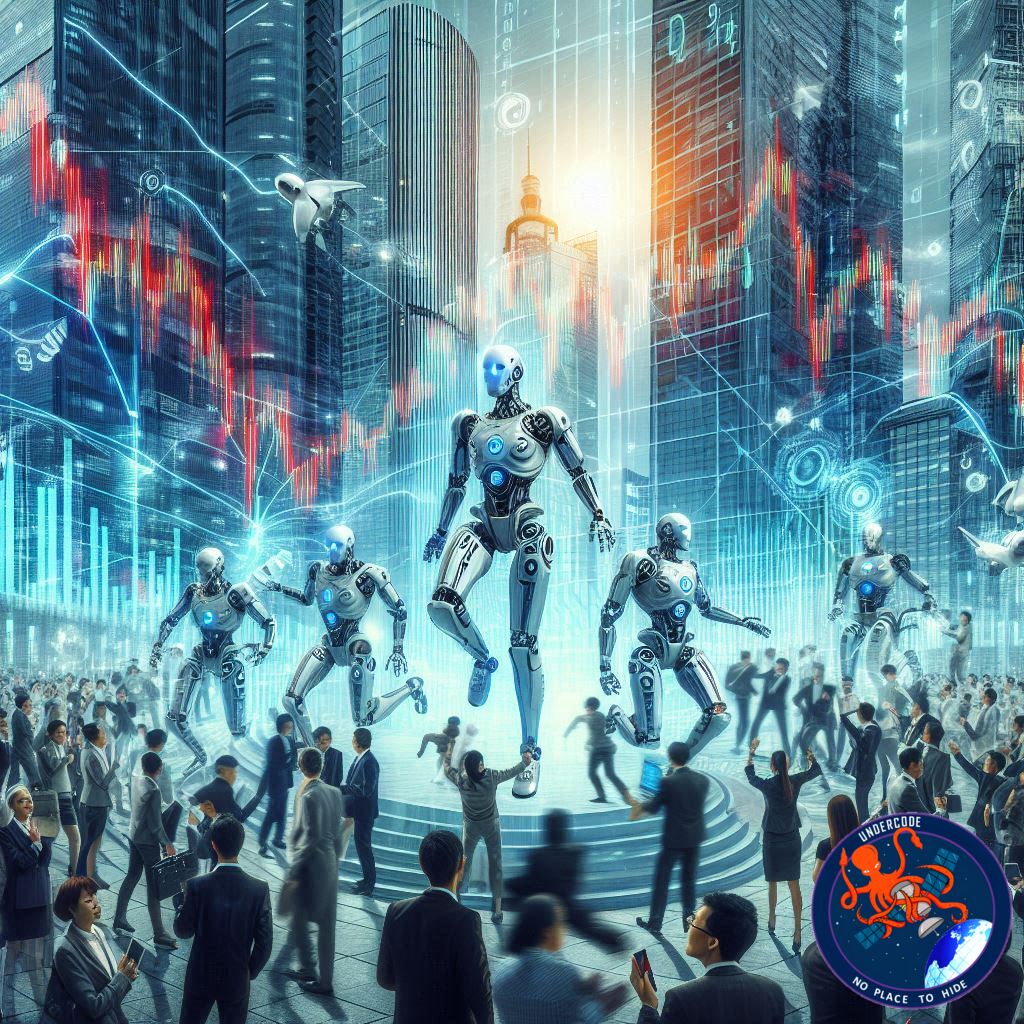
China’s powerful National Development and Reform Commission issued a public caution about the swelling humanoid robotics market. With more than 150 companies producing nearly identical robots, regulators fear the sector is drifting toward saturation. Spokeswoman Li Chao explained to reporters that this avalanche of look-alike machines could dilute innovation, weaken long-term competitiveness, and shift resources away from meaningful research.
A Familiar Pattern Of Investment Excess
Beijing’s concern fits a pattern seen before. China has experienced rapid booms in industries like bike-sharing and semiconductor manufacturing, followed by painful shakeouts where smaller or weaker firms vanish. Officials have labeled humanoid robotics as one of six strategic pillars for national economic growth through 2030. Yet the early signs suggest the sector might be repeating the classic cycle of overinvestment, hype, and eventual consolidation.
Musk’s Concerns Gaining Credibility
Elon Musk has warned that although his Optimus robot may still lead in performance, China could dominate the overall leaderboard. During an April call he predicted that companies ranked second through tenth might all be Chinese. That prediction now looks increasingly credible. China is on pace to manufacture more than 10,000 humanoid robots by the end of the year, already representing more than half of global output.
Money Pouring Into The Industry At Record Pace
A landmark national plan announced earlier this year committed 1 trillion usd, or 138 billion dollars, to robotics and advanced technology over the next twenty years. This amount far surpasses equivalent investment projections in the United States and Europe. The frenzy intensified after Unitree’s dancing robots became a sensation during the Spring Festival Gala, igniting a social media firestorm that encouraged investors to pour vast sums into the sector.
Robots Running, Dancing, Fighting And Brewing Coffee
Chinese companies quickly began showcasing robots performing a wide range of human-like tasks. Some ran marathons, others kicked punching bags, and some even prepared coffee. The spectacle signaled a shift from pure research toward commercial viability. Citigroup now forecasts the humanoid robotics market could reach seven trillion dollars by 2050, with hundreds of millions of human-like robots potentially deployed worldwide.
A Surge Of New Innovators
China’s startup ecosystem is embracing the challenge. Firms like EngineAI, Unitree, AgiBot and Galbot are using advanced AI tools to help robots learn new complex tasks autonomously. Investor enthusiasm has surged so strongly that the Solactive China Humanoid Robotics Index jumped nearly thirty percent in a single year.
Beijing Plans A Strategic Reset
Recognizing the risks, China’s government intends to refine its policies for market entry and exit, encouraging mergers, technology consolidation, and healthy competition. The goal is not only to manage risks but also to push the industry toward real-world application and sustainable innovation.
What Undercode Say:
A Technological Moment That Reflects Economic Anxiety
China’s warning illustrates a core tension between ambition and stability. The country wants to lead in robotics but fears losing control of a sector spiraling faster than regulations can adapt. In a nation where industrial fads often attract billions overnight, humanoid robotics stands out as both an extraordinary opportunity and a looming risk.
The Speed Of Innovation Is Becoming A Liability
Over 150 companies producing similar robots suggests a crowded marketplace where differentiation is fading. When too many firms rush to release nearly identical products, innovation becomes incremental instead of transformative. This mirrors earlier cycles in China where oversaturation led to brutal consolidation phases.
Elon Musk’s Prediction As A Strategic Mirror
Musk’s comment about China dominating the rankings was not just speculation. It reflected an understanding of China’s manufacturing scale, cost structure, and policy alignment. If China continues producing more than half of the world’s humanoid robots annually, global competition will inevitably shift toward whether foreign firms can innovate faster than China can replicate and improve.
The Social Media Effect On Industrial Policy
Unitree’s viral dancing robots triggered a wave of investment rarely seen in technologically demanding fields. This shows how digital culture now influences capital flows. When entertainment and deep tech intersect, investors often conflate visibility with viability, accelerating the risk of bubbles forming before the technology fully matures.
Capital Outrunning Capability
A trillion-usd investment program ensures that the sector will continue expanding, but the distribution of funds remains critical. If capital floods startups without deep research capacity, the industry could produce many flashy prototypes but few lasting breakthroughs. Overfunding can stifle creativity by pushing companies to prioritize short-term spectacle over long-term engineering.
A Race To Build Human-Like Autonomy
EngineAI, AgiBot, Galbot and others are pursuing a crucial frontier: robots that learn autonomously. This approach could redefine productivity, labor economics, and personal services. Yet China’s rush to scale up could disrupt the delicate balance between experimentation and commercial rollout.
A Market Growing Faster Than Its Guardrails
The recent thirty percent surge in the Solactive China Humanoid Robotics Index reflects investor euphoria. But in financial history, sectors that grow too fast often suffer sharper corrections. Beijing’s plan to strengthen market entry rules and support consolidation reveals that the government is preparing for a future where only a fraction of today’s companies survive.
The Global Stakes Are Immense
Robotics is not just a commercial sector. It is a geopolitical battleground. China’s dominance could influence global labor markets, military systems, home automation, healthcare, manufacturing and logistics. Countries without strong robotics ecosystems may become dependent on Chinese suppliers, creating a new form of technological reliance.
An Industry On The Edge Of Transformation
China’s warning is not a retreat. It is a recalibration that signals the next phase of industrial development. If the country manages to control the bubble while nurturing genuine innovation, it could define the global robotics landscape for the next century. If not, it risks burning through capital, talent and credibility at a moment when the world is watching closely.
Fact Checker Results
✅ China’s economic planning agency has issued a bubble warning in robotics.
✅ China is projected to produce over half of this year’s global humanoid robots.
❌ No evidence suggests a global slowdown; the market continues accelerating.
Prediction
China will continue dominating robot production, but the sector will enter a consolidation phase within three years. Investor enthusiasm will shift toward companies developing autonomous learning systems, and global competition will intensify as Western firms race to differentiate through high-end innovation. The next breakthrough will likely come from robotics-AI fusion, creating machines capable of adapting to complex real-world environments.
🕵️📝✔️Let’s dive deep and fact‑check.
References:
Reported By: timesofindia.indiatimes.com
Extra Source Hub (Possible Sources for article):
https://www.medium.com
Wikipedia
OpenAi & Undercode AI
Image Source:
Unsplash
Undercode AI DI v2
Bing
🔐JOIN OUR CYBER WORLD [ CVE News • HackMonitor • UndercodeNews ]
📢 Follow UndercodeNews & Stay Tuned:
𝕏 formerly Twitter 🐦 | @ Threads | 🔗 Linkedin | 🦋BlueSky | 🐘Mastodon


