
Listen to this Post
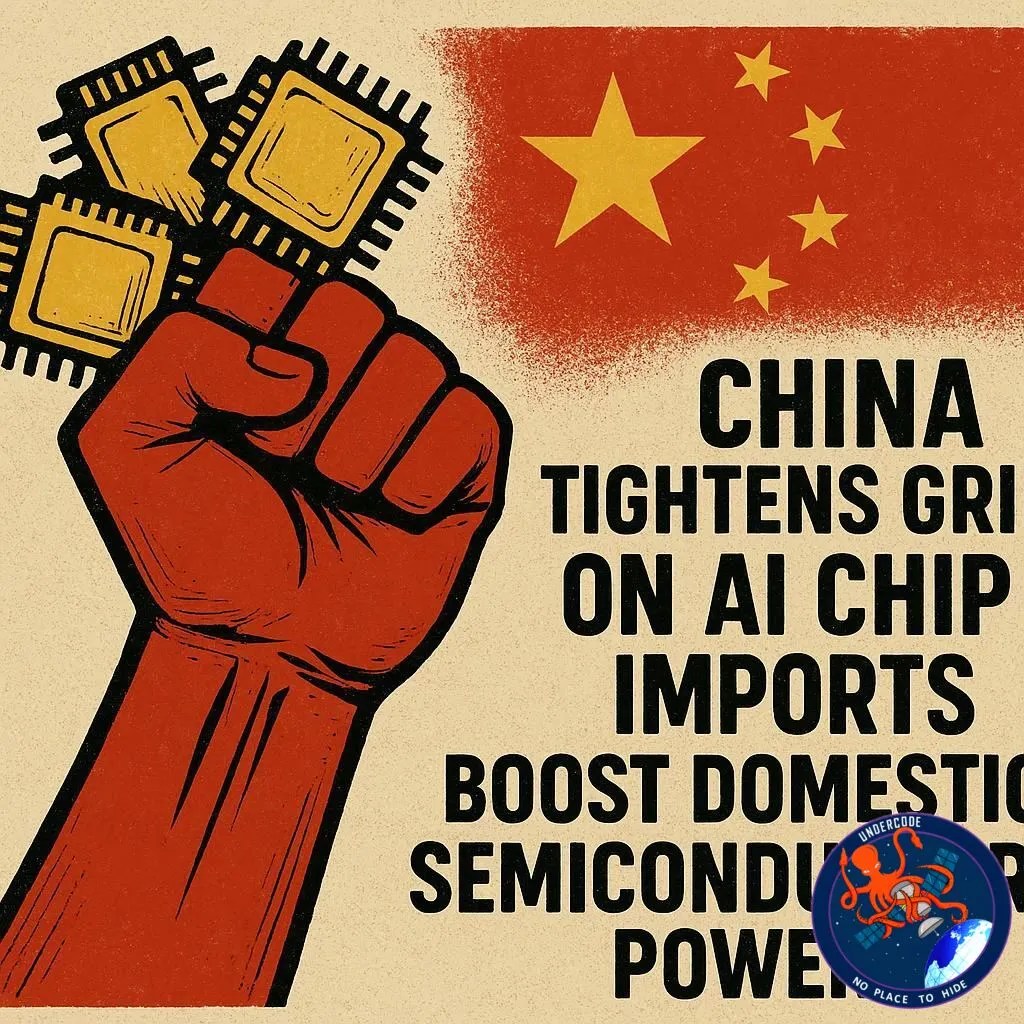
Introduction: The Battle Over AI Chips Intensifies
China is taking aggressive steps to control the flow of advanced AI chips into the country, signaling a new phase in the global tech rivalry. Recent reports indicate that Beijing is tightening inspections at major ports, specifically targeting high-end chips from US companies such as Nvidia. This move is more than just a customs crackdown—it represents a strategic push to accelerate domestic chip development and reduce reliance on American technology. For a country racing to dominate the AI industry, these measures could reshape the semiconductor market in China and beyond.
China’s Stricter Chip Import Controls
According to a report by The Financial Times, Chinese customs officers have been mobilized nationwide to conduct rigorous inspections on semiconductor shipments. The primary goal was initially to enforce guidance preventing local companies from ordering Nvidia’s China-specific AI chips, namely the H20 and RTX Pro 6000D. These chips were designed by Nvidia to comply with US export restrictions while maintaining a foothold in the Chinese market.
Now, the inspections have widened to cover all advanced semiconductor products. Authorities are specifically targeting illegal imports of high-end chips that violate US export curbs. This crackdown highlights Beijing’s strategy to reduce dependence on foreign technology while bolstering domestic chipmakers to compete in the AI sector.
Investigating Past Declarations
Beyond border checks, Chinese customs is reviewing past import declarations from companies. This comes after reports revealed that many Nvidia AI chips were smuggled into China over a three-month period starting in May. Previously, Chinese customs allowed imports as long as duties were paid, but the focus has now shifted to curbing smuggling and redirecting resources to domestic manufacturers.
High-Profile Investigations and Corporate Guidance
The enforcement wave includes probes into major firms such as US quantitative trading firm Tower Research, which allegedly smuggled advanced chips. The Cyberspace Administration of China (CAC) has coordinated with customs to instruct tech companies, including ByteDance and Alibaba, to cancel orders and halt testing of Nvidia products. This effort comes two months after Nvidia launched China-specific chip models following the lifting of a prior US export ban on H20 chips.
Domestic Production and Strategic Goals
Beijing believes domestic chips now rival Nvidia’s China-specific AI processors in performance. Plans are underway to triple the production of advanced semiconductors next year, targeting demand previously met by Nvidia products. This strategy aligns with China’s broader objective of building a self-sufficient AI and semiconductor ecosystem. Meanwhile, Nvidia has stopped including China in its revenue projections, though it previously earned $4.6 billion from H20 sales in the region, making China its fourth-largest market before export restrictions tightened.
What Undercode Say: The Strategic Implications of China’s Chip Crackdown
China’s clampdown on Nvidia AI chip imports reflects more than trade control—it signals a calculated geopolitical and technological maneuver. The move demonstrates how China is leveraging regulatory and border enforcement tools to advance its domestic tech ambitions while weakening dependency on US technology. By intensifying scrutiny of semiconductor shipments and investigating past import declarations, Beijing is sending a strong warning to both domestic and foreign firms: compliance with local guidelines is mandatory, and reliance on foreign high-end chips is increasingly risky.
The focus on Nvidia is particularly telling. Nvidia has historically dominated the AI chip market due to superior GPU performance, which is crucial for training large language models and other AI applications. China’s actions indicate that domestic AI chip manufacturers are reaching performance thresholds close to Nvidia’s offerings, which could dramatically shift market dynamics. Local chipmakers are not only being shielded from foreign competition but are also being incentivized to rapidly innovate and scale production.
By targeting smuggling and unauthorized imports, China also addresses an economic and security concern: sensitive technology flowing into the hands of local firms outside regulatory oversight. This could prevent potential misuse of AI chips while protecting domestic intellectual property development. The coordination between customs and the CAC illustrates a holistic, government-driven approach where policy, enforcement, and technological ambition converge.
The crackdown could also influence international trade. US-based chipmakers like Nvidia face reduced access to one of their largest markets, while global supply chains may experience increased friction due to stricter import controls. Meanwhile, Chinese firms could benefit from accelerated domestic production capacity, gaining a competitive edge not just locally but potentially in export markets once US dependency diminishes.
China’s ambition to triple semiconductor production highlights the seriousness of this strategy. Achieving scale in advanced chips is challenging, involving fabrication expertise, raw material access, and consistent quality assurance. The government’s involvement in channeling resources to domestic manufacturers suggests a long-term vision rather than a short-term trade maneuver. If successful, this could allow China to reduce reliance on US AI chips entirely, establishing a parallel technological ecosystem capable of self-sustained innovation.
However, there are risks. Rapid scaling could lead to quality or reliability issues, and domestic chipmakers may struggle to match the advanced efficiency and energy standards set by Nvidia. Enforcement measures could also create tension with foreign companies and governments, potentially resulting in sanctions, trade restrictions, or retaliatory measures.
From an AI perspective, the crackdown may push Chinese firms to invest more in software optimization and AI algorithms compatible with domestic chips, potentially leading to breakthroughs that bypass hardware limitations. For global AI development, this creates a bifurcated ecosystem where innovation paths diverge between US-based hardware dominance and a self-sufficient Chinese model.
Beijing’s decision to review past imports and smuggling activity is equally strategic. It demonstrates that the crackdown is not only about future orders but also about cleaning up the current market and ensuring compliance retroactively. This sends a clear signal to both multinational corporations and domestic firms that China is serious about asserting technological sovereignty.
The combined effect of these policies could significantly alter Nvidia’s strategic planning. With China no longer included in revenue projections, Nvidia may shift focus to other markets or accelerate research on chips designed for restricted markets. On the other hand, domestic players like Huawei, SMIC, and others may gain unprecedented support and opportunities to dominate the local AI chip landscape.
Overall, China’s chip import crackdown is more than a regulatory adjustment—it is a strategic pivot designed to foster domestic innovation, reduce foreign dependency, and prepare the country for leadership in the AI-driven technology race.
Fact Checker Results
✅ China has tightened import inspections on Nvidia AI chips and other advanced semiconductors.
✅ Domestic chip production plans aim to triple output to replace foreign reliance.
❌ Nvidia’s exclusion of China in revenue projections is not a permanent withdrawal, but a strategic response to new regulations.
Prediction: The Future of China’s Semiconductor Market
China is likely to continue enforcing strict import controls while simultaneously investing heavily in domestic chip capabilities. Within the next 2–3 years, domestic AI chips could rival Nvidia’s performance, reducing China’s dependency on US technology. This may lead to a bifurcated global AI hardware ecosystem, with Chinese companies capturing a larger share of regional markets and potentially exporting high-performance AI chips to allied nations. The global semiconductor supply chain could become more fragmented, and Nvidia may focus on alternative markets to offset reduced China revenues.
If you want, I can also create a clickbait, SEO-optimized headline that will maximize search traffic for this article. Do you want me to do that next?
🕵️📝✔️Let’s dive deep and fact‑check.
References:
Reported By: timesofindia.indiatimes.com
Extra Source Hub:
https://www.reddit.com
Wikipedia
OpenAi & Undercode AI
Image Source:
Unsplash
Undercode AI DI v2
🔐JOIN OUR CYBER WORLD [ CVE News • HackMonitor • UndercodeNews ]
📢 Follow UndercodeNews & Stay Tuned:
𝕏 formerly Twitter 🐦 | @ Threads | 🔗 Linkedin | 🦋BlueSky | 🐘Mastodon


