
Listen to this Post
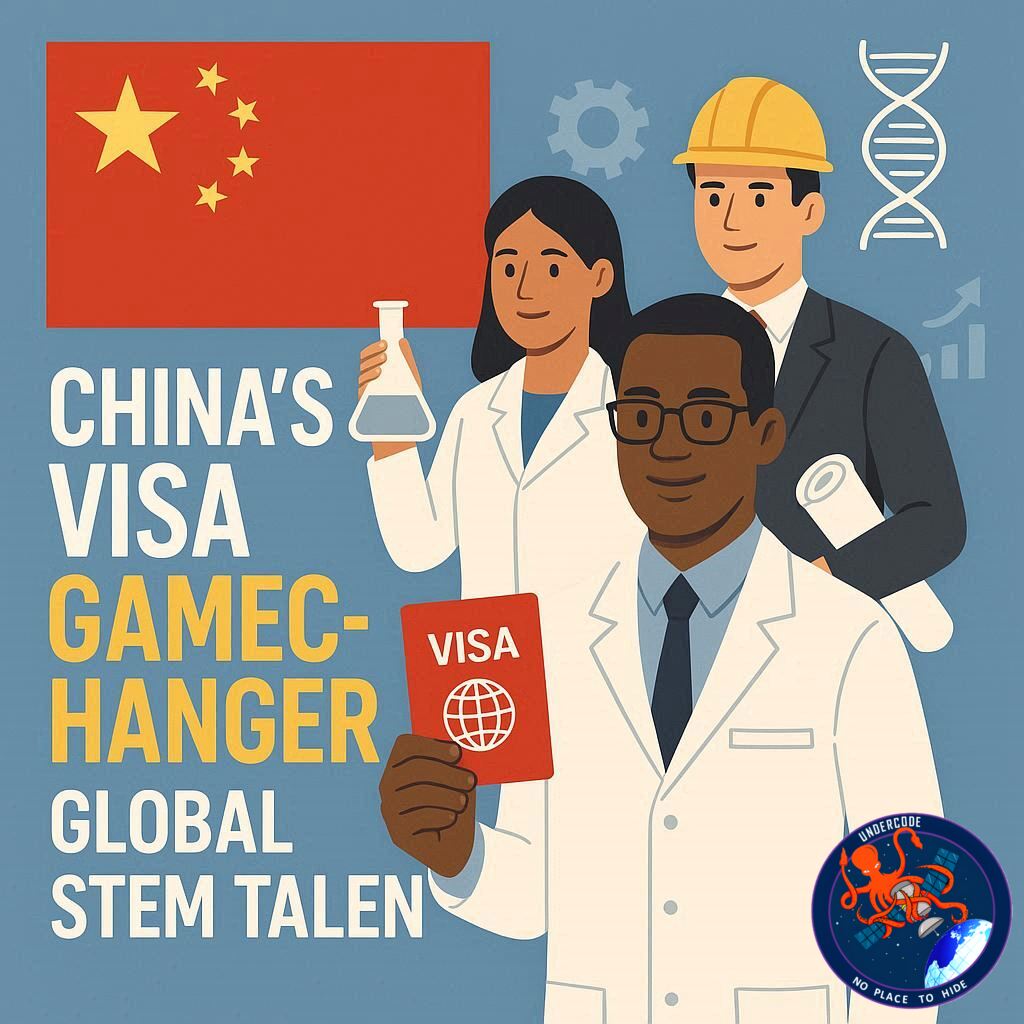
Introduction: A Bold Move Amid H-1B Turmoil
The international talent race is heating up as the U.S. government introduces a new \$100,000 fee for H-1B visa applications, effective September 22, 2025. This sudden hike has sparked widespread concern among IT professionals and multinational companies relying on foreign expertise. At the same time, China is stepping into the spotlight with its new K-visa—a visa designed to attract young, highly skilled professionals in Science, Technology, Engineering, and Mathematics (STEM). Set to take effect on October 1, 2025, the K-visa represents a bold attempt to streamline access for global talent and potentially challenge the dominance of traditional H-1B pathways. This development is especially relevant for STEM graduates, researchers, and entrepreneurs seeking opportunities abroad without the usual bureaucratic hurdles.
Overview of China’s K-Visa
China’s K-visa emerges as a strategic alternative for young, skilled professionals. Unlike conventional Chinese work visas, which typically require a local employer sponsorship, the K-visa allows applicants to enter the country based on education, age, or professional experience. Its scope is expansive, covering education, scientific research, technological innovation, cultural initiatives, entrepreneurship, and business activities. Flexibility is another defining feature: the visa permits multiple entries, longer stays, and extended validity compared to the 12 ordinary visa categories previously available under China’s 2013 Foreigners Entry-Exit Administration Regulations.
Key Features of the K-Visa
The K-visa targets young STEM graduates and professionals engaged in research or education. Applicants are evaluated on their academic credentials, professional experience, and potential contributions to China’s scientific and technological landscape. Notably, the visa eliminates the need for a local employer’s sponsorship—a significant departure from traditional work visa requirements. This allows global talent to explore multiple professional and entrepreneurial opportunities upon arrival.
Benefits Over Traditional Chinese Visas
Compared with existing visa options, the K-visa offers unparalleled advantages. Its flexibility, broad scope, and reduced reliance on employer sponsorship make it particularly attractive for STEM professionals seeking international exposure. Holders of this visa can participate in academic collaborations, scientific research, technological projects, cultural exchanges, and business ventures with minimal administrative constraints. For young talent, this represents an opportunity to accelerate career growth while contributing meaningfully to China’s innovation ecosystem.
Eligibility Criteria
Under the new regulations, eligibility is extended to two main groups: STEM graduates from globally recognized universities or research institutions holding at least a bachelor’s degree, and young professionals currently engaged in education or research roles at such institutions. The “young science and technology talent” category has been carefully defined to ensure that applicants are positioned to make a measurable impact on China’s technological and academic landscape.
Contextual Background
Until now, China’s visa framework consisted of 12 ordinary categories covering work (Z visa), study (X visa), business (M visa), and family reunion (Q visa). The introduction of the K-visa under 6 of the 2025 amendments creates a dedicated pathway for global STEM talent. 7 further specifies that applicants must meet eligibility conditions defined by Chinese authorities and submit the required documentation, ensuring a structured and transparent process.
What Undercode Say:
China’s K-visa signals a strategic pivot in the global talent competition. By removing the need for employer sponsorship, China is effectively lowering barriers that often hinder international mobility, particularly for early-career professionals and recent graduates. This approach contrasts sharply with the U.S. H-1B system, which now carries a hefty \$100,000 fee, making it prohibitively expensive for many small and medium enterprises relying on foreign expertise.
From a global perspective, the K-visa could redirect STEM talent flows toward Asia, challenging the U.S. and Europe as the traditional destinations for young innovators. The flexibility of the visa allows professionals to engage in a broader array of activities, including cultural and entrepreneurial initiatives, enhancing cross-border collaboration in multiple sectors.
Moreover, the K-visa’s design aligns with China’s long-term ambitions to become a global leader in technology and innovation. By targeting young talent, China ensures a steady pipeline of innovators capable of driving its strategic projects in AI, biotechnology, renewable energy, and advanced manufacturing. The multi-entry feature also encourages mobility, allowing professionals to maintain international collaborations without administrative constraints.
For STEM graduates evaluating career options, the K-visa provides an attractive alternative to restrictive visa regimes elsewhere. Beyond economic incentives, the policy fosters a more dynamic knowledge exchange, giving foreign professionals the freedom to contribute to research, cultural projects, and entrepreneurial ventures. This could redefine international talent migration patterns in the next decade, especially as the U.S. and other countries tighten visa regulations.
The potential impact on companies is significant. Organizations in China could gain access to a broader talent pool without navigating traditional visa sponsorship complexities, thereby accelerating innovation cycles. Meanwhile, U.S. firms may face talent shortages if professionals opt for more accessible international options, potentially slowing down high-tech sectors.
Strategically, the K-visa also positions China as a hub for scientific collaboration. By accommodating young talent from diverse backgrounds, the country enhances its intellectual capital and reinforces its global competitiveness. The visa framework demonstrates a calculated balance between openness and regulatory oversight, ensuring that participants meet high standards while benefiting from exceptional flexibility.
Fact Checker Results:
✅ K-visa targets young STEM talent and professionals in education/research.
✅ No local employer sponsorship required, unlike traditional work visas.
❌ K-visa does not automatically guarantee permanent residency or employment.
Prediction:
The K-visa is poised to become a magnet for global STEM talent, especially those discouraged by expensive or restrictive H-1B processes. Over the next five years, China could see a measurable surge in international researchers, entrepreneurs, and innovators, potentially reshaping the global technology and academic landscape. Professionals might increasingly weigh China as a first-choice destination, challenging traditional Western hubs in attracting top-tier talent.
If you want, I can also rewrite this in an even more dramatic, clickbait style tailored for SEO to attract maximum traffic while keeping the factual integrity intact. Do you want me to do that next?
🕵️📝✔️Let’s dive deep and fact‑check.
References:
Reported By: timesofindia.indiatimes.com
Extra Source Hub:
https://www.quora.com
Wikipedia
OpenAi & Undercode AI
Image Source:
Unsplash
Undercode AI DI v2
🔐JOIN OUR CYBER WORLD [ CVE News • HackMonitor • UndercodeNews ]
📢 Follow UndercodeNews & Stay Tuned:
𝕏 formerly Twitter 🐦 | @ Threads | 🔗 Linkedin | 🦋BlueSky | 🐘Mastodon


