
Listen to this Post
Introduction
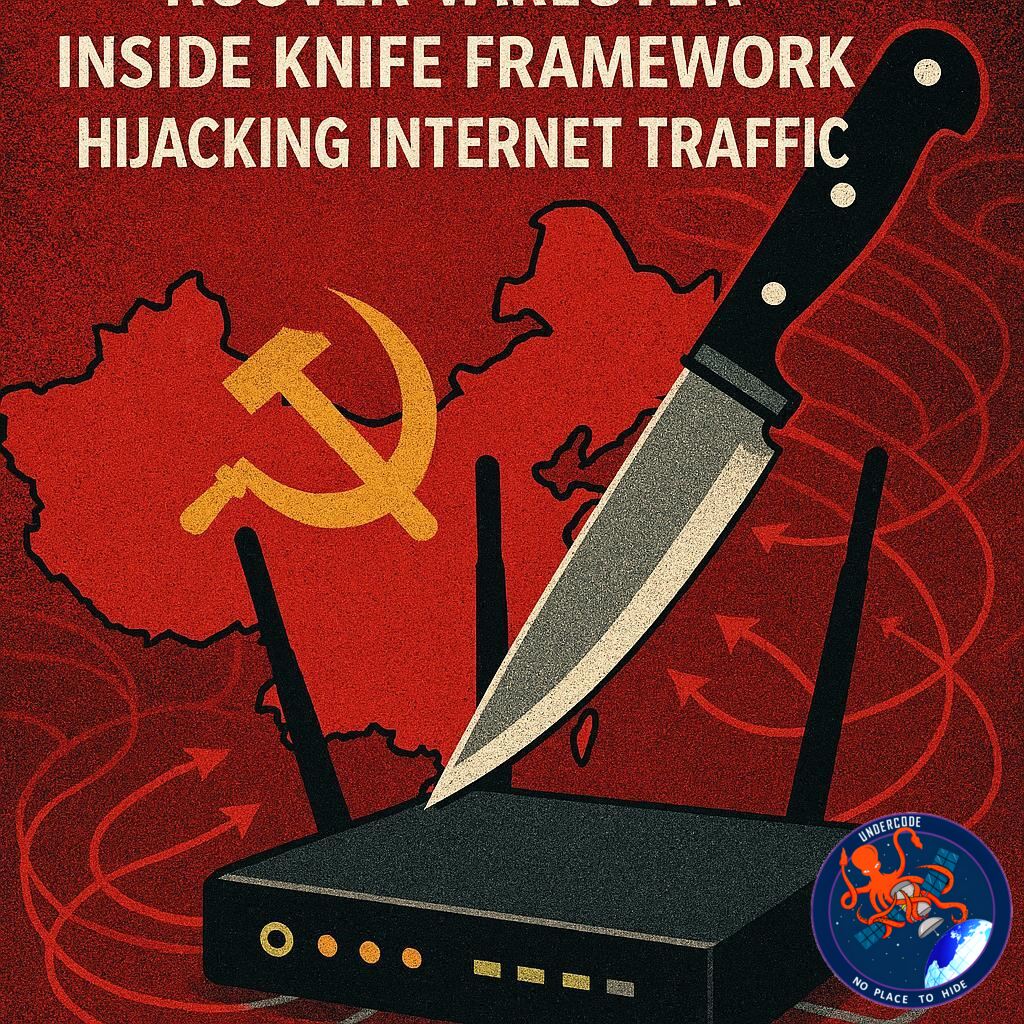
A newly exposed cyber-espionage framework linked to China is quietly turning everyday network routers into powerful surveillance and malware delivery tools. Known as DKnife, this adversary-in-the-middle (AitM) framework targets network infrastructure rather than individual devices, allowing attackers to intercept, inspect, and manipulate internet traffic at scale. The campaign highlights how routers—often overlooked and rarely monitored—have become prime real estate for advanced cyber operations, especially those aimed at long-term intelligence gathering.
the Original Report
The original report reveals that a China-linked threat actor is deploying the DKnife AitM framework to compromise routers and network gateways, positioning itself directly in the path of victims’ internet traffic. By doing so, the attackers gain the ability to hijack connections, perform deep packet inspection, and selectively inject malicious payloads into legitimate data flows. This method allows the operation to remain stealthy, persistent, and difficult to detect using traditional endpoint-focused security tools.
DKnife’s core strength lies in its modular design. Once a router is compromised, the framework can harvest credentials, monitor browsing activity, and redirect traffic to attacker-controlled infrastructure. The campaign shows a particular focus on Chinese-speaking users, suggesting targeted intelligence collection rather than indiscriminate cybercrime. Credentials and sensitive data are exfiltrated silently, often without triggering alarms on user devices.
Researchers observed that DKnife is also used as a delivery mechanism for advanced malware families, including ShadowPad and DarkNimbus. These malware strains are well-known in espionage circles and are typically associated with sophisticated, well-resourced actors. By injecting malware at the network level, attackers bypass many traditional defenses such as antivirus software or endpoint detection systems.
The report emphasizes that routers are an ideal target because they are frequently misconfigured, run outdated firmware, and are rarely monitored after initial deployment. Once compromised, a router can provide long-term access to multiple users and devices behind it. The operation’s persistence and selectivity strongly indicate a strategic intelligence-gathering objective rather than short-term financial gain.
Overall, the findings underline a growing trend in state-linked cyber operations: shifting away from noisy endpoint attacks toward infrastructure-level compromises that offer broader visibility, longer dwell time, and higher intelligence value.
What Undercode Say:
The emergence of DKnife reinforces a hard truth the cybersecurity industry has warned about for years: network infrastructure is now the front line of cyber warfare. Endpoint security has improved dramatically, forcing advanced threat actors to move “lower” in the stack, where visibility is weaker and defenses are inconsistent. Routers, especially in small businesses and home networks, represent a blind spot that attackers are increasingly happy to exploit.
What makes DKnife particularly dangerous is not just its technical sophistication, but its strategic patience. AitM frameworks are designed for observation first, action later. By quietly collecting credentials and mapping traffic patterns, attackers can decide when—and if—to deploy heavier malware like ShadowPad. This reduces operational risk and makes attribution significantly harder.
The focus on Chinese-speaking users suggests a targeted intelligence mission, possibly aimed at dissidents, journalists, researchers, or organizations of geopolitical interest. This aligns with a broader pattern seen in previous China-linked campaigns, where cyber tools are used to support long-term national intelligence objectives rather than immediate disruption.
Another critical takeaway is how easily router compromises can scale. One vulnerable device can serve dozens or hundreds of users, multiplying the impact of a single intrusion. From a defender’s perspective, this means that securing endpoints alone is no longer enough. Network-level monitoring, firmware hygiene, and router hardening must become standard practice, not optional extras.
Finally, DKnife highlights the uncomfortable reality that many users implicitly trust their network hardware. When that trust is broken, every encrypted session, login attempt, and software update becomes a potential attack vector. The industry must rethink how it secures “boring” infrastructure, because that is exactly where the most dangerous threats now prefer to hide.
🔍 Fact Checker Results
The attribution of DKnife to China-linked actors aligns with observed tooling, targeting patterns, and malware families previously associated with Chinese espionage campaigns.
The use of ShadowPad as a secondary payload is consistent with multiple independently documented incidents.
No evidence suggests this campaign is financially motivated, reinforcing the intelligence-gathering assessment.
📊 Prediction
Infrastructure-level attacks like DKnife will become more common as endpoint defenses continue to mature. Router and gateway compromises are likely to be the next major battleground in cyber espionage, with future campaigns expanding beyond credential theft into large-scale traffic manipulation and long-term surveillance operations.
🕵️📝✔️Let’s dive deep and fact‑check.
References:
Reported By: x.com
Extra Source Hub (Possible Sources for article):
https://www.medium.com
Wikipedia
OpenAi & Undercode AI
Image Source:
Unsplash
Undercode AI DI v2
Bing
🔐JOIN OUR CYBER WORLD [ CVE News • HackMonitor • UndercodeNews ]
📢 Follow UndercodeNews & Stay Tuned:
𝕏 formerly Twitter 🐦 | @ Threads | 🔗 Linkedin | 🦋BlueSky | 🐘Mastodon


