
Listen to this Post
Introduction: A Quiet Shift With Massive Consequences
For decades, Chinese carmakers have dominated global production but remained locked out of the United States. High tariffs, political tension, and distrust kept Chinese vehicles off American roads. That wall, however, is starting to crack. Industry experts now believe Chinese-built or Chinese-owned cars could arrive at U.S. dealerships within the next five to ten years. If that happens, it won’t just add a few new brands to the market — it could reshape pricing, competition, and the future of electric vehicles in America.
the Original
Chinese automakers are the world’s largest vehicle producers and exporters, yet the U.S. market has remained out of reach due to steep tariffs and strained trade relations between United States and China. Experts now suggest that this barrier may fall, not through imports, but through Chinese companies building factories directly in America.
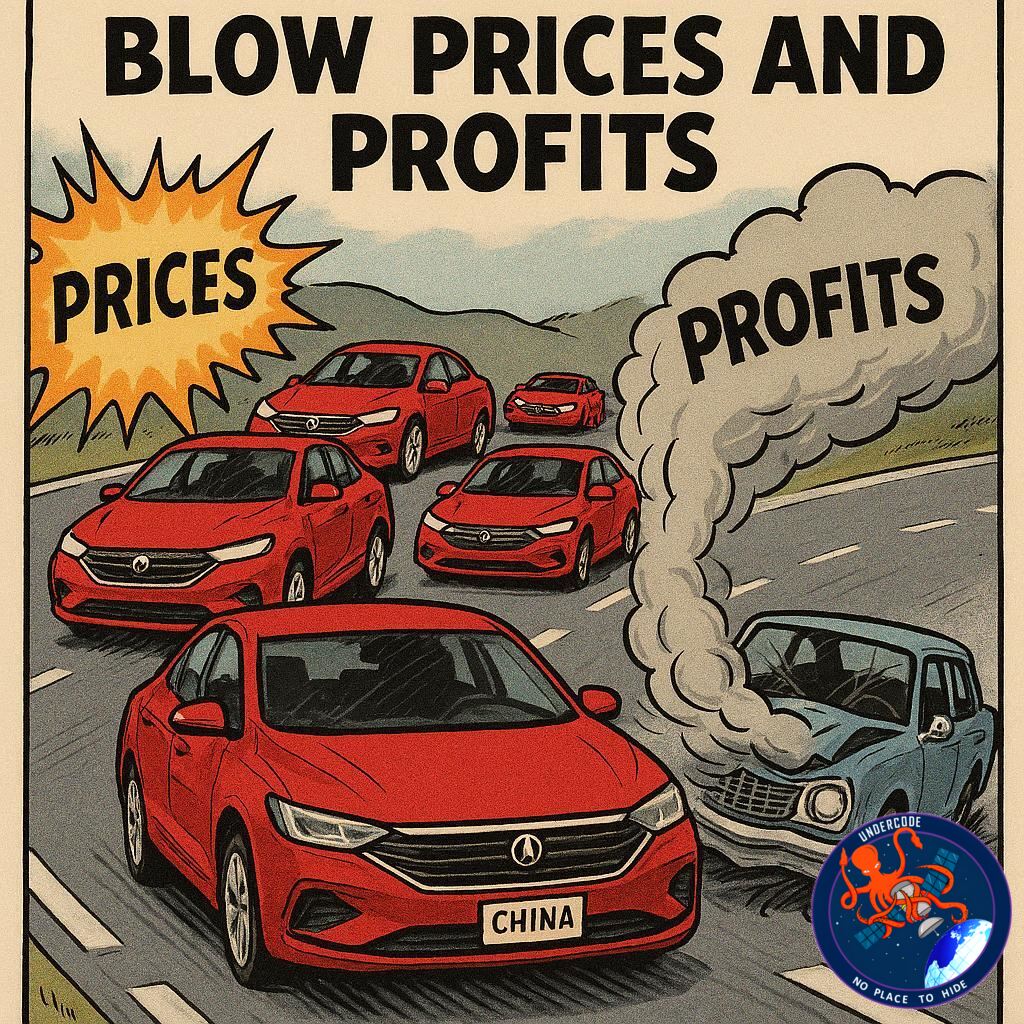
Auto analyst Lei Xing explains that several Chinese manufacturers are already preparing for U.S. expansion, signaling readiness to invest locally. This would benefit American consumers by increasing competition, especially in the electric vehicle (EV) segment, which could push prices down. At the same time, it could pressure profits and jobs at existing U.S. automakers.
Currently, Chinese-built cars face a 100% tariff when entering the U.S. market. Despite this, President Donald Trump recently expressed openness to Chinese automakers — as long as they build plants in the U.S. and hire American workers. A White House official reinforced this stance, stating that foreign investment is welcome if national and economic security are protected.
China’s dominance in auto manufacturing is already clear. According to the China Association of Automobile Manufacturers, China produced roughly one-third of the world’s cars last year and exported more than eight million vehicles, a sharp increase from 2024. In 2023, China surpassed Japan as the world’s largest vehicle exporter.
In EVs, China is even more competitive. BYD surpassed Tesla in global EV sales and recently overtook Ford worldwide as well. Analysts note that while building U.S. factories takes time, most major Chinese automakers already see America as the ultimate proving ground.
Industry consultant Michael Dunne highlights the financial incentive: the average Chinese-exported car sells for about $19,000, while the average new U.S. car costs around $50,000. That pricing gap represents massive profit potential.
Chinese firms are already testing the waters. Volvo, owned by Geely, has operated a South Carolina plant since 2015 and is expanding it with a $1.3 billion investment. This facility could eventually produce vehicles from Geely’s Zeekr and Lynk & Co. brands. Geely already supplies vehicles to Waymo, owned by Alphabet.
Experts say Chinese cars tend to succeed not just on price, but on quality and technology. Investment advisor Bill Russo notes that foreign brands have lost more than half their market share in China in under five years, largely because domestic automakers built better vehicles at more affordable prices.
While Chinese companies face brand-recognition challenges in the U.S., analysts believe American consumers ultimately prioritize value. As Russo bluntly puts it, Americans already buy Chinese-made products daily at places like Walmart — cars may not be much different.
What Undercode Say:
The arrival of Chinese automakers in the U.S. would mark the most disruptive shift in the American auto industry since the rise of Tesla. This isn’t just about cheaper cars — it’s about a fundamentally different manufacturing philosophy colliding with an aging, high-cost legacy system.
Chinese automakers operate at a scale Western companies simply cannot match. Decades of state-backed investment created massive overcapacity, forcing brands to innovate faster and cut margins aggressively. When those companies enter the U.S., they won’t be chasing survival — they’ll be hunting market share.
Electric vehicles are the real battleground. While U.S. and European automakers still struggle with EV affordability, Chinese brands have already cracked the code: vertically integrated supply chains, in-house battery production, and software-first design. This allows them to sell feature-rich EVs at prices American manufacturers can’t easily touch.
For consumers, this is overwhelmingly positive. More competition historically leads to better products and lower prices, and there is no reason to believe cars will be different. The European market already offers a preview, where Chinese EVs undercut rivals while matching — and sometimes exceeding — build quality.
For U.S. automakers, however, the threat is existential. Profit margins are already thin, union labor costs are high, and EV transitions are expensive. A wave of Chinese-built vehicles assembled on U.S. soil could neutralize tariff protections while exposing inefficiencies that have long been masked by brand loyalty.
Politically, this creates a paradox. Blocking Chinese investment risks higher prices and slower EV adoption. Allowing it risks job displacement and long-term dependence on foreign-controlled manufacturing. The likely outcome is a tightly regulated compromise: Chinese factories, American workers, and heavy oversight.
The biggest wildcard is consumer psychology. American buyers may hesitate at unfamiliar brand names, but history suggests that skepticism fades quickly when quality is proven and prices are right. Once a few models earn strong safety ratings and positive reviews, momentum could accelerate fast.
In short, Chinese automakers entering the U.S. wouldn’t just compete — they would force a reckoning. The companies that survive will be the ones that adapt quickly, cut costs brutally, and finally treat affordability as a core feature rather than an afterthought.
🔍 Fact Checker Results
✅ China is the world’s largest vehicle producer and exporter.
✅ Chinese EV manufacturers have overtaken major Western rivals in global sales.
❌ No confirmed timeline yet exists for a full Chinese-brand retail launch in the U.S.
📊 Prediction
Chinese-built vehicles assembled in the U.S. will begin limited commercial sales before 2032, starting with EV fleets and subscription models. Once pricing undercuts domestic rivals by 20–30%, consumer resistance will collapse, triggering a rapid reshuffle of the American auto market.
🕵️📝✔️Let’s dive deep and fact‑check.
References:
Reported By: edition.cnn.com
Extra Source Hub (Possible Sources for article):
https://stackoverflow.com
Wikipedia
OpenAi & Undercode AI
Image Source:
Unsplash
Undercode AI DI v2
Bing
🔐JOIN OUR CYBER WORLD [ CVE News • HackMonitor • UndercodeNews ]
📢 Follow UndercodeNews & Stay Tuned:
𝕏 formerly Twitter 🐦 | @ Threads | 🔗 Linkedin | 🦋BlueSky | 🐘Mastodon


