
Listen to this Post
Introduction
Italian authorities have taken down one of the most technically advanced piracy systems uncovered in recent years, exposing how cybercriminals evolved beyond traditional illegal IPTV models into something far more sophisticated. The operation, known as “Operazione Tutto Chiaro” (All Clear), targeted a massive piracy ecosystem built around an application called CINEMAGOAL, a platform investigators say weaponized legitimate streaming infrastructure itself to distribute unauthorized content.
The investigation reveals a major shift in digital piracy tactics. Instead of relying solely on stolen streams or mirrored content libraries, operators allegedly exploited valid subscription credentials tied to fake identities across major entertainment services. The discovery highlights how piracy operations continue adapting to modern security controls, creating new challenges for streaming companies and law enforcement alike.
Inside Italy’s Massive Anti-Piracy Operation
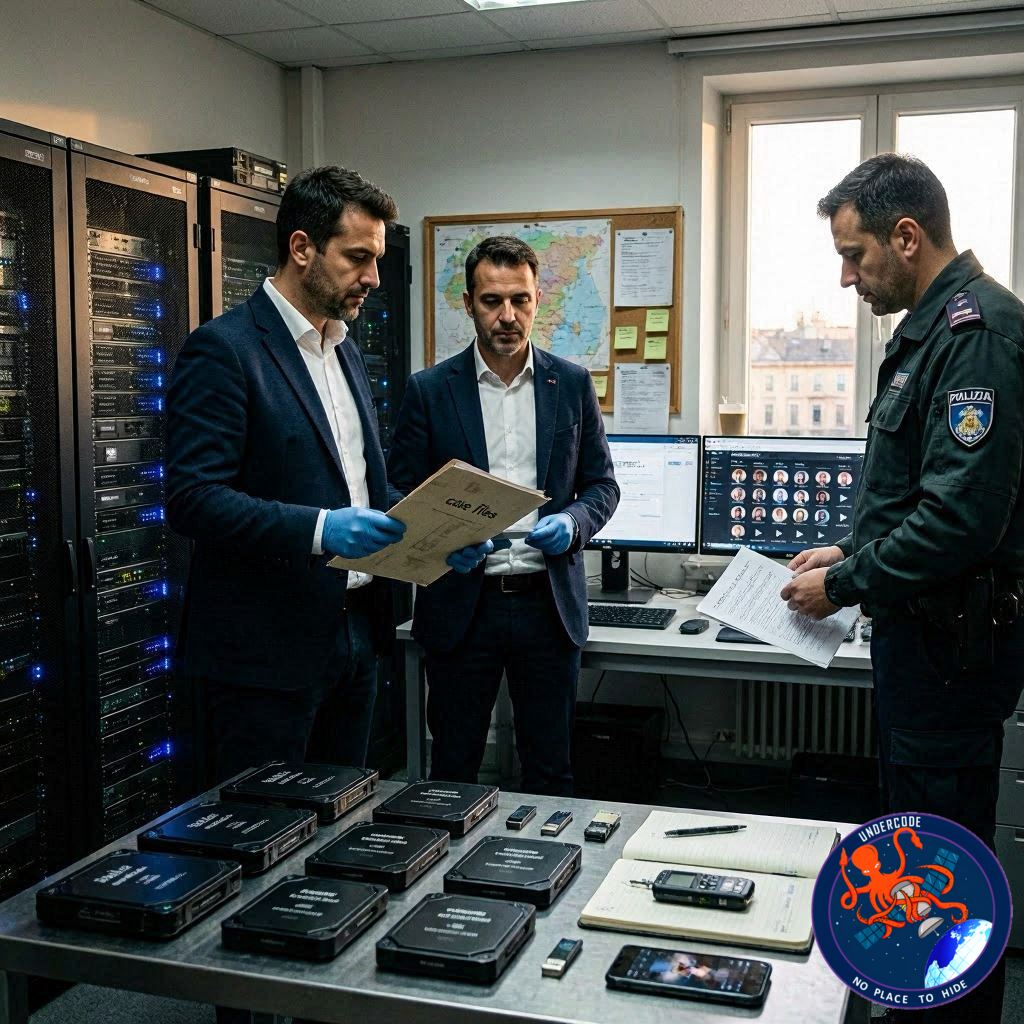
Italian financial police, operating through the Ravenna division under the supervision of the Bologna Prosecutor’s Office, launched a nationwide crackdown on May 22, 2026. The operation involved more than 100 coordinated searches and seizures conducted across 17 regions throughout Italy.
Authorities describe CINEMAGOAL as far more sophisticated than traditional IPTV piracy platforms. Instead of directly copying content repositories, the application allegedly relied on legitimate subscription accounts created using fabricated identities. Those credentials reportedly granted access to premium services including SKY, DAZN, Netflix, Disney+, and Spotify.
Investigators emphasized that the infrastructure behind CINEMAGOAL introduced methods they had not previously encountered in large piracy investigations. The technology allegedly bypassed security mechanisms while simultaneously offering users improved streaming reliability compared to older piracy solutions.
A particularly concerning discovery involved the system’s backend architecture. According to investigators, operators deployed virtual machines distributed throughout Italy that remained active continuously, capturing authentication and decryption data from legitimate subscriptions approximately every three minutes.
This constant credential harvesting mechanism reportedly allowed the network to maintain stable access while avoiding many detection methods normally used by streaming platforms.
One of the most technically unusual elements involved customer anonymity. Authorities stated CINEMAGOAL users did not require IP addresses directly associated with viewing sessions. That separation allegedly complicated anti-piracy detection systems, creating a selling point actively promoted by resellers attempting to attract customers.
Investigators uncovered an extensive reseller ecosystem supporting the operation. More than 70 resellers across Italy allegedly distributed CINEMAGOAL access packages, charging annual subscription fees ranging between €40 and €130 depending on available content tiers.
Financial tracking efforts also revealed deliberate attempts to obscure payment flows. Revenue moved through cryptocurrency transactions alongside foreign and fictitious banking arrangements designed to reduce traceability. Individual resellers reportedly retained portions of subscription revenue before forwarding remaining proceeds to higher organizational levels.
Authorities further discovered CINEMAGOAL existed alongside a broader piracy infrastructure. The same operators allegedly maintained traditional IPTV piracy services, often referred to locally as “pezzotto” systems, indicating a diversified criminal business model rather than an isolated application.
International cooperation became a major component of the investigation. Through Eurojust coordination mechanisms, prosecutors organized synchronized enforcement actions in France and Germany.
Those cross-border operations reportedly secured foreign servers containing CINEMAGOAL’s complete application source code along with decryption infrastructure critical to platform functionality.
Nearly 200 Guardia di Finanza officers participated in Italian enforcement activities alone. Investigators believe seized systems and digital evidence may reveal additional individuals connected to the operation, including organizers, distributors, and potentially subscribers.
Financial damage estimates developed with assistance from affected streaming companies place total losses near €300 million, approximately $348 million USD, representing years of unpaid subscription revenue.
Authorities have already identified the first 1,000 subscribers. Those individuals could face administrative penalties ranging from €154 to €5,000.
Investigators warned additional users may be identified as forensic analysis continues.
Potential criminal allegations under review include audiovisual piracy violations, unauthorized computer system access, and computer fraud offenses.
Officials emphasized the case remains in its preliminary investigation stage. Final criminal responsibility will only be determined following judicial proceedings and any eventual convictions.
The Evolution Beyond Traditional IPTV Piracy
Older IPTV piracy operations typically depended on capturing and rebroadcasting unauthorized feeds. Anti-piracy technologies gradually improved at detecting those methods, forcing criminal operators toward more sophisticated techniques.
CINEMAGOAL allegedly represented an evolution of that landscape.
Rather than stealing content directly, investigators claim operators exploited authentication systems themselves. This approach potentially transformed legitimate digital rights management mechanisms into attack surfaces.
That shift matters because security controls designed to prevent abuse can become difficult to distinguish from authorized behavior when attackers successfully leverage legitimate credentials.
Modern streaming platforms increasingly rely on authentication intelligence, device recognition, behavioral analytics, and DRM protections.
When attackers begin operating inside those trusted mechanisms, detection complexity rises significantly.
The architecture described by investigators also demonstrates another trend within cyber-enabled criminal ecosystems: infrastructure diversification.
Instead of depending on one piracy channel, organizations increasingly build layered monetization systems.
Traditional IPTV distribution.
Credential exploitation.
Subscription resale ecosystems.
Cryptocurrency payment channels.
International hosting infrastructure.
Multiple overlapping technologies can improve resilience against takedown attempts.
The investigation further highlights how cybercrime operations increasingly resemble legitimate technology businesses.
Dedicated infrastructure.
Distributed operational models.
Reseller partnerships.
International server deployments.
Payment processing strategies.
Technical optimization.
Many modern digital criminal enterprises operate with organizational maturity resembling commercial startups.
That reality creates long-term challenges for regulators, streaming providers, and law enforcement agencies attempting disruption efforts.
Another notable takeaway involves international cooperation.
Cyber-enabled crime rarely respects borders.
Server infrastructure may exist in one country.
Operators may reside elsewhere.
Financial movement may cross additional jurisdictions.
Without coordinated multinational enforcement, sophisticated digital operations can remain resilient.
The France and Germany server seizures demonstrate how international coordination increasingly becomes mandatory rather than optional.
Streaming providers may also face growing pressure to enhance identity verification systems.
Credential abuse remains one of the most persistent challenges across digital platforms.
As attackers improve automation and infrastructure sophistication, defensive systems must evolve equally rapidly.
The CINEMAGOAL investigation serves as a warning that piracy ecosystems are becoming technically smarter.
The battle is no longer simply about blocking unauthorized streams.
It increasingly involves protecting authentication layers, monitoring behavioral anomalies, strengthening identity systems, and disrupting criminal monetization infrastructure.
What Undercode Say:
The CINEMAGOAL case reflects a broader cybersecurity reality: attackers frequently stop targeting content itself and instead target trust mechanisms.
Security architecture often assumes authentication equals legitimacy.
Sophisticated threat actors understand that assumption.
If valid credentials can be abused efficiently enough, many security layers become less effective.
The alleged use of virtualized infrastructure operating continuously suggests operational maturity that resembles enterprise-grade environments rather than amateur piracy communities.
That trend appears across multiple cybercrime sectors today.
Ransomware groups.
Credential theft operators.
Information stealers.
Piracy ecosystems.
Many increasingly adopt scalable infrastructure approaches borrowed directly from legitimate cloud operations.
Another interesting technical angle is the claimed absence of user IP association during viewing sessions.
If validated through court proceedings, such architecture represents an intentional anti-forensics design decision.
Criminal operators increasingly design systems not merely for functionality but specifically for resistance against detection and attribution.
Financial obfuscation strategies also reveal operational planning.
Cryptocurrency usage alone does not guarantee anonymity.
Sophisticated laundering patterns, layered accounts, and cross-border payment structures often matter more than payment medium selection.
The hybrid piracy model uncovered here may become increasingly common.
Organizations diversify.
Single revenue streams create operational fragility.
Multiple monetization paths increase resilience.
That same logic appears throughout cybercriminal ecosystems.
Law enforcement agencies face another challenge moving forward.
Infrastructure takedowns disrupt operations.
They do not necessarily eliminate technical knowledge.
Once advanced architectures emerge publicly, imitation risk increases.
Future piracy systems may adopt similar techniques while improving concealment strategies.
Defenders therefore cannot rely exclusively on enforcement actions.
Security improvements must evolve continuously.
Streaming providers increasingly need stronger anomaly detection systems capable of identifying legitimate credentials behaving illegitimately.
The CINEMAGOAL operation may ultimately be remembered not only as a major piracy investigation but also as evidence that digital crime ecosystems increasingly function like professional technology enterprises.
That transformation changes the defensive equation entirely.
Fact Checker Results
✅ Italian authorities conducted nationwide enforcement actions involving over 100 searches and seizures.
✅ Investigators stated CINEMAGOAL relied on legitimate subscription credentials rather than conventional mirrored piracy libraries.
✅ Authorities confirmed the case remains under preliminary investigation, with final criminal responsibility pending court outcomes.
Prediction
🔮 Streaming piracy ecosystems will increasingly shift toward credential abuse and infrastructure manipulation rather than traditional feed rebroadcasting.
🔮 Platform providers will likely invest more heavily in behavioral analytics and authentication anomaly detection.
🔮 International cooperation between law enforcement agencies will become increasingly essential as cyber-enabled piracy operations continue expanding across borders.
🕵️📝Let’s dive deep and fact‑check.
References:
Reported By: cyberpress.org
Extra Source Hub (Possible Sources for article):
https://www.facebook.com
Wikipedia
OpenAi & Undercode AI
Image Source:
Unsplash
Undercode AI DI v2
Bing
🔐JOIN OUR CYBER WORLD [ CVE News • HackMonitor • UndercodeNews ]
📢 Follow UndercodeNews & Stay Tuned:
𝕏 formerly Twitter 🐦 | @ Threads | 🔗 Linkedin | 🦋BlueSky | 🐘Mastodon | 📺Youtube


