
Listen to this Post
Introduction
A newly revealed cybersecurity incident involving the Cybersecurity and Infrastructure Security Agency (CISA) has triggered serious concerns across the U.S. government and cybersecurity community. Lawmakers are now demanding explanations after sensitive credential data connected to internal government systems reportedly appeared publicly on GitHub, potentially exposing highly privileged access points to federal infrastructure.
The exposure has reignited long-standing debates around contractor oversight, cloud security practices, workforce shortages, and whether government agencies responsible for protecting national cyber defenses are adequately protecting themselves. While investigators say there is currently no evidence of malicious exploitation, experts warn that even a brief exposure of credentials tied to critical systems can create severe long-term risks.
Public GitHub Exposure Triggers Immediate Concern
Congressional Democrats are pushing for answers after reports emerged that sensitive credential information linked to CISA systems had been publicly exposed through GitHub. The leak was discovered by security company GitGuardian, whose researchers identified a repository reportedly containing privileged AWS GovCloud credentials and access information connected to internal CISA systems.
The repository, reportedly named “Private-CISA,” was allegedly maintained by a contractor and had apparently exposed credential-related information dating back to November. Security researcher Guillaume Valadon described the discovery as one of the most concerning credential leaks he had encountered.
Initially believing the repository might be fake, Valadon later concluded the exposed information appeared legitimate. His concern quickly shifted toward what sophisticated adversaries, especially nation-state attackers, might do if they gained access to such material.
One major fear raised by researchers centered around persistence. Rather than causing immediate destruction, attackers who quietly establish long-term access inside government systems can create deeper strategic risks. Persistent access allows threat actors to remain hidden, gather intelligence, and potentially exploit infrastructure over extended periods.
Capitol Hill Demands Explanations
The incident rapidly escalated into a political issue.
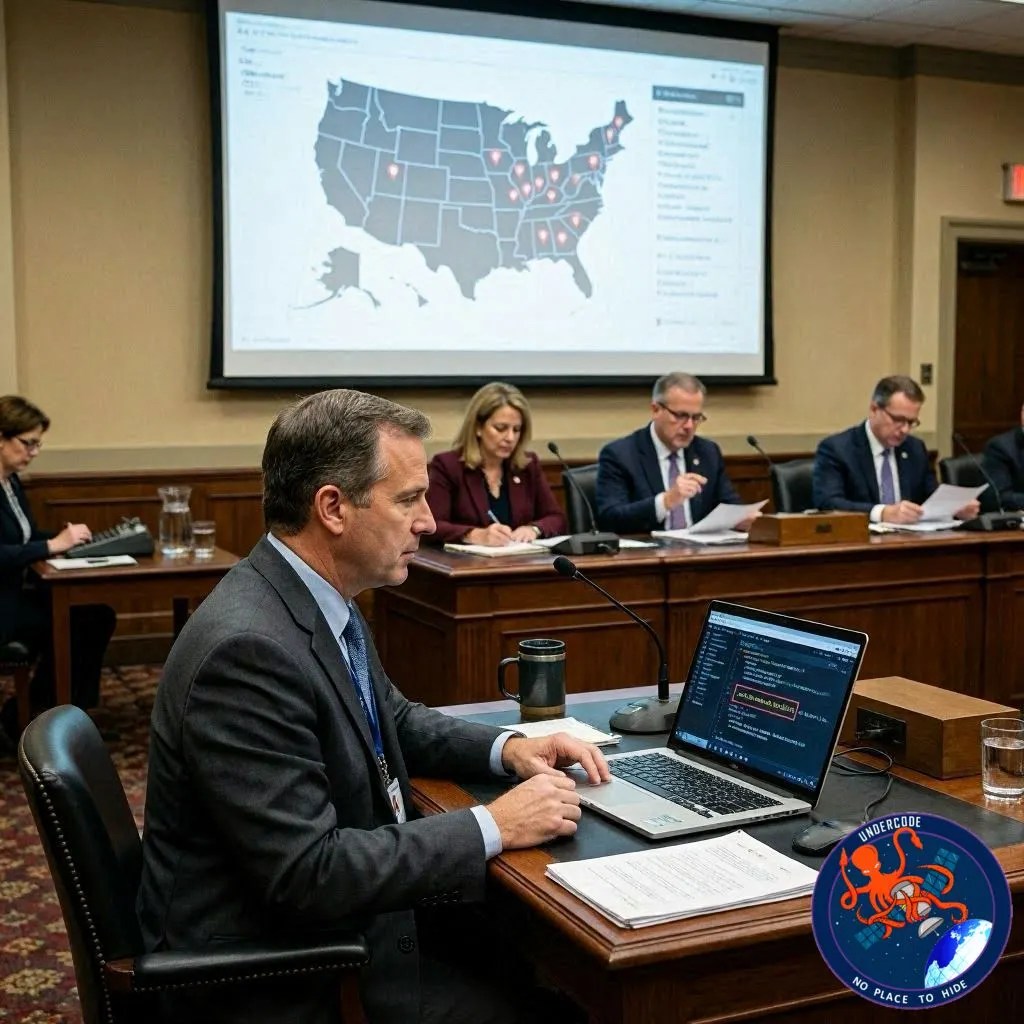
Representative Bennie Thompson of Mississippi, ranking Democrat on the Homeland Security Committee, alongside Representative Delia Ramirez, requested a formal briefing from CISA leadership. Lawmakers want detailed answers regarding how the exposure happened, what systems may have been affected, what remediation measures were taken, and how contractor accountability will be addressed.
Senator Maggie Hassan also requested a classified briefing seeking clarity about exposed systems, forensic investigations performed by CISA, and corrective measures implemented after discovery.
Lawmakers questioned how a cybersecurity lapse could occur within the agency responsible for defending American critical infrastructure against cyber threats.
The concerns extend beyond technical failures. Congressional officials pointed toward personnel shortages and budget constraints as possible contributing factors. Reduced staffing levels combined with operational pressures can increase the likelihood of human mistakes, particularly in environments managing highly sensitive infrastructure.
CISA Responds
CISA acknowledged awareness of the reported exposure and stated it was actively investigating the matter.
Agency officials indicated that, based on current findings, there is no evidence sensitive information was compromised through malicious exploitation. The agency also emphasized efforts to strengthen safeguards designed to prevent future incidents.
Reports indicate CISA moved quickly after receiving notification from researchers, removing the exposed repository rapidly after discovery.
The repository itself was reportedly maintained by personnel connected to contractor Nightwing, though company representatives referred inquiries back to CISA.
Cybersecurity Experts Warn About Credential Exposure Risks
Cybersecurity professionals across the industry emphasized that exposed credentials remain one of the most dangerous and common security failures organizations face.
Ben Harris, founder of security company WatchTowr, noted that accidental exposure of privileged credentials occurs far more frequently than many organizations realize. Sensitive information often leaks through repositories, cloud misconfigurations, accidental uploads, or poor development practices.
Experts noted that modern cyberattacks increasingly succeed not because attackers use sophisticated zero-day exploits, but because organizations unintentionally expose their own access mechanisms.
Dave Mitchell from Infoblox highlighted GitHub repository management as a recurring weakness across enterprises. A single accidental upload involving authentication keys or privileged credentials can rapidly evolve into a major security event.
Security specialists also stressed the importance of auditing repository permissions, enforcing credential scanning, limiting credential lifespan, and implementing automated monitoring systems capable of detecting exposed secrets before attackers discover them.
Human Error Remains Cybersecurity’s Hardest Problem
Despite the severity of the incident, some researchers urged perspective.
Human mistakes remain one of cybersecurity’s most persistent challenges. Even organizations built around defending against cyber threats experience accidental exposures.
Cybersecurity defenses rely on three pillars:
People
Processes
Technology
A weakness in any one of those areas can create opportunities for failure.
Researchers noted that if organizations were judged solely on whether incidents occur, virtually every major technology company, cybersecurity vendor, and government institution would struggle to meet expectations.
The more important question becomes how organizations respond.
In this case, researchers acknowledged CISA acted quickly once notified. Rapid response can significantly reduce exposure windows and minimize potential damage.
Still, the incident arrives amid broader concerns regarding federal cybersecurity resilience.
Workforce Challenges and Budget Pressures Add Complexity
Industry observers also pointed toward structural problems impacting cybersecurity readiness.
Government agencies continue facing persistent shortages of cybersecurity professionals. Recruiting and retaining experienced security talent remains difficult across both public and private sectors.
Combined with funding interruptions, workforce turnover, and increasingly sophisticated threats, agencies operate under mounting pressure.
Cybersecurity resilience increasingly depends not only on advanced technology but sustained investment in staffing, operational maturity, and organizational preparedness.
Federal infrastructure protection operates continuously. Threat actors do not pause operations during budget disputes, staffing transitions, or funding gaps.
The exposure highlights how operational strain can intersect with security failures, creating vulnerabilities that attackers actively seek.
CISA’s Previous Security Challenges Add Context
This is not the first time CISA has faced scrutiny surrounding internal security controls.
The agency previously faced criticism after sensitive contract information was reportedly uploaded into ChatGPT by a former acting director.
In 2024, CISA also informed Congress regarding a breach affecting a chemical facility security tool.
While isolated incidents do not necessarily indicate systemic failure, repeated security events naturally attract heightened oversight from lawmakers and cybersecurity professionals alike.
Government agencies tasked with protecting national infrastructure operate under unique scrutiny because public trust forms part of their mission.
Incidents like these reinforce how cybersecurity maturity requires continuous improvement rather than static compliance.
What Undercode Say:
The CISA credential exposure highlights a difficult truth within cybersecurity: security maturity does not eliminate mistakes. Even agencies specifically built to defend digital infrastructure remain vulnerable to operational failures and human error.
Credential leaks continue to rank among the most dangerous forms of exposure because credentials bypass many defensive layers. Firewalls, intrusion prevention systems, and endpoint protections become significantly less effective when attackers possess legitimate authentication material.
The reported involvement of contractor-managed infrastructure also raises another increasingly relevant issue: supply chain cybersecurity governance.
Modern organizations depend heavily on third-party contractors, cloud providers, and distributed development workflows. Every additional participant introduces another security dependency.
GitHub repositories have become a recurring source of credential leakage across industries. Development teams frequently move quickly under operational deadlines, and security controls often lag behind engineering velocity.
Automated secret scanning tools exist specifically to identify exposed credentials before publication. Organizations managing critical infrastructure should increasingly treat these controls as mandatory rather than optional.
Another important lesson involves persistence risk.
Traditional security thinking often focuses on immediate disruption, ransomware deployment, or destructive attacks. Nation-state operators frequently prioritize stealth instead. Quiet persistence within government systems can create strategic intelligence opportunities extending months or years.
Congressional concern regarding workforce shortages also reflects a larger cybersecurity reality.
The talent shortage problem is not hypothetical.
Public-sector organizations routinely compete against private-sector salaries and hiring flexibility. Budget instability compounds recruitment difficulties.
Cybersecurity resilience increasingly depends on people sustainability as much as technological sophistication.
Rapid remediation deserves recognition as well.
Researchers acknowledged that CISA responded quickly once alerted. Detection speed and remediation efficiency often determine whether exposures become breaches.
However, response quality cannot entirely compensate for prevention failures.
Modern cybersecurity strategy increasingly centers around assuming mistakes will happen and designing systems resilient enough to contain them.
Short-lived credentials, stronger repository controls, zero-trust principles, automated validation pipelines, and continuous auditing become essential safeguards.
No organization becomes immune to cyber risk.
The agencies responsible for defending critical infrastructure must continuously demonstrate the same operational rigor expected from private industry.
Incidents like this ultimately reinforce a difficult but necessary cybersecurity principle:
Trust alone never secures systems.
Verification does.
Fact Checker Results
✅ GitGuardian reportedly discovered publicly exposed credential-related information connected to CISA systems.
✅ Congressional lawmakers requested briefings regarding the incident and potential security consequences.
❌ There is currently no public evidence confirming malicious exploitation of the exposed credentials.
Prediction
🔮 Federal cybersecurity agencies will likely increase repository auditing controls and automated credential-scanning requirements.
🔮 Contractor security oversight standards may become stricter following congressional review.
🔮 Government cybersecurity investment discussions will increasingly focus on workforce resilience alongside technology modernization.
🕵️📝Let’s dive deep and fact‑check.
References:
Reported By: cyberscoop.com
Extra Source Hub (Possible Sources for article):
https://www.stackexchange.com
Wikipedia
OpenAi & Undercode AI
Image Source:
Unsplash
Undercode AI DI v2
Bing
🔐JOIN OUR CYBER WORLD [ CVE News • HackMonitor • UndercodeNews ]
📢 Follow UndercodeNews & Stay Tuned:
𝕏 formerly Twitter 🐦 | @ Threads | 🔗 Linkedin | 🦋BlueSky | 🐘Mastodon


