
Listen to this Post
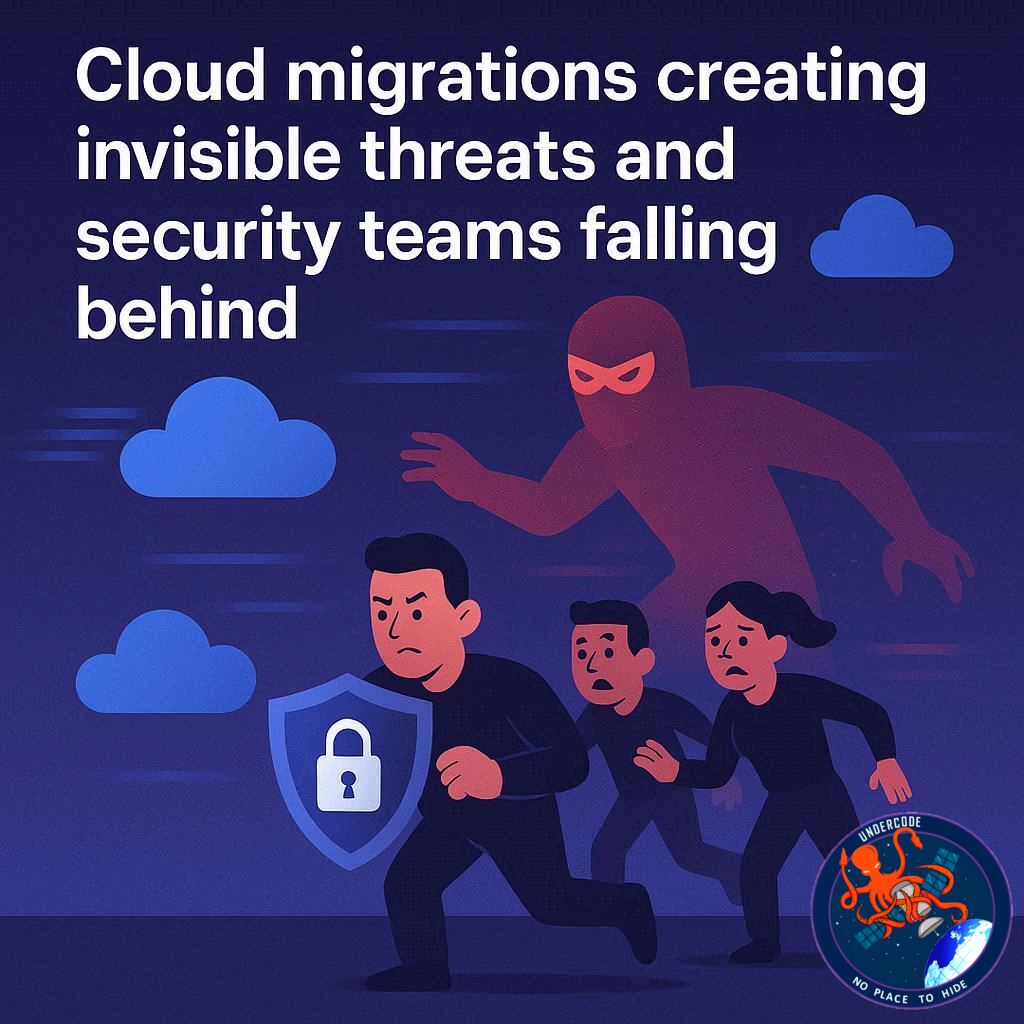
Introduction: The Hidden Cost of Moving to the Cloud
As organizations accelerate cloud adoption, the promise is speed, scalability, and flexibility. But beneath that optimism lies a growing cybersecurity blind spot. Cloud migrations—especially across multi-cloud and hybrid environments—are quietly eroding traditional visibility models. Security teams that once relied on perimeter-based monitoring are now struggling to see what actually happens inside their cloud workloads. A recent industry insight shared by Cybersecurity News Everyday highlights a critical reality: without network-layer telemetry and Network Detection and Response (NDR), many cloud threats remain effectively invisible.
the Original
The original article emphasizes that cloud migrations fundamentally change how network traffic flows, often breaking long-standing visibility assumptions used in on-premise environments. Traditional security tools, which depend heavily on fixed network perimeters and centralized logging, are not designed for dynamic cloud-native infrastructures. As workloads shift between providers or operate simultaneously across hybrid and multi-cloud environments, blind spots emerge where malicious activity can go undetected for extended periods.
The article points out that cloud providers offer their own native logging and monitoring tools, but these are often siloed, inconsistent, and tightly coupled to specific platforms. This fragmentation makes it difficult for security teams to maintain a unified threat detection strategy. As a result, attackers can exploit east-west traffic, lateral movement, and misconfigured services without triggering alerts.
To address this challenge, the article highlights the importance of network-layer telemetry—data captured directly from network traffic rather than application logs alone. Techniques such as traffic mirroring and cloud-native packet capture provide a provider-agnostic view of what is actually happening inside cloud networks. When paired with Network Detection and Response solutions, this telemetry enables behavioral analysis that can detect anomalies, command-and-control traffic, and stealthy intrusion attempts.
The article also stresses that modern environments increasingly rely on containerized workloads and Kubernetes clusters, which add another layer of complexity. Ephemeral containers can spin up and disappear within seconds, leaving little trace in traditional logs. Network-based visibility, however, can observe communications in real time, regardless of how short-lived the workload is.
Ultimately, the article argues that consistent threat detection across cloud environments is no longer optional. Organizations that fail to adapt their visibility strategy risk operating blind, even while believing their cloud security posture is mature and well-instrumented.
What Undercode Say:
Cloud security discussions often focus on identity, access management, and misconfiguration risks, but visibility is the quieter, more dangerous problem. When companies migrate to the cloud, they frequently assume that “native logging is enough,” without realizing how fragmented and context-poor those logs can be. This assumption creates a false sense of security that attackers are more than happy to exploit.
Network-layer telemetry matters because it observes reality, not intent. Logs tell you what a system claims it is doing; network traffic shows you what it is actually doing. In hybrid and multi-cloud environments, this distinction becomes critical. Attackers rarely rely on noisy exploits anymore. Instead, they blend into normal-looking traffic patterns, moving laterally and exfiltrating data slowly to avoid detection.
NDR fills a strategic gap that endpoint and log-based tools cannot fully cover. It provides behavioral baselining across environments, making it possible to spot subtle deviations that indicate compromise. This is especially relevant in Kubernetes-heavy deployments, where workloads are ephemeral and traditional agents may never fully initialize before a container is destroyed. Network visibility does not care how long a workload exists—it captures the communication regardless.
Another overlooked issue is vendor lock-in at the security layer. Relying solely on cloud-provider-native tools ties detection capabilities to specific ecosystems. As organizations diversify their cloud strategies for resilience and cost reasons, this approach becomes unsustainable. Provider-agnostic telemetry and NDR offer a rare form of consistency in an otherwise fragmented security landscape.
From a strategic standpoint, visibility should be treated as core infrastructure, not an add-on. Security teams should design cloud architectures with traffic mirroring, flow logs, and NDR integration from day one, rather than attempting to retrofit visibility after incidents occur. The cost of doing it early is predictable; the cost of doing it late usually appears as a breach headline.
In practice, organizations that invest in network-level visibility tend to detect intrusions faster, investigate incidents with more confidence, and reduce dwell time significantly. As cloud environments grow more complex, the gap between organizations that can truly see their networks and those that cannot will only widen. Visibility is no longer about compliance—it is about survival.
Fact Checker Results
The claim that cloud migrations reduce traditional visibility is accurate and widely documented.
Network-layer telemetry is a recognized method for detecting lateral movement and stealthy threats.
NDR is increasingly adopted to complement, not replace, endpoint and log-based security tools.
Prediction
Over the next few years, cloud security strategies that lack provider-agnostic network visibility will be viewed as incomplete. Organizations will increasingly standardize NDR as a baseline control in multi-cloud architectures, not as an advanced or optional capability.
🕵️📝✔️Let’s dive deep and fact‑check.
References:
Reported By: x.com
Extra Source Hub (Possible Sources for article):
https://www.digitaltrends.com
Wikipedia
OpenAi & Undercode AI
Image Source:
Unsplash
Undercode AI DI v2
Bing
🔐JOIN OUR CYBER WORLD [ CVE News • HackMonitor • UndercodeNews ]
📢 Follow UndercodeNews & Stay Tuned:
𝕏 formerly Twitter 🐦 | @ Threads | 🔗 Linkedin | 🦋BlueSky | 🐘Mastodon


