
Listen to this Post
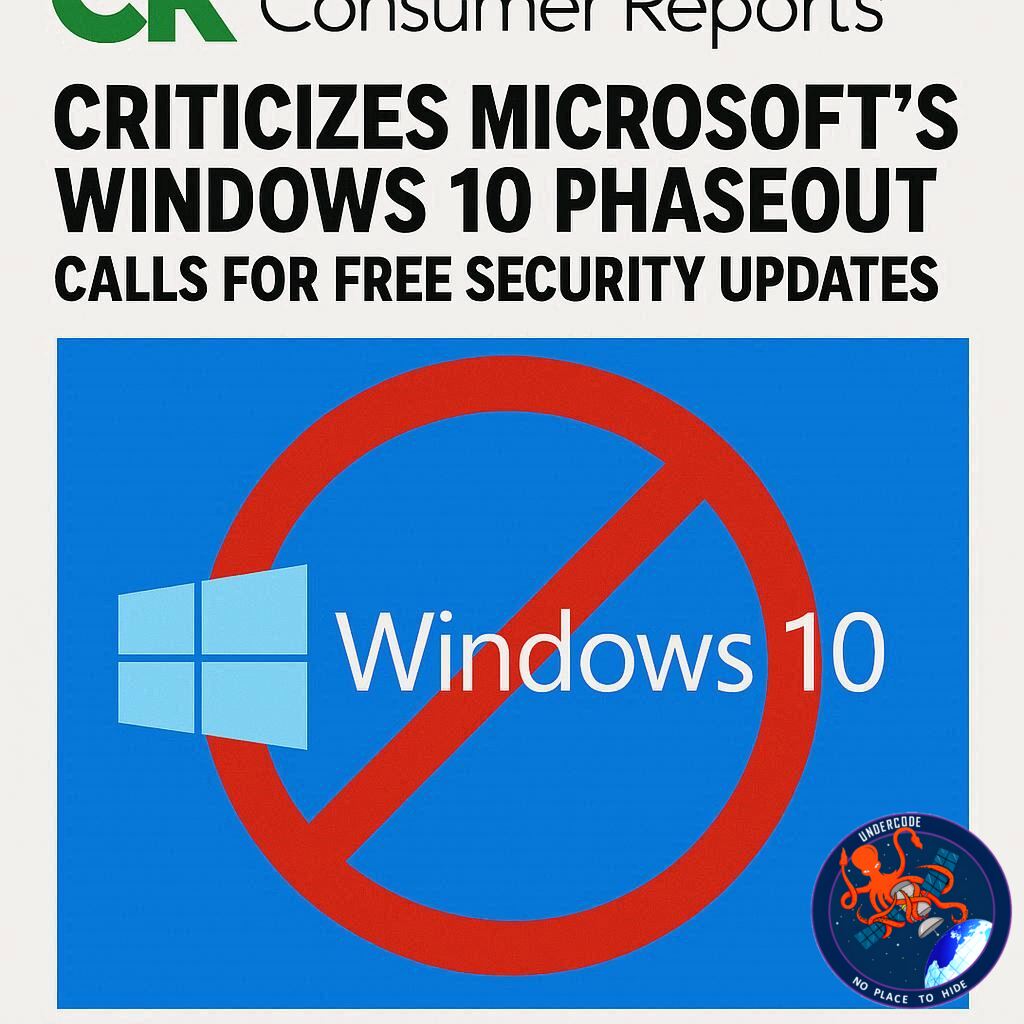
Introduction: The Windows 10 Dilemma
Microsoft’s decision to end free support for Windows 10 has sparked outrage among consumers and advocacy groups alike. With millions of PCs at risk of becoming unsupported, the move raises serious questions about cybersecurity, user rights, and corporate responsibility. Consumer Reports (CR), a trusted consumer advocacy organization, has stepped in to urge Microsoft to rethink its approach, emphasizing that the consequences extend far beyond individual inconvenience and into national security territory.
Consumer Reports’ Letter to Microsoft
Consumer Reports recently sent a detailed letter to Microsoft CEO Satya Nadella expressing deep concern over the impending end of free Windows 10 updates. The letter, authored by Stacey Higginbotham and Justin Brookman, highlights the potentially massive impact on millions of users whose PCs cannot meet Windows 11 hardware requirements. According to CR, these users face three stark choices: pay \$30 for a one-year support extension, purchase an entirely new computer, or risk running an increasingly vulnerable system.
The Broader Advocacy Movement
CR is not alone in its call for Microsoft to reconsider. The Public Interest Research Group (PIRG) and other environmental and consumer organizations, including the European Right to Repair coalition and iFixit, have long criticized the forced obsolescence of hardware that still works perfectly. They warn that up to 400 million PCs could be discarded simply because they don’t meet Windows 11 specifications, creating both economic and environmental fallout.
Consumer Data and Lifespan of Devices
The letter references a survey of over 100,000 PC owners, revealing that more than 95% of computers purchased since 2019 remain actively used. This demonstrates that users expect devices to last through typical OS transitions. By imposing strict hardware requirements, Microsoft effectively shortens the usable life of these computers, contradicting consumer expectations and prior messaging.
Cybersecurity Concerns
CR emphasizes that this is not just a consumer inconvenience—it is a national security issue. Leaving millions of PCs unprotected increases the risk of cyberattacks that can affect individuals, businesses, and infrastructure. The decision to charge for extended security updates further complicates matters, potentially leaving users financially penalized for continuing to use their existing hardware.
Criticism of Microsoft’s Strategy
Consumer Reports calls Microsoft’s strategy “hypocritical.” The company promotes Windows 11 as a cybersecurity upgrade while simultaneously exposing vast numbers of machines to greater risk. The requirement to pay for extended updates is seen as a move to monetize users rather than prioritize their safety. CR also encourages Microsoft to partner with recycling programs to responsibly handle older devices, aligning environmental and consumer interests.
What Undercode Say: Analyzing the Windows 10 Controversy
Microsoft’s handling of Windows 10’s lifecycle reflects broader tensions between corporate profit motives and consumer trust. While technological advancement is necessary, the abrupt obsolescence of devices purchased just a few years ago erodes user confidence. Windows 11’s hardware restrictions were initially justified under the guise of performance and security improvements. Yet the reality is that many PCs fully capable of running the OS are excluded, raising questions about whether these limits serve innovation or market control.
The economic implications are significant. Many households and small businesses cannot afford the sudden cost of new hardware. By imposing a \$30 annual fee for extended updates, Microsoft risks alienating long-term users who feel penalized for loyalty. This could drive users to explore alternatives, including open-source operating systems or competing platforms, which might be more flexible and cost-effective.
From a cybersecurity perspective, the policy is counterproductive. A fragmented ecosystem with millions of unsupported PCs increases vulnerability across the digital landscape. Hackers often exploit outdated systems, and as the number of unpatched machines grows, the potential for large-scale attacks escalates. National security experts have flagged this as a tangible risk.
Microsoft’s approach also has environmental repercussions. Discarding hundreds of millions of functional devices contributes to electronic waste and environmental degradation. Advocacy groups advocating repair, recycling, and extended support highlight an opportunity for Microsoft to demonstrate corporate responsibility while retaining customer loyalty.
Consumer perception is another critical angle. CR’s involvement amplifies the issue beyond tech circles, potentially shaping public opinion and media narratives. Unlike technical critiques from niche blogs, CR’s message resonates with mainstream audiences, emphasizing fairness, safety, and responsible consumption. Microsoft’s non-response suggests a calculated risk, betting that market inertia and brand loyalty will outweigh consumer backlash.
Strategically, this could be a turning point for Microsoft. If ignored, it may lose trust among a core segment of its user base. On the other hand, engaging with advocacy groups and offering extended support could strengthen brand image, portraying Microsoft as responsive and ethically conscious. Balancing innovation with accessibility remains the central challenge in managing OS transitions.
Fact Checker Results
Consumer Reports did send a letter criticizing Microsoft’s Windows 10 phase-out ✅
Millions of PCs may face security vulnerabilities if updates end ❌ (potential, but not guaranteed)
Microsoft has not officially responded beyond “nothing to share” ✅
Prediction: The Future of Windows 10 Support
Given the mounting pressure from advocacy groups and public sentiment, Microsoft may reconsider its free update policy for certain devices, at least temporarily. Partnerships with recycling programs and extended security support could emerge as compromise solutions. However, without meaningful concessions, users may increasingly explore alternative platforms, and the company’s reputation among long-term customers could suffer. The next year will likely determine whether Microsoft adapts to consumer needs or doubles down on its restrictive upgrade model.
If you want, I can also create an even more dramatic, clickbait-style title to make this article highly SEO-friendly. Do you want me to do that?
🕵️📝✔️Let’s dive deep and fact‑check.
References:
Reported By: www.zdnet.com
Extra Source Hub:
https://www.twitter.com
Wikipedia
OpenAi & Undercode AI
Image Source:
Unsplash
Undercode AI DI v2
🔐JOIN OUR CYBER WORLD [ CVE News • HackMonitor • UndercodeNews ]
📢 Follow UndercodeNews & Stay Tuned:
𝕏 formerly Twitter 🐦 | @ Threads | 🔗 Linkedin | 🦋BlueSky | 🐘Mastodon


