
Listen to this Post
 A New Digital Crisis Targets Government Systems and Millions of Online Accounts
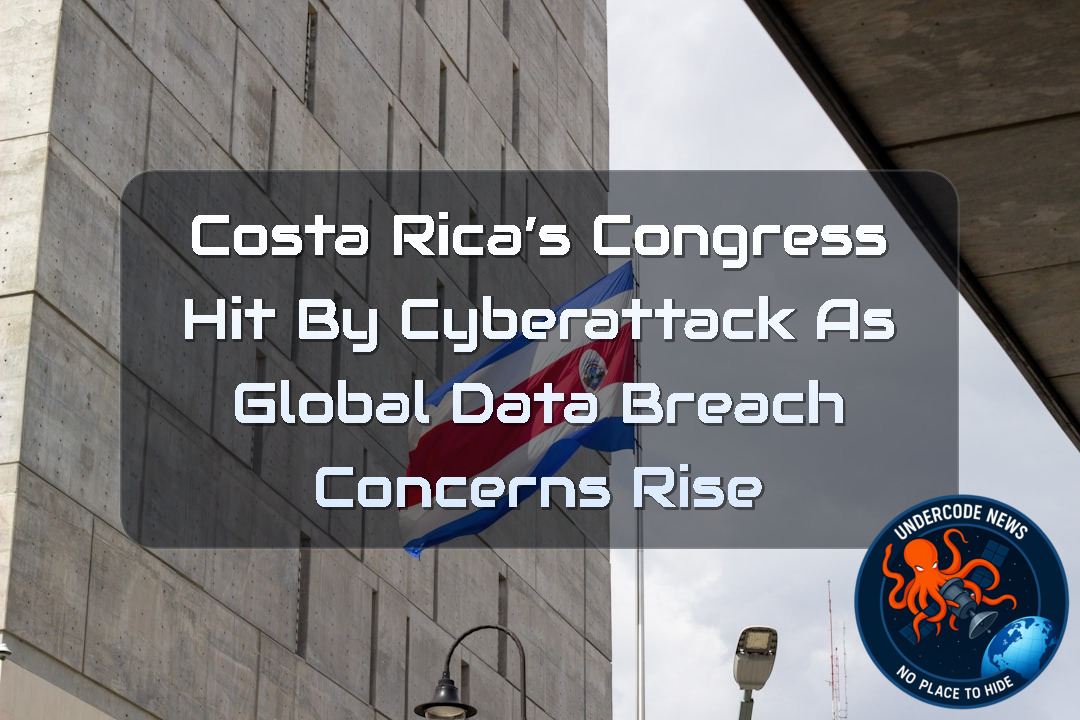
Cyberattacks against governments and large online platforms continue to expose a growing reality: no organization is immune from the expanding threat landscape. In July 2026, Costa Rica’s Legislative Assembly confirmed that its digital infrastructure had been targeted by a cyberattack, causing website disruptions during an active parliamentary session. The incident added fresh concerns about the security of government networks, while separate reports of massive data exposures involving Suno and Paidwork raised alarms over the protection of personal and financial information belonging to millions of users.
The attacks highlight two different but connected challenges facing modern society. Governments are increasingly becoming targets because their systems contain sensitive information and represent critical public services. At the same time, private platforms holding user identities, payment information, and authentication data remain attractive targets for cybercriminal groups seeking financial gain.
As organizations move deeper into digital transformation, attackers continue to search for weak points, from outdated infrastructure and vulnerable applications to compromised credentials and poor security practices.
Costa Rica Legislative Assembly Confirms Cyberattack
Government Website Disruption Raises Security Questions
Costa Rica’s Legislative Assembly confirmed that its computer systems experienced a cyberattack after users reported website outages during a parliamentary plenary session. The disruption affected access to congressional online services, creating immediate concerns about whether sensitive government systems had been compromised.
Although initial reports focused on service interruptions, government cyber incidents often require extensive investigation to determine the full impact. A website outage may represent a simple denial-of-service attack, but it can also be an early indicator of deeper network intrusion attempts.
Government institutions around the world have increasingly become targets because attackers understand that public-sector systems often operate complex networks containing decades of accumulated technology, third-party integrations, and sensitive databases.
Why Government Networks Are Becoming Prime Cyber Targets
Digital Infrastructure Has Become Part of National Security
Modern governments rely heavily on online platforms to deliver public services, communicate with citizens, manage internal operations, and store important records. This dependence creates a larger attack surface for cybercriminals and politically motivated groups.
A successful attack against a government institution can create several consequences:
Public disruption and loss of trust.
Temporary shutdown of essential digital services.
Exposure of confidential information.
Political pressure on officials responsible for cybersecurity.
Government networks require protection similar to critical infrastructure because digital systems now support many of the same functions once handled only through physical processes.
Suno and Paidwork Breach Reports Raise Massive Data Privacy Concerns
Millions of Accounts Allegedly Exposed
Separate cybersecurity reports claimed that breaches involving Suno and Paidwork may have exposed information from more than 78 million accounts. The reported data allegedly included email addresses, phone numbers, payment-related records, password hashes, and banking details.
If confirmed, such exposure would represent a significant privacy risk because stolen account information can be used for identity theft, phishing campaigns, financial fraud, and credential-stuffing attacks.
Large-scale breaches often create long-term consequences because personal data cannot simply be replaced like a password or credit card number. Once leaked, information can circulate across underground communities for years.
The Growing Danger of Credential and Financial Data Exposure
Why Password Hashes and Payment Records Matter
Many users underestimate the importance of password-related information. Even when passwords are stored as hashes rather than plain text, attackers may attempt offline cracking techniques to recover original credentials.
Cybercriminals frequently combine leaked information from multiple breaches to create detailed profiles of victims. A single exposed email address can later be connected with:
Previous password leaks.
Social engineering campaigns.
Fake customer support attacks.
Targeted phishing emails.
Financial scams.
The combination of identity data and payment information creates a dangerous situation where attackers can move beyond simple account theft into broader fraud operations.
Cybersecurity Lessons From These Incidents
Organizations Must Assume They Are Potential Targets
The Costa Rica incident and the reported Suno and Paidwork exposures demonstrate a common cybersecurity reality: attackers do not only target technology companies. Governments, entertainment platforms, financial services, and everyday applications can all become valuable targets.
Organizations should focus on several defensive priorities:
Strong identity protection.
Multi-factor authentication enforcement.
Continuous monitoring.
Regular security assessments.
Employee cybersecurity awareness.
Rapid incident response planning.
Security cannot depend on a single protective layer. Modern defense requires multiple systems working together.
The Global Cyber Threat Landscape Continues Expanding
From Hacktivism to Data Theft, Attack Methods Are Evolving
Cyberattacks today are driven by different motivations. Some groups seek political attention, while others focus purely on financial profit. Data theft has become especially attractive because stolen information can be monetized repeatedly.
Attackers may sell databases, use stolen credentials, launch ransomware operations, or conduct targeted fraud campaigns.
The increasing number of incidents shows that cybersecurity is no longer only an IT responsibility. It has become a strategic issue affecting governments, businesses, and individuals.
What Undercode Say:
A Deeper Analysis of the Cybersecurity Impact
The Costa Rica Legislative Assembly incident represents a larger trend where government institutions are becoming digital battlefields.
Government networks are attractive because they combine visibility, sensitive information, and political importance.
Even a temporary outage can create uncertainty among citizens.
Attackers understand that disruption itself can be valuable.
A successful cyberattack does not always require stealing classified documents.
Sometimes causing confusion is enough to create pressure.
The reported Suno and Paidwork data exposure shows another side of cybersecurity risk.
Personal information has become one of the most valuable digital assets.
Attackers are not only searching for passwords.
They are collecting complete identity profiles.
Email addresses, phone numbers, financial records, and authentication data can be combined into powerful attack tools.
Modern cybercrime operates like a data economy.
Information stolen today may become useful months or years later.
Organizations must understand that cybersecurity incidents rarely end when systems come back online.
The investigation, recovery, and reputation damage can continue for a long period.
Governments especially need stronger security maturity because public confidence depends on digital reliability.
Basic protections remain essential.
Strong passwords.
Multi-factor authentication.
Network segmentation.
Security monitoring.
Regular vulnerability testing.
Threat intelligence.
Incident response preparation.
Security teams should also focus on visibility.
Many attacks succeed because organizations discover intrusions too late.
Logging and monitoring systems can reveal suspicious activity before attackers cause major damage.
Linux administrators can review authentication activity with commands such as:
sudo journalctl -u ssh
System administrators can inspect active connections using:
ss -tulnp
Security teams can search suspicious processes with:
ps aux | grep suspicious
File integrity monitoring can help detect unexpected changes:
find /etc -type f -mtime -1
Network analysis can also provide valuable information:
tcpdump -i eth0
Organizations should treat cybersecurity as an ongoing process, not a one-time project.
The future threat environment will likely include more automated attacks powered by artificial intelligence.
Attackers will continue improving phishing campaigns, vulnerability exploitation, and data harvesting methods.
Defenders must respond with equally advanced monitoring, automation, and security intelligence.
The biggest lesson from these incidents is simple: digital trust must be protected before an attack happens, not after damage is already done.
✅ Costa Rica’s Legislative Assembly reported a cyberattack affecting its systems and causing website disruptions during a parliamentary session.
✅ Reports claimed Suno and Paidwork-related breaches may involve tens of millions of accounts and sensitive information.
❌ The full scope, attacker identity, and complete dataset exposure have not been independently confirmed publicly.
Prediction
(+1) Future Cybersecurity Investment Will Increase
Governments will likely increase cybersecurity budgets after repeated attacks against public institutions.
More organizations will adopt stronger authentication systems and continuous monitoring.
Data protection regulations may become stricter as large-scale breaches continue.
Cybercriminal groups will continue targeting organizations with valuable personal information.
Identity theft and credential-based attacks are expected to remain major threats.
Smaller organizations may struggle to maintain advanced security defenses without additional resources.
Deep Analysis: Security Investigation Commands and Defensive Monitoring
Linux Commands for Detecting Suspicious Activity
Cybersecurity teams can use basic Linux tools to investigate possible compromises.
Check recent login activity
last
This command helps identify unusual access attempts.
Review failed authentication attempts
sudo grep "Failed password" /var/log/auth.log
Monitor running processes
top
or:
htop
Identify open network services
sudo netstat -tulpn
Search modified files
find / -type f -mtime -2
Review firewall status
sudo iptables -L
Analyze suspicious network traffic
sudo tcpdump -i any
These commands do not replace professional security platforms, but they provide administrators with visibility into possible malicious behavior.
The most effective cybersecurity strategy combines technology, skilled analysts, continuous monitoring, and preparation before incidents occur.
▶️ Related Video (84% Match):
🕵️📝Let’s dive deep and fact‑check.
🎓 Live Courses & Certifications:
Join Undercode Academy for Verified Certifications
🚀 Request a Custom Project:
Secure, high-velocity infrastructure and disruptive technological engineering. Contact our engineering team for high-tier development and proprietary systems:
[email protected]
💎 Smart Architecture | 🛡️ Secure by Design | ⭐ Trusted by Thousands
References:
Reported By: x.com
Extra Source Hub (Possible Sources for article):
https://www.instagram.com
Wikipedia
OpenAi & Undercode AI
Image Source:
Unsplash
Undercode AI DI v2
🔐JOIN OUR CYBER WORLD [ CVE News • HackMonitor • UndercodeNews ]
📢 Follow UndercodeNews & Stay Tuned:
𝕏 formerly Twitter 🐦 | @ Threads | 🔗 Linkedin | 🦋BlueSky | 🐘Mastodon | 📺Youtube


