
Listen to this Post
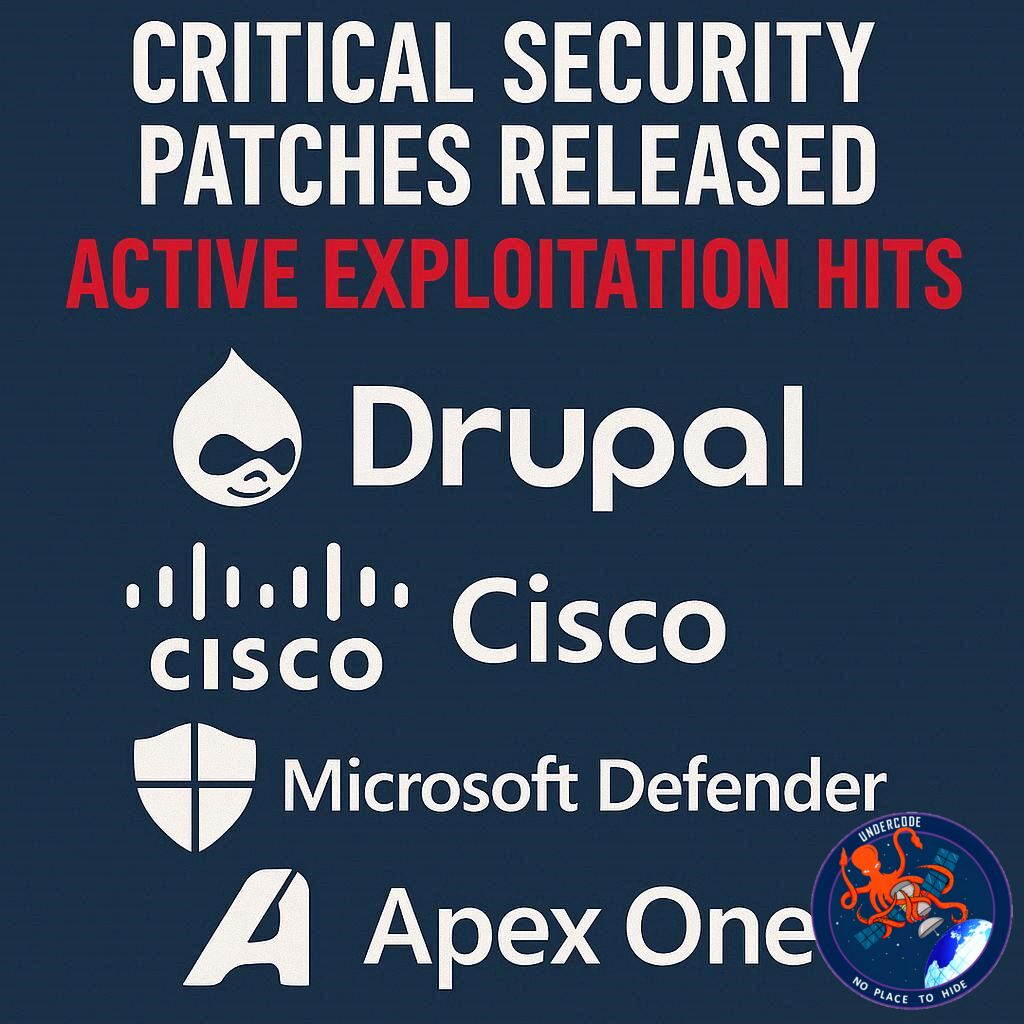
The cybersecurity landscape experienced another chaotic week after emergency security patches were released for multiple widely used enterprise platforms, including Drupal, Cisco products, Microsoft Defender, Trend Micro Apex One, and several Chromium-based technologies. Reports circulating through cybersecurity monitoring channels indicate that some of these vulnerabilities were already being actively exploited in real-world attacks before patches became available.
The situation became especially alarming after disclosures surrounding a severe SQL injection vulnerability affecting Drupal installations. Security researchers warned that attackers could remotely execute malicious database queries, potentially allowing unauthorized access to sensitive information, privilege escalation, or complete compromise of vulnerable web servers. Organizations running outdated Drupal instances were immediately urged to deploy updates before automated exploit campaigns escalated further.
At the same time, administrators managing enterprise security infrastructure were hit with another major concern involving Trend Micro Apex One. According to circulating reports, a zero-day vulnerability targeting Apex One systems had already entered active exploitation phases. Threat actors allegedly leveraged the flaw to bypass protections and infiltrate corporate networks before defenders had enough time to react. Because Apex One is commonly deployed across enterprise environments for endpoint detection and response, the potential impact radius is substantial.
The emergency patch cycle did not stop there. Cisco products also received urgent security fixes tied to active exploitation risks. Although technical details remained partially limited during the initial disclosure phase, analysts suggested attackers were targeting networking appliances and remote management infrastructure to gain persistence within enterprise environments. Such attacks can become particularly dangerous because compromised network devices often operate silently in the background without immediate detection.
Meanwhile, Microsoft Defender updates addressed multiple vulnerabilities linked to malware evasion techniques and possible privilege escalation paths. Cybercriminal groups continue focusing heavily on security software bypasses because disabling or manipulating endpoint defenses dramatically increases the success rate of ransomware operations and credential theft campaigns. Defender remains one of the most deployed security solutions globally, making any exploitable weakness highly valuable in underground markets.
The Chromium ecosystem was also affected by urgent fixes. Since Chromium powers numerous modern browsers and enterprise applications, vulnerabilities inside its rendering engine or sandbox architecture can expose millions of systems to remote code execution attacks. Browser-based exploitation continues to rise because users interact with web content constantly, giving attackers a broad and highly scalable attack surface.
Another major story emerging from cybersecurity monitoring feeds involved alleged ransomware activity targeting Baker Distributing Company. Reports tied the incident to the notorious shinyhunters threat group, which claimed responsibility for compromising more than 260,000 Salesforce records. The attackers allegedly stole personally identifiable information, internal corporate documents, and operational data before issuing a payment demand with a deadline of May 27, 2026.
If verified, the Baker Distributing breach would highlight an increasingly dangerous trend where attackers move beyond traditional network infiltration and focus directly on cloud-connected business platforms like Salesforce. Cloud ecosystems frequently contain customer databases, sales pipelines, employee communications, and financial records, making them attractive targets for extortion-focused cybercriminals.
Security analysts monitoring dark web activity noted that modern ransomware operations increasingly combine data theft, public shaming, and deadline-driven extortion tactics. Threat actors no longer rely solely on encrypting systems. Instead, they weaponize reputational damage, regulatory pressure, and customer distrust to force faster payments from victims.
The growing number of simultaneous emergency patches demonstrates how fragmented and difficult modern cybersecurity defense has become. Organizations are now forced to manage vulnerabilities across operating systems, browsers, endpoint protection tools, networking devices, cloud infrastructure, and web applications all at once. Even well-funded security teams struggle to maintain rapid patch cycles without operational disruption.
Attackers are also becoming faster. Exploit developers frequently reverse-engineer vendor patches within hours after release, creating weaponized exploits before many organizations complete their update process. This creates a dangerous “patch gap” period where systems remain vulnerable despite fixes already being publicly available.
The rise of AI-assisted reconnaissance and automated vulnerability scanning further accelerates exploitation timelines. Cybercriminal groups can now identify exposed targets at internet scale, prioritize high-value systems, and launch automated attack chains in record time. As a result, delays of even a few days in patch deployment may significantly increase breach risks.
For enterprises, the message is becoming increasingly clear: patch management can no longer operate as a slow administrative process. It has become a frontline security function directly tied to business survival.
What Undercode Says:
The Real Danger Behind Simultaneous Patch Releases
When multiple major vendors suddenly release emergency updates in the same news cycle, it usually signals something deeper happening behind the scenes. Attackers are likely sharing exploit techniques, trading zero-days privately, or racing to compromise systems before defensive teams can respond.
Drupal Remains a Favorite Target
Drupal vulnerabilities continue appearing in high-profile attack campaigns because many organizations delay updating their web infrastructure. Government portals, universities, healthcare systems, and enterprise websites frequently rely on legacy Drupal deployments that remain exposed for months or years.
SQL Injection Never Truly Disappeared
Despite being one of the oldest web attack methods, SQL injection still works surprisingly well against poorly maintained systems. The reason is simple: complex enterprise environments often prioritize uptime over secure code modernization.
Endpoint Security Products Are Becoming Primary Targets
The Apex One zero-day situation reflects a disturbing industry trend. Attackers are no longer afraid of security tools. They actively target them first. Compromising endpoint security software gives attackers visibility, persistence, and the ability to disable monitoring mechanisms before ransomware deployment.
Cisco Infrastructure Exploitation Is Strategically Valuable
Compromising networking infrastructure provides attackers with enormous operational advantages. Routers, VPN appliances, and network controllers frequently process authentication traffic, encrypted communications, and internal routing data. A single compromised appliance can expose an entire organization.
Browser Exploitation Is Quietly Exploding
Chromium vulnerabilities are especially dangerous because browser-based attacks require minimal user interaction. A malicious advertisement, poisoned search result, or compromised website may become enough to trigger exploitation chains against vulnerable browsers.
Salesforce Data Is the New Goldmine
The alleged shinyhunters attack against Baker Distributing shows why cloud business platforms are now premium targets. Salesforce environments often centralize sensitive customer data, invoices, contracts, and sales intelligence inside one ecosystem.
Double Extortion Is Now Standard
Modern ransomware groups rarely encrypt first anymore. They steal data before launching operational disruption. This strategy guarantees leverage even if victims restore systems from backups.
AI Is Accelerating Reconnaissance
Threat actors increasingly use automation and AI-enhanced reconnaissance tools to scan internet-facing systems faster than human analysts can react. Attackers can identify vulnerable software versions, exposed admin panels, and weak authentication mechanisms within minutes.
Patch Fatigue Is Becoming a Serious Enterprise Problem
Security teams are drowning in vulnerability alerts. Large organizations may receive hundreds of urgent advisories every month, making prioritization extremely difficult.
Legacy Infrastructure Is the Weakest Link
Many organizations still operate outdated internal systems because replacing them is expensive and operationally risky. Attackers know this and intentionally target industries with slow modernization cycles.
The Human Factor Still Matters
Even advanced vulnerabilities often succeed because organizations delay patching, ignore alerts, or underestimate threat severity. Technology alone cannot solve poor operational security culture.
Supply Chain Risks Continue Expanding
Enterprise environments today depend on interconnected vendors, SaaS platforms, APIs, and cloud integrations. A vulnerability in one product can create cascading security consequences across entire ecosystems.
Incident Response Windows Are Shrinking
Companies once had weeks to respond to disclosed vulnerabilities. Today, exploitation can begin within hours after public disclosure.
Threat Actors Are Becoming More Organized
Cybercriminal operations increasingly resemble legitimate businesses with dedicated developers, negotiators, infrastructure managers, and affiliate programs.
Deep analysis :
Detect outdated Drupal installations
droopescan scan drupal -u https://target-site.com
Check exposed Cisco services
nmap -sV --script vuln target-ip
Identify Chromium version on Linux
google-chrome –version
Verify Microsoft Defender status
Get-MpComputerStatus
Scan for vulnerable Trend Micro services
netstat -ano | findstr 4343
Search for suspicious outbound connections
tcpdump -i eth0 port 443
Enumerate exposed web applications
nikto -h https://target-site.com
Monitor logs for exploitation attempts
tail -f /var/log/auth.log
Detect SQL injection patterns
grep -Ri "UNION SELECT" /var/log/apache2/
Run vulnerability assessment
nessuscli update
🔍 Fact Checker Results
✅ Emergency patches for multiple enterprise platforms were publicly discussed across cybersecurity monitoring channels on May 23, 2026.
✅ Reports involving active exploitation of vulnerabilities in Drupal and Trend Micro Apex One have circulated among threat intelligence communities.
❌ The alleged Baker Distributing breach attributed to shinyhunters remains an unverified criminal claim until officially confirmed by the company or independent investigators.
📊 Prediction
🔮 Attackers will increasingly focus on enterprise security products themselves rather than only targeting end-user systems.
🔮 Cloud business platforms such as Salesforce, ServiceNow, and Microsoft 365 will become primary extortion targets throughout 2026.
🔮 Organizations with delayed patch cycles will face rising risks from AI-assisted automated exploitation campaigns capable of compromising vulnerable systems within hours after disclosure.
▶️ Related Video (78% Match):
🕵️📝Let’s dive deep and fact‑check.
References:
Reported By: x.com
Extra Source Hub (Possible Sources for article):
https://www.reddit.com
Wikipedia
OpenAi & Undercode AI
Image Source:
Unsplash
Undercode AI DI v2
Bing
🔐JOIN OUR CYBER WORLD [ CVE News • HackMonitor • UndercodeNews ]
📢 Follow UndercodeNews & Stay Tuned:
𝕏 formerly Twitter 🐦 | @ Threads | 🔗 Linkedin | 🦋BlueSky | 🐘Mastodon | 📺Youtube


