
Listen to this Post
Introduction: A Silent Supply-Chain Threat Inside Developers’ Editors
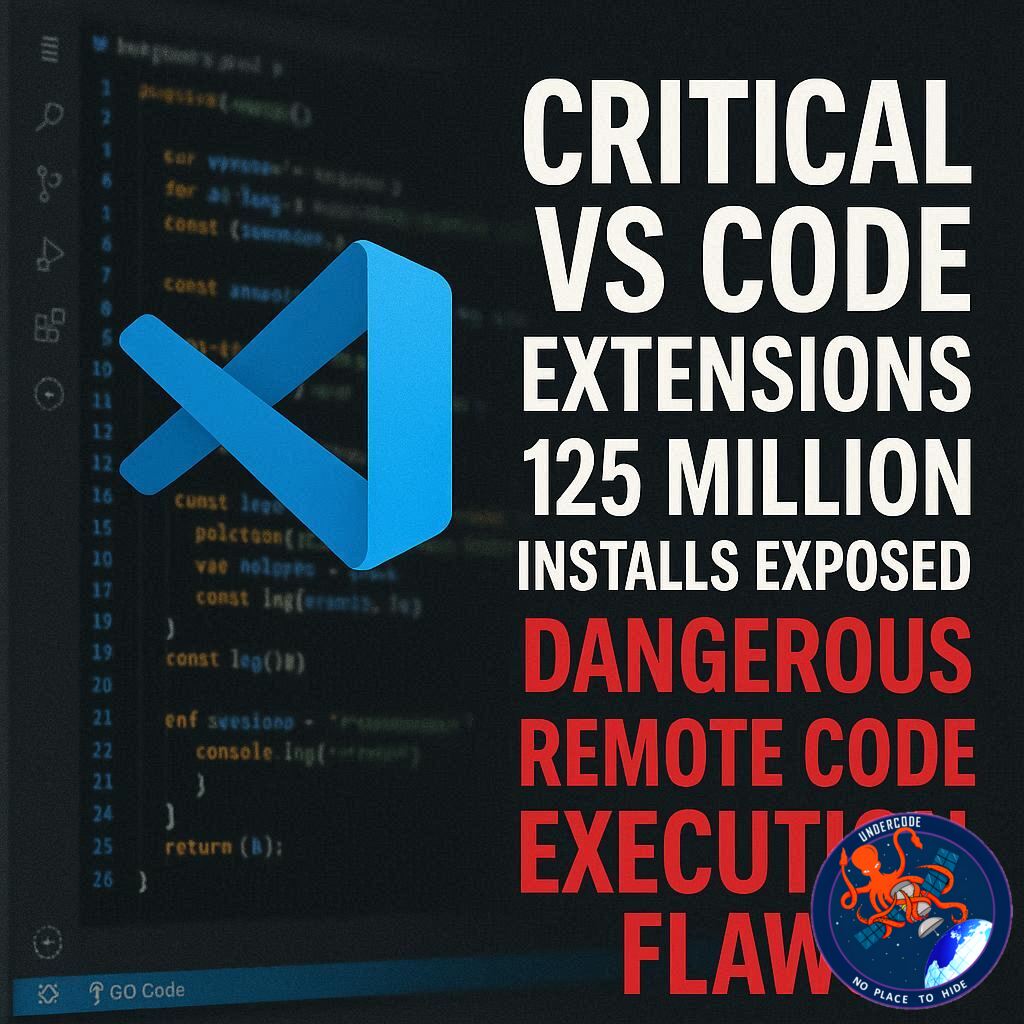
Visual Studio Code has become the backbone of modern software development, trusted by millions of developers and enterprises worldwide. That trust is now under pressure after new findings revealed that several widely used VS Code extensions contained critical security vulnerabilities. With a combined install base exceeding 125 million, these flaws transform everyday development tools into potential attack vectors, raising urgent questions about extension security, review processes, and developer awareness—especially within an ecosystem closely associated with Microsoft.
the Original Report: Critical Flaws Hidden in Plain Sight
Security researchers disclosed severe vulnerabilities affecting four popular VS Code extensions, including Live Server and Markdown Preview Enhanced, tools commonly used for local web testing and documentation previews. According to the report, these flaws could be exploited to achieve remote code execution, allowing attackers to run arbitrary commands on a victim’s machine without explicit user consent. In practical terms, this means a developer could open a project or preview content and unknowingly trigger malicious payloads embedded through manipulated extension behavior. The vulnerabilities also open the door to data theft, enabling attackers to exfiltrate sensitive information such as source code, credentials, environment variables, and internal project files. What makes the discovery particularly alarming is the sheer scale of exposure: more than 125 million installations across the affected extensions. The report highlights weaknesses in how extensions handle untrusted input, local servers, and preview rendering, turning convenience features into security liabilities. Although patches and mitigations are expected, the incident underscores how extension ecosystems can become high-impact supply-chain targets, especially when developers implicitly trust tools installed directly inside their code editors.
What Undercode Say: The Extension Ecosystem as a Soft Underbelly
The VS Code extension marketplace has grown faster than its security governance, creating a classic imbalance between innovation and protection. Extensions often operate with broad permissions, yet most developers rarely audit what those tools can access once installed.
What Undercode Say: Why Remote Code Execution Changes Everything
Remote code execution is not just another vulnerability class—it is a full system compromise. Once achieved, attackers can pivot from a developer workstation into CI/CD pipelines, cloud credentials, and even production environments, escalating a single extension flaw into an enterprise-level breach.
What Undercode Say: The Illusion of Safety in “Popular” Tools
Popularity is frequently mistaken for security. Extensions with tens of millions of installs are often assumed to be safe by default, but attackers increasingly target exactly these tools because they offer the widest blast radius with minimal effort.
What Undercode Say: Supply-Chain Attacks Are Shifting Left
Historically, supply-chain attacks focused on libraries and package managers. This incident shows a clear shift toward developer tooling itself. Editors, plugins, and preview servers are now prime targets because they sit upstream of every application build.
What Undercode Say: Marketplace Review Is Not a Security Audit
Automated reviews and basic checks in extension marketplaces are insufficient against logic flaws and abuse-prone features. Without continuous security reviews and stricter permission models, malicious or vulnerable code can persist for years unnoticed.
What Undercode Say: Developers as the New Attack Surface
Attackers no longer need to breach hardened production systems if they can compromise developers instead. A single infected workstation can leak proprietary code, signing keys, or infrastructure secrets, making developers the weakest link by default.
What Undercode Say: Lessons for Organizations and Teams
Organizations should treat editor extensions as first-class software dependencies. This means maintaining allowlists, monitoring extension updates, and educating developers about the risks of installing tools purely based on convenience or popularity.
What Undercode Say: The Broader Trust Problem
Incidents like this erode trust not just in individual extensions, but in the wider ecosystem surrounding VS Code and its marketplace. Long-term confidence will depend on stronger isolation, permission transparency, and faster coordinated disclosures between researchers and vendors.
Fact Checker Results 🔍
✅ The reported vulnerabilities affect multiple widely used VS Code extensions with a combined install base exceeding 125 million.
✅ The primary risks include remote code execution and potential data exfiltration from developer systems.
❌ There is no evidence that all users were actively exploited; the findings highlight exposure, not confirmed mass compromise.
Prediction 📊
Over the next year, VS Code and its ecosystem will likely face stricter extension permission models, increased security audits, and possibly regulatory scrutiny as developer tools become recognized as high-value supply-chain targets. Incidents like this may also accelerate the adoption of zero-trust principles inside development environments, forcing both vendors and users to rethink how much trust they place in “just another extension.”
🕵️📝✔️Let’s dive deep and fact‑check.
References:
Reported By: x.com
Extra Source Hub (Possible Sources for article):
https://stackoverflow.com
Wikipedia
OpenAi & Undercode AI
Image Source:
Unsplash
Undercode AI DI v2
Bing
🔐JOIN OUR CYBER WORLD [ CVE News • HackMonitor • UndercodeNews ]
📢 Follow UndercodeNews & Stay Tuned:
𝕏 formerly Twitter 🐦 | @ Threads | 🔗 Linkedin | 🦋BlueSky | 🐘Mastodon


