
Listen to this Post
Introduction
Artificial intelligence is becoming deeply embedded inside modern enterprises, powering everything from software development and legal analysis to customer service and internal research. As AI adoption accelerates, cybersecurity teams face a growing challenge: maintaining visibility and governance over AI systems with the same rigor applied to cloud infrastructure, endpoints, and identity environments.
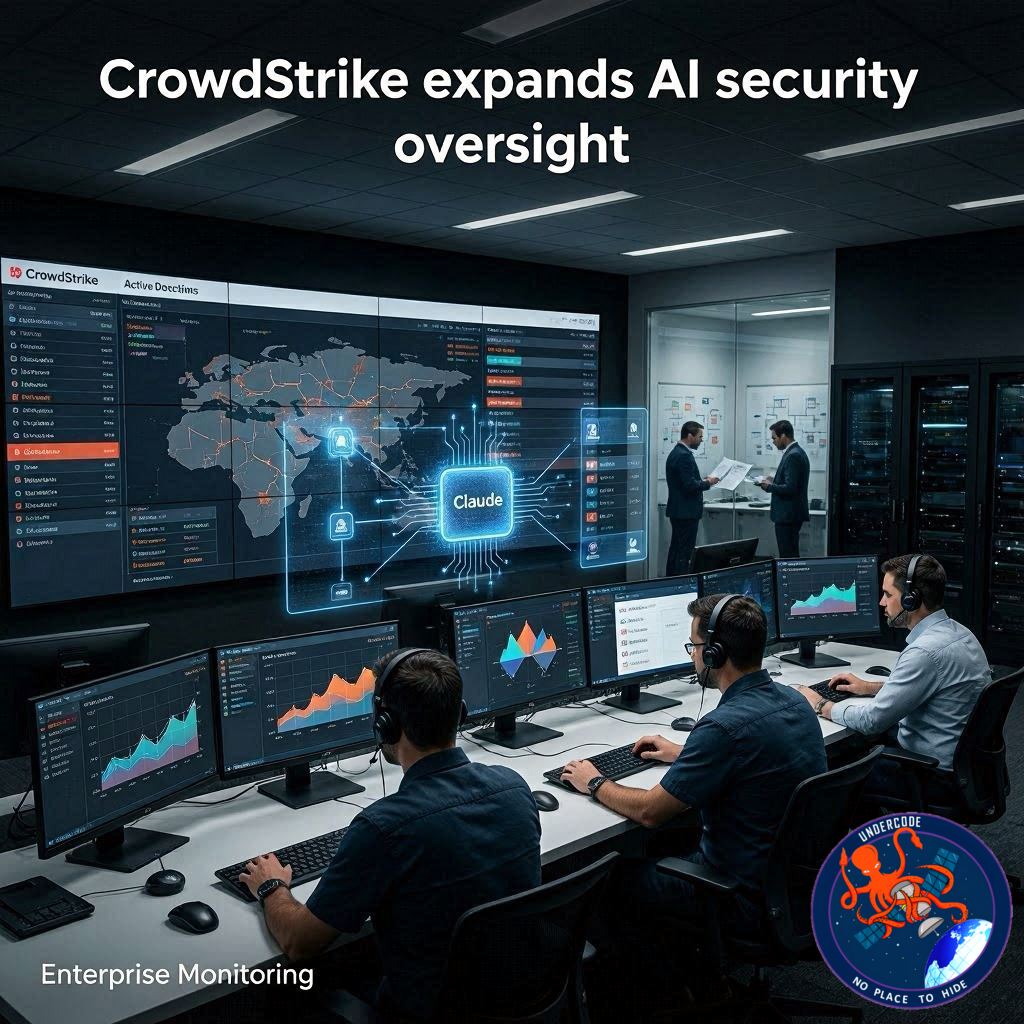
To address that concern, CrowdStrike announced a new integration with Claude’s Compliance API, designed to give organizations centralized visibility into Claude Enterprise and Claude Platform activity through the Falcon platform. The move reflects a larger trend in enterprise cybersecurity where AI systems are no longer viewed as isolated productivity tools, but as operational assets that require monitoring, detection capabilities, and policy enforcement.
CrowdStrike Brings Claude Activity Into Falcon Security Operations
CrowdStrike revealed a new integration that connects Claude Enterprise and Claude Platform activity directly into the CrowdStrike Falcon ecosystem. The announcement highlights a strategic effort to help organizations monitor AI usage with the same security framework already applied to endpoints, cloud workloads, identities, and sensitive enterprise data.
As companies increasingly adopt AI for production environments, organizations are using Claude for tasks such as code generation, customer communications, legal document analysis, and internal knowledge discovery. While these capabilities improve efficiency, they also introduce potential blind spots within enterprise security operations.
Without dedicated monitoring for AI systems, security teams may miss emerging risks tied to user behavior, unusual access patterns, or sensitive information movement occurring through AI workflows.
CrowdStrike aims to close that visibility gap by integrating Claude activity directly into Falcon® Next-Gen SIEM and Charlotte Agentic SOAR. This allows AI-related telemetry to become part of a larger operational security picture instead of existing separately from other cybersecurity signals.
Daniel Bernard, Chief Business Officer at CrowdStrike, emphasized that AI applications should receive the same protection standards as traditional enterprise systems. According to Bernard, organizations need AI activity visible within their operational environment alongside endpoint, identity, and cloud signals so security teams can apply established cybersecurity processes consistently.
The integration enables organizations to extend visibility into Claude Enterprise activity logs, Claude Platform usage logs, and conversation-related content. Security analysts can then correlate AI interactions with broader environmental telemetry.
One major advantage involves contextual threat detection. Security teams can compare unusual Claude usage patterns against identity anomalies, suspicious authentication behavior, or abnormal data movement events. Individually, those signals may appear harmless. Combined, they could reveal indicators of insider threats, compromised accounts, or misuse of enterprise AI systems.
CrowdStrike also emphasizes automation through Charlotte Agentic SOAR capabilities. Organizations can trigger automated workflows tied to AI activity alerts, accelerating investigations and reducing reliance on manual response processes.
Another component involves governance and policy enforcement. Falcon AI Detection and Response (AIDR) together with Falcon Shield provide mechanisms for organizations to define AI security policies and automate responses when predefined thresholds or behavioral concerns appear.
The broader goal is to integrate AI usage into existing cybersecurity operations rather than creating isolated monitoring systems that security teams must manage separately.
CrowdStrike positions this development as part of its larger mission to secure critical enterprise risk areas through cloud-native security architecture powered by telemetry, threat intelligence, behavioral analytics, and artificial intelligence.
The Falcon platform itself is designed around lightweight cloud-native deployment and centralized protection across enterprise infrastructure. By extending those capabilities toward enterprise AI visibility, CrowdStrike is signaling that AI governance is becoming a core cybersecurity discipline rather than an optional compliance consideration.
The announcement also reinforces a growing industry shift: enterprise AI security is moving from prevention-focused strategies toward continuous monitoring, observability, and automated response.
Organizations deploying AI at scale increasingly need security controls capable of understanding not only infrastructure threats but also behavioral risks introduced by AI adoption itself.
What Undercode Say:
This announcement reflects a broader transformation happening inside enterprise cybersecurity. AI security is evolving into its own operational category.
For years, security teams focused primarily on endpoints, identity management, cloud security, and network visibility. Enterprise AI introduces a new operational layer that behaves differently from traditional software systems.
AI tools process language, generate code, summarize legal materials, analyze customer interactions, and often gain access to highly sensitive information. That creates an entirely new telemetry surface.
The CrowdStrike and Claude integration demonstrates a reality many organizations are now confronting: productivity gains from AI create governance obligations.
The biggest challenge is not merely protecting AI infrastructure itself. The challenge is understanding how employees use AI systems inside production environments.
Security blind spots often emerge during rapid technology adoption cycles. Organizations rush deployment because productivity improvements are immediate, while governance frameworks develop later.
This creates operational asymmetry.
Attackers only need one overlooked pathway.
Security teams need comprehensive visibility.
Bringing Claude telemetry into Falcon SIEM capabilities represents movement toward unified operational awareness rather than fragmented monitoring.
Correlation matters.
An unusual Claude interaction by itself may not signal compromise.
An unusual Claude interaction combined with abnormal credential activity and unexpected data movement becomes significantly more important.
That contextual intelligence reduces alert fatigue while improving detection quality.
Automation also matters.
Large enterprises generate enormous volumes of security telemetry. Human analysts cannot manually investigate every anomaly.
Machine-speed response becomes increasingly necessary as AI adoption expands.
Another strategic implication involves compliance.
Regulators globally are paying closer attention to AI governance, auditability, and enterprise accountability.
Organizations that establish AI observability early may gain long-term operational advantages compared to businesses treating AI oversight as a future problem.
There is also competitive positioning involved.
Cybersecurity vendors increasingly recognize that enterprise customers want consolidated platforms instead of isolated security tools.
Integrating AI telemetry into existing security ecosystems strengthens vendor value while reducing complexity for customers.
The timing is notable.
Enterprise AI adoption is accelerating faster than many governance models can adapt.
Security vendors that successfully integrate AI observability into existing operational workflows could define the next phase of enterprise cyber defense.
AI security is no longer theoretical planning.
It is becoming infrastructure.
And infrastructure always requires visibility.
Fact Checker Results
✅ CrowdStrike announced an integration bringing Claude activity into the Falcon platform through Claude’s Compliance API.
✅ The integration focuses on centralized visibility, AI monitoring, detection workflows, and governance capabilities.
✅ The announcement aligns with a broader enterprise cybersecurity trend where AI systems increasingly receive security oversight comparable to cloud and endpoint infrastructure.
Prediction
🔮 Enterprise cybersecurity platforms will increasingly evolve toward unified AI governance capabilities rather than standalone AI monitoring products.
🔮 Security vendors will prioritize behavioral analytics for AI usage patterns as organizations deploy generative AI deeper into critical business operations.
🔮 Within the next several years, AI telemetry monitoring may become a standard enterprise security requirement alongside endpoint detection and cloud security observability.
🕵️📝Let’s dive deep and fact‑check.
References:
Reported By: www.crowdstrike.com
Extra Source Hub (Possible Sources for article):
https://stackoverflow.com
Wikipedia
OpenAi & Undercode AI
Image Source:
Unsplash
Undercode AI DI v2
Bing
🔐JOIN OUR CYBER WORLD [ CVE News • HackMonitor • UndercodeNews ]
📢 Follow UndercodeNews & Stay Tuned:
𝕏 formerly Twitter 🐦 | @ Threads | 🔗 Linkedin | 🦋BlueSky | 🐘Mastodon | 📺Youtube


