
Listen to this Post
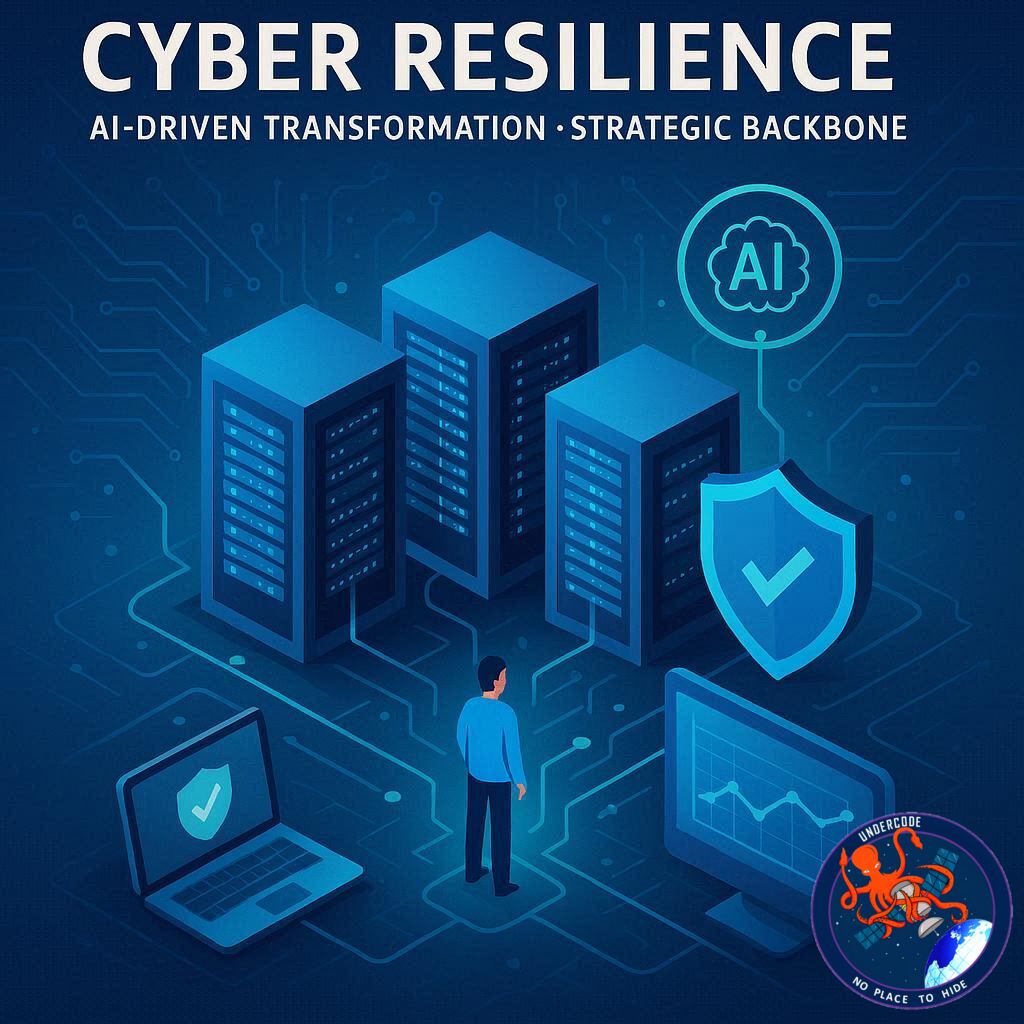
Introduction: The Silent Battle Behind Digital Innovation
The digital world is evolving at a pace that feels almost relentless. Organizations are no longer simply adapting to change, they are racing to stay relevant in an environment shaped by artificial intelligence, automation, and massive data flows. Yet beneath this rapid innovation lies a critical challenge: how to protect what matters most. Data centers, once seen as static infrastructure, have become the nerve centers of modern business. Their resilience against cyber threats now determines not just security, but survival.
the Original Rising Pressure in a Hyper-Digital Era
The modern technological landscape is experiencing one of its fastest transformations in history. Organizations across industries are under intense pressure to accelerate the adoption of artificial intelligence and deploy cutting-edge technologies that promise competitive advantage. However, this rapid innovation comes with a growing set of risks, particularly in the realm of cybersecurity. Businesses must now balance speed with caution, ensuring that their systems remain protected while continuing to evolve.
At the core of this challenge lies the modern data center, which serves as the foundation for digital operations. These environments handle vast amounts of sensitive and mission-critical data, making them prime targets for cyberattacks. As organizations push forward with digital transformation initiatives, the need for a robust cybersecurity framework becomes more urgent than ever. Cyber resilience is no longer optional; it is a necessity.
Cyber resilience goes beyond traditional security measures. It encompasses the ability to anticipate, withstand, recover from, and adapt to cyber incidents. This means organizations must not only defend against threats but also ensure continuity of operations in the face of disruptions. Downtime, data breaches, and system failures can have devastating consequences, both financially and reputationally.
The article emphasizes that a strong cybersecurity posture is the cornerstone of innovation. Without it, organizations cannot confidently pursue ambitious technological goals. Companies must invest in advanced security solutions, adopt proactive monitoring strategies, and implement robust recovery plans. These measures enable them to maintain operational stability even under attack.
Furthermore, the increasing complexity of IT environments adds another layer of difficulty. Hybrid infrastructures, cloud integration, and distributed systems create more entry points for potential threats. As a result, security strategies must evolve to address these complexities. Organizations must adopt a holistic approach that integrates security into every layer of their operations.
In essence, the article highlights a critical truth: innovation and security must go hand in hand. The faster companies move toward digital transformation, the stronger their cyber resilience must be. Only by building a solid foundation of security can they unlock the full potential of emerging technologies while safeguarding their future.
The Expanding Role of Data Centers in Digital Transformation
Data centers are no longer passive storage facilities. They have evolved into dynamic ecosystems that power everything from AI models to real-time analytics. Their importance has grown exponentially as businesses rely more heavily on digital infrastructure. This shift has made them central to both innovation and risk.
The Escalation of Cyber Threats in Modern Infrastructure
As technology advances, so do the tactics of cybercriminals. Threats are becoming more sophisticated, targeting vulnerabilities in complex systems. Ransomware attacks, data breaches, and supply chain compromises are now common occurrences. This escalation forces organizations to rethink their approach to security.
The Concept of Cyber Resilience Beyond Traditional Security
Traditional cybersecurity focuses on prevention, but resilience introduces a broader perspective. It involves preparation, response, and recovery. Organizations must assume that breaches will occur and design systems capable of minimizing impact and restoring operations quickly.
The Balance Between Innovation and Risk Management
Innovation often requires taking risks, but those risks must be managed carefully. Companies cannot afford to slow down their digital initiatives, yet they must ensure that security measures keep pace. This balance is essential for sustainable growth.
The Importance of Proactive Security Strategies
Reactive security is no longer sufficient in today’s threat landscape. Organizations must adopt proactive strategies that include continuous monitoring, threat intelligence, and predictive analytics. These tools help identify potential vulnerabilities before they can be exploited.
The Growing Complexity of Hybrid and Cloud Environments
Modern IT infrastructures are increasingly distributed. Hybrid and multi-cloud environments offer flexibility but also introduce complexity. Each layer adds potential نقاط ضعف that attackers can exploit, making comprehensive security frameworks essential.
The Financial and Reputational Impact of Cyber Incidents
Cyberattacks can have far-reaching consequences. Beyond immediate financial losses, they can damage brand reputation and erode customer trust. Recovery often requires significant resources, making prevention and resilience critical investments.
The Role of Leadership in Cyber Resilience
Cyber resilience is not just a technical issue; it is a strategic priority. Leadership teams must prioritize security and allocate resources accordingly. A strong culture of cybersecurity awareness is essential across all مستويات of an organization.
The Integration of AI in Cybersecurity دفاعات
Artificial intelligence is becoming a key tool in cybersecurity. It enables faster detection of anomalies and more efficient response to threats. However, it also introduces new risks, as attackers can leverage AI for more advanced attacks.
The Future of Secure Digital Transformation
The path forward requires a unified approach that combines innovation with resilience. Organizations must continuously adapt their strategies to keep up with evolving threats while maintaining their competitive edge.
What Undercode Say:
The conversation around cyber resilience often sounds like a technical checklist, but the reality is far more strategic and deeply human. Organizations are not just protecting systems; they are protecting trust. In a world where data is currency, a single breach can dismantle years of credibility. That alone reshapes how businesses must think about infrastructure.
The original discussion highlights speed as a defining pressure, and that is accurate. But speed without architectural discipline creates fragility. Many companies rush into AI adoption without rethinking the foundational layers of their data centers. This creates an illusion of innovation while quietly increasing systemic risk. Real transformation requires rebuilding the core, not just layering new tools on top.
Another overlooked dimension is operational psychology. Cyber resilience is not only about systems recovering, it is about teams responding effectively under stress. Incident response plans often exist on paper but fail in real-world execution because organizations underestimate human factors. Training, simulation, and decision-making clarity become just as important as firewalls and encryption.
There is also a growing asymmetry between attackers and defenders. Attackers need to find one weakness, while defenders must secure everything. This imbalance makes resilience more practical than pure prevention. Accepting that breaches will happen is not pessimistic; it is realistic. The competitive advantage lies in how quickly and intelligently an organization can recover.
The role of AI introduces a paradox. While it strengthens defense capabilities, it also accelerates the threat landscape. Automated attacks, deepfake-based intrusions, and adaptive malware are becoming more common. This creates a technological arms race where static defenses quickly become obsolete. Continuous adaptation is no longer optional, it is survival.
Cloud and hybrid infrastructures further complicate governance. Many organizations lose visibility across distributed systems, creating blind spots that attackers exploit. True resilience requires unified visibility, something that many enterprises still struggle to achieve. Without it, even the most advanced tools operate with incomplete information.
From a strategic standpoint, cyber resilience should be treated as an investment, not a cost center. Companies that embed resilience into their DNA will move faster in the long run because they operate with confidence. Those that neglect it will face interruptions that erase any short-term gains.
The future will likely separate organizations into two categories: those that design for failure and those that are destroyed by it. The difference lies in mindset. Resilience is not about avoiding disruption entirely; it is about ensuring that disruption does not define the outcome.
Fact Checker Results:
✅ Cyber resilience is widely recognized as essential for modern data center operations and business continuity.
✅ Increasing adoption of AI and hybrid cloud environments does expand the cybersecurity attack surface.
❌ Cybersecurity alone cannot fully prevent breaches; resilience strategies are required for recovery and continuity.
Prediction:
📊 Organizations will shift from prevention-only security models to resilience-first architectures by 2030.
📊 AI-driven cyber defense systems will become standard, but so will AI-powered cyberattacks.
📊 Data centers will evolve into autonomous, self-healing infrastructures capable of real-time recovery from threats.
🕵️📝✔️Let’s dive deep and fact‑check.
References:
Reported By: www.techradar.com
Extra Source Hub (Possible Sources for article):
https://stackoverflow.com
Wikipedia
OpenAi & Undercode AI
Image Source:
Unsplash
Undercode AI DI v2
Bing
🔐JOIN OUR CYBER WORLD [ CVE News • HackMonitor • UndercodeNews ]
📢 Follow UndercodeNews & Stay Tuned:
𝕏 formerly Twitter 🐦 | @ Threads | 🔗 Linkedin | 🦋BlueSky | 🐘Mastodon


