
Listen to this Post
Introduction
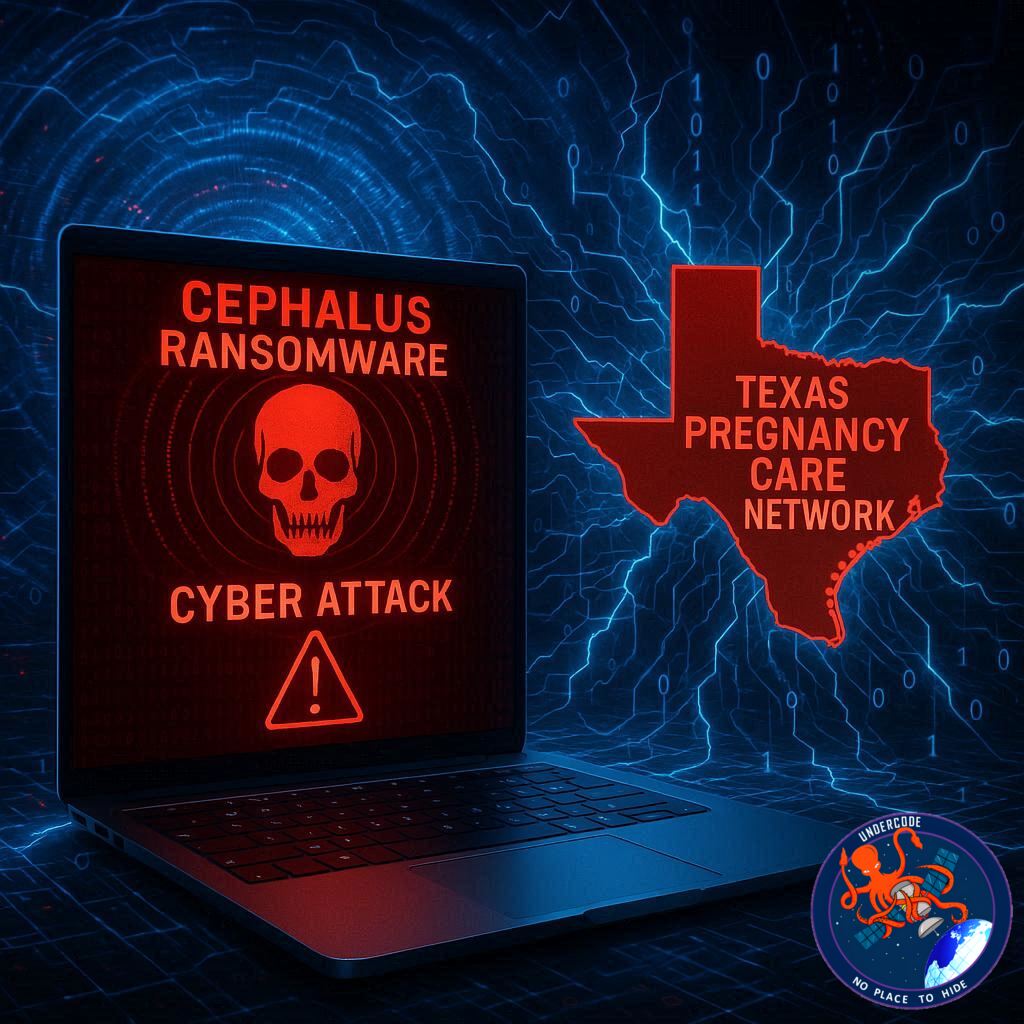
Ransomware attacks continue to escalate in frequency and intensity, targeting organizations across different sectors with devastating consequences. Recently, intelligence reports revealed that the Texas Pregnancy Care Network has fallen victim to the “Cephalus” ransomware group. This development highlights the growing sophistication of dark web criminal networks and their unrelenting pursuit of sensitive data, regardless of the social or healthcare missions of their targets. Alongside this, another attack was detected involving the “Incransom” group targeting Climax Portable, a global manufacturing company. Both cases showcase the alarming breadth of ransomware threats in today’s digital landscape.
the Incident
ThreatMon Ransomware Monitoring confirmed that the Cephalus ransomware group has added the Texas Pregnancy Care Network to its list of victims on August 28, 2025, at 02:40:01 UTC+3. This attack, discovered through dark web activity tracking, raises concerns about the exposure of sensitive healthcare and personal data belonging to vulnerable communities relying on the organization’s services.
In a parallel incident, the Incransom group targeted Climax Portable, a leading global manufacturer of portable machines, welding, valve testing equipment, and repair tools. This attack occurred on August 27, 2025, at 23:40:19 UTC+3. While the full scope of the data compromised remains unclear, the targeting of a global manufacturing company indicates the wide net cast by ransomware operators, spanning industries from healthcare to industrial manufacturing.
These two cases illustrate the rising wave of ransomware activity where malicious actors exploit the weaknesses of organizations with varying resources. Healthcare institutions are often targeted for their sensitive patient data, while manufacturing firms are attacked due to their reliance on continuous operations and supply chains. Both face intense pressure to pay ransoms quickly to avoid operational collapse or data exposure.
The incidents also underscore the importance of threat intelligence platforms like ThreatMon, which provide valuable insights into ransomware trends, dark web monitoring, and Indicators of Compromise (IOC). With ransomware groups operating globally, organizations must adopt proactive security postures to anticipate, detect, and neutralize threats before they cause irreversible harm.
What Undercode Say:
The latest wave of ransomware targeting both healthcare and industrial sectors signals an unsettling trend: no organization is off-limits. The Texas Pregnancy Care Network represents a socially critical institution, aiding vulnerable groups, yet even such organizations are not spared. For cybercriminals, the potential financial gain outweighs ethical considerations, making healthcare data one of the most sought-after commodities in underground markets.
From an analytical perspective, Cephalus’s attack aligns with a broader strategy of targeting mid-sized organizations. These entities often lack the same cybersecurity funding as large corporations, making them softer targets. Healthcare nonprofits, in particular, may not prioritize advanced endpoint detection, intrusion monitoring, or zero-trust architecture, leaving exploitable gaps.
On the other hand, Incransom’s focus on Climax Portable highlights how manufacturing and industrial firms are prime targets due to operational disruption risks. A halted production line can cost millions in losses daily, incentivizing victims to pay ransoms swiftly. The manufacturing industry has historically been vulnerable due to legacy IT systems, limited segmentation between IT and OT (Operational Technology), and insufficient patch management.
Both cases demonstrate a dual motivation in ransomware strategies:
Healthcare attacks are primarily data-driven, targeting patient information that can be sold, blackmailed, or used in fraud.
Manufacturing attacks focus on operational disruption, exploiting downtime costs to coerce payment.
The key insight here is that ransomware groups are diversifying their portfolios — hitting social institutions and industrial giants alike to maximize reach and profits. This strategic spread ensures that even if one victim resists paying, another might cave due to the scale of damages.
Moreover, the timing of these incidents is notable. The back-to-back targeting of two distinct sectors suggests that ransomware syndicates may be scaling operations with automated scanning tools, AI-driven vulnerability discovery, and outsourced affiliates. This “industrialization of cybercrime” reflects the maturity of ransomware-as-a-service (RaaS) ecosystems on the dark web.
Organizations like Texas Pregnancy Care Network must immediately deploy incident response measures, conduct forensic analysis, and engage law enforcement. Meanwhile, Climax Portable must assess potential supply chain fallout, as attacks on industrial manufacturers often have ripple effects across partners and clients worldwide.
Ultimately, these attacks reaffirm the urgent need for cyber resilience:
Regular data backups stored offline.
Zero-trust frameworks to limit lateral movement.
Continuous employee training against phishing vectors.
Threat intelligence integration for proactive defense.
If these trends continue, ransomware may soon surpass traditional cybercrime as the most profitable and damaging digital threat of the decade.
✅ Fact Checker Results
Confirmed: Cephalus ransomware group targeted Texas Pregnancy Care Network.
Confirmed: Incransom group attacked Climax Portable.
Confirmed: Both incidents were identified through ThreatMon’s ransomware monitoring intelligence.
🔮 Prediction
Ransomware attacks will continue expanding into socially critical sectors like healthcare, education, and charities — entities often unequipped for large-scale cyber defense. Meanwhile, industrial targets will remain high on the list due to their reliance on uninterrupted operations. Expect ransomware groups to increasingly use AI-enhanced tools for vulnerability discovery, making attacks faster and harder to prevent.
🕵️📝✔️Let’s dive deep and fact‑check.
References:
Reported By: x.com
Extra Source Hub:
https://www.reddit.com/r/AskReddit
Wikipedia
OpenAi & Undercode AI
Image Source:
Unsplash
Undercode AI DI v2
🔐JOIN OUR CYBER WORLD [ CVE News • HackMonitor • UndercodeNews ]
📢 Follow UndercodeNews & Stay Tuned:
𝕏 formerly Twitter 🐦 | @ Threads | 🔗 Linkedin | 🦋BlueSky | 🐘Mastodon


