
Listen to this Post
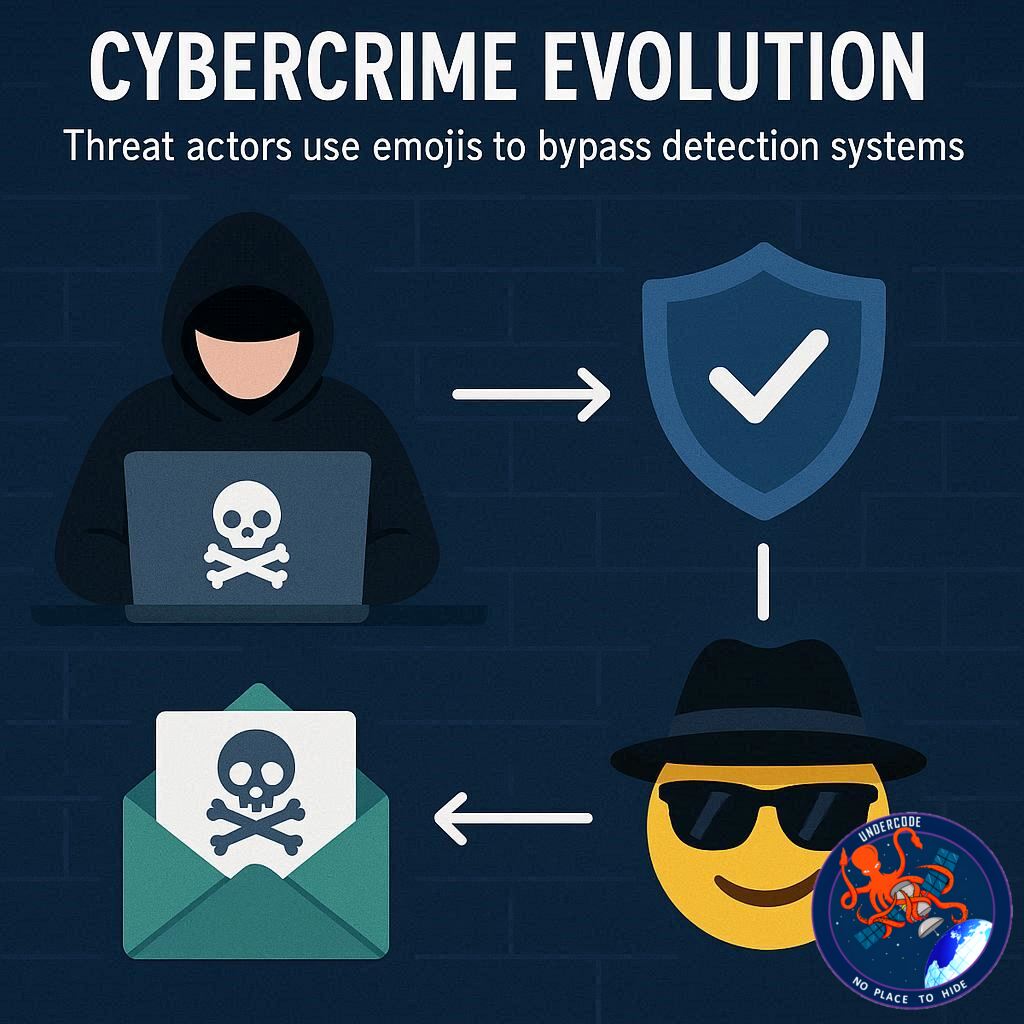
🎯 Introduction: When Innocent Symbols Become Digital Weapons
What once started as playful icons to express emotions has quietly evolved into a covert language for cybercriminals. Emojis, designed to simplify communication and add personality to messages, are now being repurposed by threat actors to conceal malicious intent. Beneath their harmless appearance lies a growing trend in cybercrime, where symbols like 🤖, 💰, or 🔑 carry meanings far more dangerous than they appear. This shift signals a deeper transformation in how attackers communicate, coordinate, and evade detection in an increasingly monitored digital world.
🧾 Summary: The Hidden Language of Emoji-Based Cybercrime
Threat actors are rapidly adopting emojis as part of their communication toolkit across platforms such as Telegram, Discord, and underground cybercrime forums. These symbols are no longer decorative; they function as coded signals that help attackers bypass traditional detection systems. For instance, a robot emoji may indicate a bot service is available, while multiple money bag emojis could signal a lucrative ransomware opportunity. This method allows criminals to communicate sensitive information without triggering keyword-based filters.
Security researchers have observed a broader shift toward visual and adaptive communication methods among cybercriminals. Emojis provide a fast, universal language that transcends linguistic barriers, making them ideal for global operations. Their benign appearance also makes them effective tools for obfuscation, allowing malicious actors to blend into normal online traffic.
One notable example is the emergence of malware like “Disgomoji,” which uses emojis as command triggers. In such cases, emojis sent via platforms like Discord are translated into specific operational actions. A camera emoji might instruct malware to take screenshots, while a fire emoji could initiate data exfiltration. This demonstrates how deeply integrated emojis have become in technical attack strategies.
Beyond communication, emojis are also being embedded directly into malicious code or used in techniques like “emoji smuggling,” where harmful payloads are hidden within seemingly harmless symbols. This further complicates detection, as traditional security systems are not designed to interpret emojis as potential threats.
The use of emojis serves two main purposes for attackers. First, it helps them evade automated detection systems that rely heavily on keyword matching. Second, it enhances communication efficiency in high-volume environments like fraud marketplaces and phishing networks. Emojis enable quick identification of services, products, and opportunities, even in multilingual settings.
Common use cases include representing stolen financial data, access credentials, or hacking tools. For example, a key emoji may indicate login credentials, while a toolbox might represent a bundle of hacking utilities. Emojis are also used to signal target types or geographic focus, such as using building icons for corporate targets or flags for specific countries.
Interestingly, while emojis help attackers hide, they also create identifiable patterns over time. Repeated emoji combinations, formatting styles, and usage habits can serve as digital fingerprints. Security analysts can leverage these patterns to track and attribute threat actors across different platforms and identities, turning the attackers’ own tactics into investigative advantages.
🧩 What Undercode Say: The Strategic Shift Toward Visual Obfuscation in Cybersecurity
The rise of emoji-based communication among threat actors is not just a quirky trend, it reflects a deeper strategic evolution in cyber warfare. Traditional cybersecurity defenses were built around textual analysis, keyword detection, and pattern recognition rooted in language. Emojis disrupt this entire framework because they exist outside conventional linguistic structures.
This shift exposes a critical blind spot in many security systems. Most detection engines are optimized to scan for suspicious words, URLs, or code signatures. Emojis, however, operate in a gray area, they are visual, context-dependent, and often ignored by filters. This allows attackers to embed meaning in plain sight without raising alarms.
Another important factor is scalability. Cybercrime today operates like an industry, with marketplaces, customer support, and service offerings. Emojis act as universal shortcuts, reducing the need for lengthy explanations and enabling faster transactions. In high-traffic environments like Telegram channels, speed and clarity are essential, and emojis deliver both.
There is also a psychological dimension. Emojis create a sense of informality and harmlessness. This can lower suspicion among both automated systems and human observers. A message filled with symbols appears less threatening than one packed with technical jargon or explicit malicious terms. This subtle manipulation of perception is a powerful tool in social engineering.
From an operational standpoint, emoji-based commands in malware represent a significant leap in stealth techniques. By converting simple icons into executable instructions, attackers reduce the visibility of their command-and-control infrastructure. This makes it harder for security teams to trace and interpret malicious activity in real time.
However, this evolution is not without weaknesses. The very patterns that make emojis efficient also make them traceable. Over time, threat actors develop habits, specific combinations, preferred symbols, and consistent structures. These patterns can be analyzed using advanced threat intelligence tools, allowing researchers to map networks and identify recurring actors.
The real challenge for cybersecurity lies in adaptation. Defenders must move beyond traditional text-based analysis and incorporate contextual and behavioral understanding of emojis. This includes building datasets of emoji usage in malicious contexts, training AI models to interpret symbolic communication, and integrating visual language analysis into threat detection pipelines.
Ultimately, emojis represent a broader trend in cybercrime, the move toward abstraction and ambiguity. As defenses improve, attackers will continue to exploit overlooked channels and unconventional methods. Emoji-based communication is just one example of how creativity and adaptability drive the evolution of digital threats.
🔍 Fact Checker Results
✅ Emojis are actively used by threat actors to bypass keyword-based detection systems.
✅ Malware like “Disgomoji” demonstrates real-world emoji-based command execution.
❌ Emojis alone cannot fully replace traditional communication methods in cybercrime operations.
📊 Prediction
📈 Emoji-based obfuscation techniques will become more advanced, integrating with AI-driven malware systems.
⚠️ Cybersecurity tools will begin incorporating visual and contextual analysis to counter this trend.
🌐 Global cybercrime networks will increasingly rely on symbol-based communication to scale operations across languages.
▶️ Related Video (86% Match):
🕵️📝✔️Let’s dive deep and fact‑check.
References:
Reported By: www.darkreading.com
Extra Source Hub (Possible Sources for article):
https://www.facebook.com
Wikipedia
OpenAi & Undercode AI
Image Source:
Unsplash
Undercode AI DI v2
Bing
🔐JOIN OUR CYBER WORLD [ CVE News • HackMonitor • UndercodeNews ]
📢 Follow UndercodeNews & Stay Tuned:
𝕏 formerly Twitter 🐦 | @ Threads | 🔗 Linkedin | 🦋BlueSky | 🐘Mastodon


