
Listen to this Post
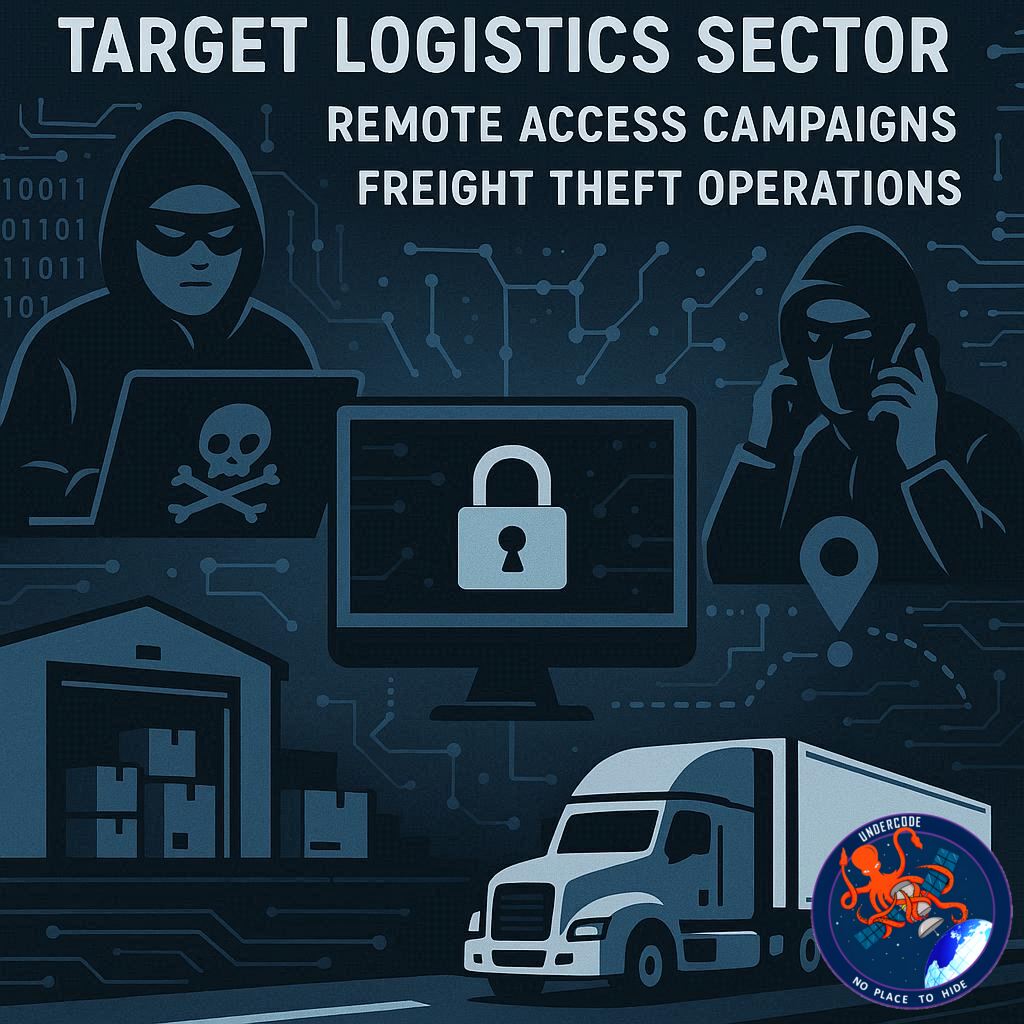
Introduction: A New Era of Digitally Driven Cargo Theft
The logistics and transportation industry is facing a silent but rapidly escalating threat. What once required physical interception and insider coordination has evolved into a sophisticated cyber-driven operation. Criminal groups are no longer just hijacking trucks on highways; they are infiltrating systems, manipulating logistics platforms, and redirecting shipments with precision. Recent findings reveal how cyberattacks are now directly enabling large-scale cargo theft, blending digital intrusion with organized crime tactics to disrupt global supply chains and siphon billions in revenue.
Summary: How Cyber Intrusions Are Fueling Real-World Cargo Theft
Recent research has uncovered a coordinated campaign targeting trucking and logistics companies, where attackers deploy remote access tools to infiltrate systems and orchestrate cargo theft. These operations are not isolated incidents but appear to be linked to organized crime groups leveraging cyber capabilities to enhance traditional theft methods. The scale of this threat is significant, with reported losses in North America alone reaching $6.6 billion in 2025, highlighting how digital attacks are becoming a core component of supply chain exploitation.
The campaign gained attention when researchers executed a malicious payload within a controlled environment designed to mimic a real-world target. Although the environment was not an actual logistics company, it remained compromised for over a month, offering rare visibility into how attackers behave after gaining access. This extended observation revealed a highly methodical approach focused on persistence, intelligence gathering, and financial exploitation.
The attackers initially targeted logistics firms using remote monitoring and management tools, a tactic first observed in mid-2025. Their primary objective was to steal freight, particularly high-value goods such as food and beverages. By infiltrating systems, they were able to hijack cargo bids and manipulate logistics workflows, effectively redirecting shipments without raising immediate suspicion.
A notable incident occurred in February 2026, when attackers breached a load board platform and sent fraudulent emails to carriers offering fake shipping jobs. These emails contained malicious VBS files that triggered PowerShell scripts, ultimately installing remote access software while displaying fake agreements to disguise the intrusion. This level of deception ensured that victims remained unaware of the compromise during its early stages.
Once inside, the attackers focused heavily on maintaining access. They deployed multiple remote management tools, including several instances of remote access software, ensuring redundancy in case one method was detected or removed. This persistence strategy allowed them to maintain control over compromised systems for extended periods.
One of the most sophisticated techniques observed was the use of a “signing-as-a-service” method. This approach involved re-signing malicious software with seemingly legitimate certificates, allowing it to bypass security controls and appear trustworthy. By replacing original components with signed versions, attackers effectively evaded detection and maintained long-term access.
After securing their foothold, the attackers shifted to manual operations. They examined financial accounts, including online payment platforms, and deployed custom tools to extract cryptocurrency wallet data. The stolen information was then transmitted through encrypted channels, such as messaging platforms, to avoid detection.
The attackers also used a wide array of PowerShell scripts to profile victims. These scripts collected extensive data, including user credentials, browser history, and access to financial and logistics platforms. They were capable of copying locked files, identifying valuable services, and storing sensitive information in hidden directories. By operating with elevated system privileges, the attackers ensured maximum access to critical data.
Continuous monitoring of browser databases allowed the attackers to identify patterns related to financial activity. They specifically targeted banking systems, money transfer services, fleet payment platforms, and freight management tools. This focus clearly indicates that the ultimate goal was financial fraud combined with cargo diversion.
In the final stages of the intrusion, additional scripts gathered system-level intelligence, including installed security tools and financial applications. This data was quietly transmitted back through existing remote sessions, minimizing the risk of detection. The entire operation demonstrated a high level of coordination and strategic planning, far beyond simple opportunistic hacking.
Overall, the campaign illustrates how modern cybercriminals operate with patience and precision. They prioritize stealth, persistence, and intelligence gathering before executing financially motivated actions. The integration of cyber techniques with traditional cargo theft methods represents a significant evolution in criminal strategy, posing a serious challenge for the logistics industry.
What Undercode Say: The Convergence of Cybercrime and Physical Supply Chain Exploitation
The emerging pattern here is not just about hacking, it is about the industrialization of cybercrime within physical economies. Logistics has become an attractive target because it sits at the intersection of data, money, and tangible goods. When attackers compromise a logistics firm, they are not merely stealing information; they are gaining the ability to influence real-world movement of assets.
What stands out is the attackers’ patience. They are not rushing to monetize access immediately. Instead, they spend weeks, sometimes months, observing internal workflows, identifying high-value transactions, and understanding operational blind spots. This level of discipline is typically associated with advanced threat actors, yet here it is being used for financial crime rather than espionage.
The use of legitimate tools and trusted mechanisms is another critical shift. By leveraging signed software and widely used remote management platforms, attackers blend seamlessly into normal IT operations. This creates a detection problem, not because the tools are inherently malicious, but because their usage context becomes the threat. Security teams that rely solely on signature-based detection will struggle against this model.
Another key insight is the redundancy in persistence. Deploying multiple remote access tools is not just a technical tactic; it is a strategic safeguard. It ensures that even if defenders identify and remove one entry point, others remain active. This layered approach mirrors resilience strategies used in enterprise systems, ironically adopted by the attackers themselves.
The financial targeting strategy also reveals a dual objective. On one side, attackers are extracting direct monetary value through payment systems and cryptocurrency theft. On the other, they are enabling cargo diversion, which can be monetized through resale in black markets. This hybrid model significantly increases profitability while reducing dependency on a single revenue stream.
There is also a psychological component to these attacks. By using fake agreements and legitimate-looking communications, attackers exploit trust within the logistics ecosystem. Employees are conditioned to process shipments quickly, often under time pressure, making them more susceptible to convincing fraudulent requests. This human factor remains one of the weakest links in supply chain security.
The broader implication is that supply chains are no longer just operational systems; they are now cyber-physical battlegrounds. A breach does not stay confined to servers or databases. It extends into warehouses, transportation routes, and financial networks. This interconnectedness amplifies the impact of each successful intrusion.
Organizations must rethink their defense strategies. Monitoring for unauthorized remote tools is no longer optional; it is essential. Behavioral analysis of PowerShell activity, anomaly detection in browser usage, and real-time tracking of financial platform access should become standard practices. Traditional perimeter defenses are insufficient in this context.
Another overlooked aspect is third-party risk. Load boards and shared logistics platforms act as central hubs, making them attractive entry points for attackers. A single compromise can cascade across multiple organizations, creating a network-wide vulnerability. Strengthening security across these shared systems is critical to reducing systemic risk.
Ultimately, this trend signals a shift toward cybercrime as a service-driven ecosystem. The mention of “signing-as-a-service” is particularly telling. It suggests the existence of specialized providers offering tools and infrastructure to other criminals, lowering the barrier to entry and accelerating the spread of such attacks.
The logistics sector must adapt quickly. The cost of inaction is not just financial loss but operational disruption at a global scale. As attackers continue to refine their methods, the line between cyberattack and physical crime will become increasingly blurred, making detection and response more complex than ever before.
Fact Checker Results
✅ Cyber-enabled cargo theft is rising, with billions in documented losses across North America.
✅ Attackers increasingly use legitimate tools and signed software to evade detection.
❌ Not all logistics breaches lead directly to cargo theft, some remain purely data-focused.
Prediction
📊 Cyber-enabled cargo theft will expand into other sectors like retail and manufacturing as attackers refine their methods.
📊 The use of trusted software and certificate abuse will become a dominant tactic in stealth intrusions.
📊 Logistics firms will increasingly adopt AI-driven threat detection to counter long-term, persistent attacks.
▶️ Related Video (82% Match):
🕵️📝✔️Let’s dive deep and fact‑check.
References:
Reported By: securityaffairs.com
Extra Source Hub (Possible Sources for article):
https://www.quora.com/topic/Technology
Wikipedia
OpenAi & Undercode AI
Image Source:
Unsplash
Undercode AI DI v2
Bing
🔐JOIN OUR CYBER WORLD [ CVE News • HackMonitor • UndercodeNews ]
📢 Follow UndercodeNews & Stay Tuned:
𝕏 formerly Twitter 🐦 | @ Threads | 🔗 Linkedin | 🦋BlueSky | 🐘Mastodon


