
Listen to this Post
Introduction: A Silent Vulnerability in Critical Industries
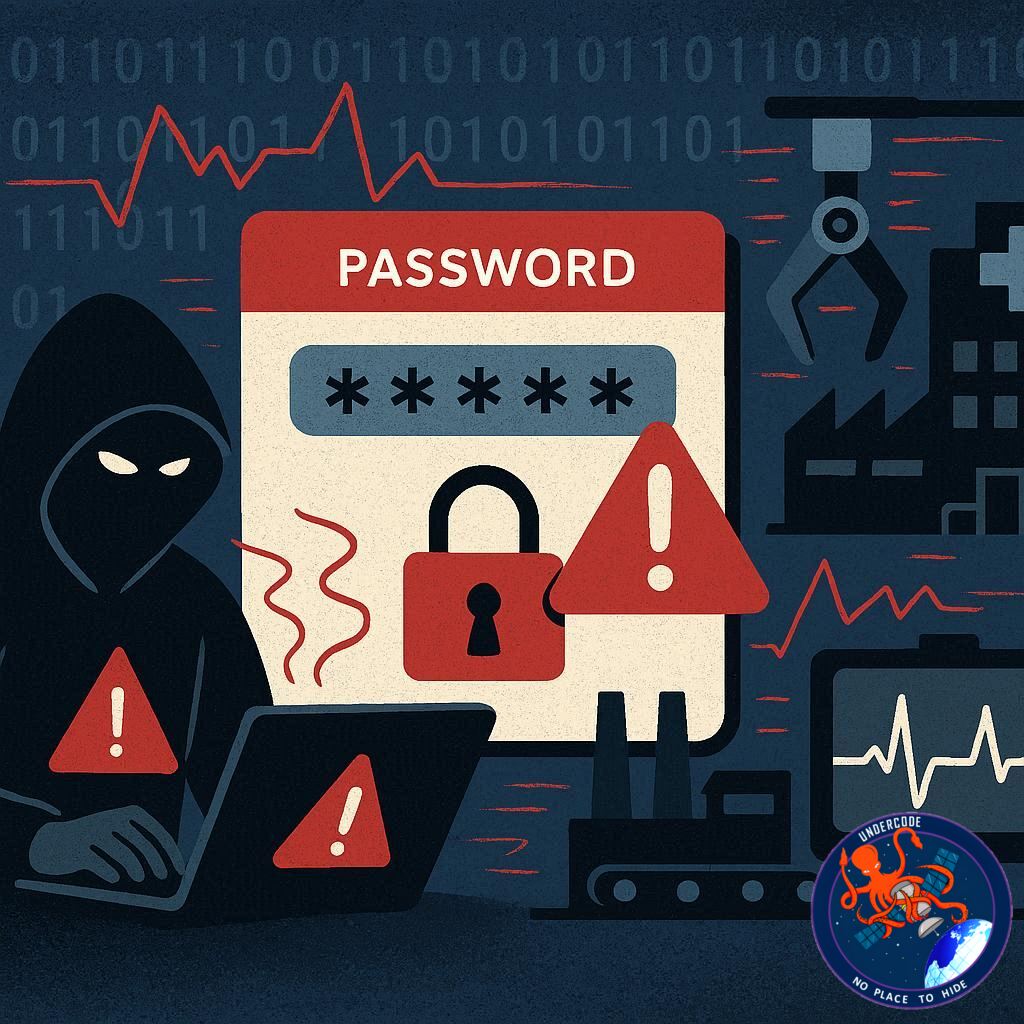
In an era where cyberattacks are growing more sophisticated and relentless, two of the world’s most essential industries, manufacturing and healthcare, are facing a surprisingly basic yet dangerous weakness: poor password security. Despite handling critical infrastructure and human lives, both sectors continue to struggle with fundamental cybersecurity practices. This isn’t just a technical issue, it’s deeply rooted in culture, workflow pressure, and outdated systems. While attackers increasingly exploit identity access points, many insiders still see password protocols as obstacles rather than safeguards, creating a dangerous imbalance that leaves systems exposed.
Summary: Password Weaknesses Fuel Cyber Risk Across Industries
Manufacturing and healthcare, though vastly different in function, share strikingly similar cybersecurity challenges, particularly in password hygiene. These industries have become prime targets for ransomware attacks, with manufacturing ranking as the most targeted sector for four consecutive years. The reasons are not hard to identify. Both environments rely heavily on legacy systems, cannot tolerate downtime, and often prioritize operational continuity over security protocols.
Inside hospitals and factory floors, risky practices such as sharing login credentials, using weak passwords, or even bypassing authentication entirely are more common than expected. Medical professionals and plant operators often operate under intense time pressure, where every second matters. In such environments, entering complex passwords or following strict authentication procedures can feel like unnecessary friction.
This mindset creates a dangerous vulnerability. Simple or reused passwords are easy targets for attackers, allowing them to gain unauthorized access, move laterally within systems, and cause severe disruptions. In healthcare, this could delay patient care or compromise sensitive data. In manufacturing, it could halt production lines and disrupt supply chains.
Cultural resistance plays a significant role. Many professionals view cybersecurity measures as intrusive or inefficient. Physicians, for instance, may resist password protocols, arguing that they slow down critical workflows. Similarly, factory operators often share credentials to maintain productivity, reflecting a mindset where operational efficiency outweighs security concerns.
Another major issue lies in identity management. In manufacturing plants, shared IDs are frequently used to keep systems running smoothly, but this practice eliminates accountability and increases risk. Without clear user tracking, detecting suspicious activity becomes significantly harder.
The problem is further complicated by legacy technology. Both industries depend on outdated systems that lack modern authentication capabilities. These systems persist because upgrading them would require costly downtime, which organizations are unwilling to accept. As a result, decades-old infrastructure continues to operate in environments that demand modern security standards.
As operational technology expands and systems become more interconnected, the attack surface grows larger. What was once an isolated environment is now part of a broader digital ecosystem, increasing exposure to cyber threats. Despite growing awareness, many organizations still lack proper monitoring tools to detect unusual login behavior or unauthorized access.
Ultimately, the challenge is not just technical but psychological. Changing how people think about security is essential. Professionals must understand that weak password practices are not minor shortcuts but significant risk factors that can lead to major operational and financial consequences.
The Operational vs Security Mindset Conflict
At the core of the issue lies a fundamental conflict between productivity and protection. In both industries, the priority has always been speed and efficiency. Whether it’s saving a patient’s life or keeping an assembly line running, delays are unacceptable. This urgency often pushes security to the background.
Legacy Systems: The Double-Edged Sword
Outdated technologies remain deeply embedded in both sectors. While they provide stability and consistency, they also lack modern security features. These systems were never designed to handle today’s cyber threats, making them easy entry points for attackers.
Credential Sharing: Convenience Over Accountability
Shared logins might seem practical in fast-paced environments, but they eliminate traceability. When multiple individuals use the same credentials, identifying the source of a breach becomes nearly impossible, delaying response and increasing damage.
Lack of Monitoring and Visibility
Even when unauthorized access occurs, many organizations fail to detect it quickly. Monitoring tools exist, but they are underutilized. Without proper visibility, suspicious behavior can go unnoticed until it’s too late.
Cultural Resistance to Security Protocols
One of the biggest barriers is human behavior. Many professionals resist adopting stricter security measures, viewing them as unnecessary complications. This resistance slows down the adoption of better practices and leaves systems exposed.
What Undercode Say:
The real issue is not passwords themselves, but the psychology surrounding them. When security is perceived as an obstacle instead of an enabler, failure becomes inevitable. Manufacturing and healthcare are not ignoring cybersecurity because they lack awareness, they are deprioritizing it because their environments reward speed over caution. This creates a systemic vulnerability that attackers are actively exploiting.
There is also a deeper structural problem. These industries were not originally built for digital resilience. Their core systems evolved in isolation, optimized for reliability and uptime, not for defending against external threats. As connectivity increases, these legacy foundations are being forced into a modern threat landscape they were never designed to survive.
Another critical factor is the illusion of control. Many organizations believe that because operations are running smoothly, systems are secure. In reality, attackers often remain undetected for long periods, quietly exploiting weak credentials and mapping networks. By the time a breach becomes visible, the damage is already extensive.
Training alone will not solve this problem. Awareness campaigns are useful, but they cannot override deeply ingrained habits. Real change requires redesigning workflows so that security becomes invisible and frictionless. Technologies like biometric authentication, zero-trust architectures, and adaptive access controls must replace traditional password systems.
Moreover, leadership plays a decisive role. If executives continue to prioritize uptime without integrating security into performance metrics, employees will follow the same pattern. Security must be treated as a core operational requirement, not an optional layer.
Another overlooked dimension is accountability. Shared credentials remove responsibility, creating an environment where no one feels directly accountable for security breaches. Introducing individual accountability, combined with smart monitoring, can significantly reduce risky behavior.
The industries must also rethink their approach to legacy systems. While complete replacement may not be feasible, layered security strategies can mitigate risks. Network segmentation, access controls, and continuous monitoring can protect vulnerable systems without requiring full modernization.
Finally, the rise of ransomware highlights the urgency of this issue. Attackers are not targeting these sectors randomly. They know these industries cannot afford downtime, making them more likely to pay ransoms. Weak password practices are often the easiest entry point, turning minor vulnerabilities into major crises.
Fact Checker Results
✅ Manufacturing has been a top ransomware target for multiple consecutive years.
✅ Credential sharing and weak passwords are documented risks in both industries.
❌ Strong password enforcement alone is sufficient to stop cyberattacks.
Prediction
Cybersecurity in manufacturing and healthcare will shift toward passwordless authentication and automated identity management systems. 🔐
Organizations that fail to modernize security alongside operations will face increasing ransomware incidents and financial losses. 📉
Human behavior will remain the biggest vulnerability, pushing companies to adopt AI-driven security controls that minimize user friction. 🤖
🕵️📝✔️Let’s dive deep and fact‑check.
References:
Reported By: www.darkreading.com
Extra Source Hub (Possible Sources for article):
https://www.quora.com/topic/Technology
Wikipedia
OpenAi & Undercode AI
Image Source:
Unsplash
Undercode AI DI v2
Bing
🔐JOIN OUR CYBER WORLD [ CVE News • HackMonitor • UndercodeNews ]
📢 Follow UndercodeNews & Stay Tuned:
𝕏 formerly Twitter 🐦 | @ Threads | 🔗 Linkedin | 🦋BlueSky | 🐘Mastodon


