
Listen to this Post
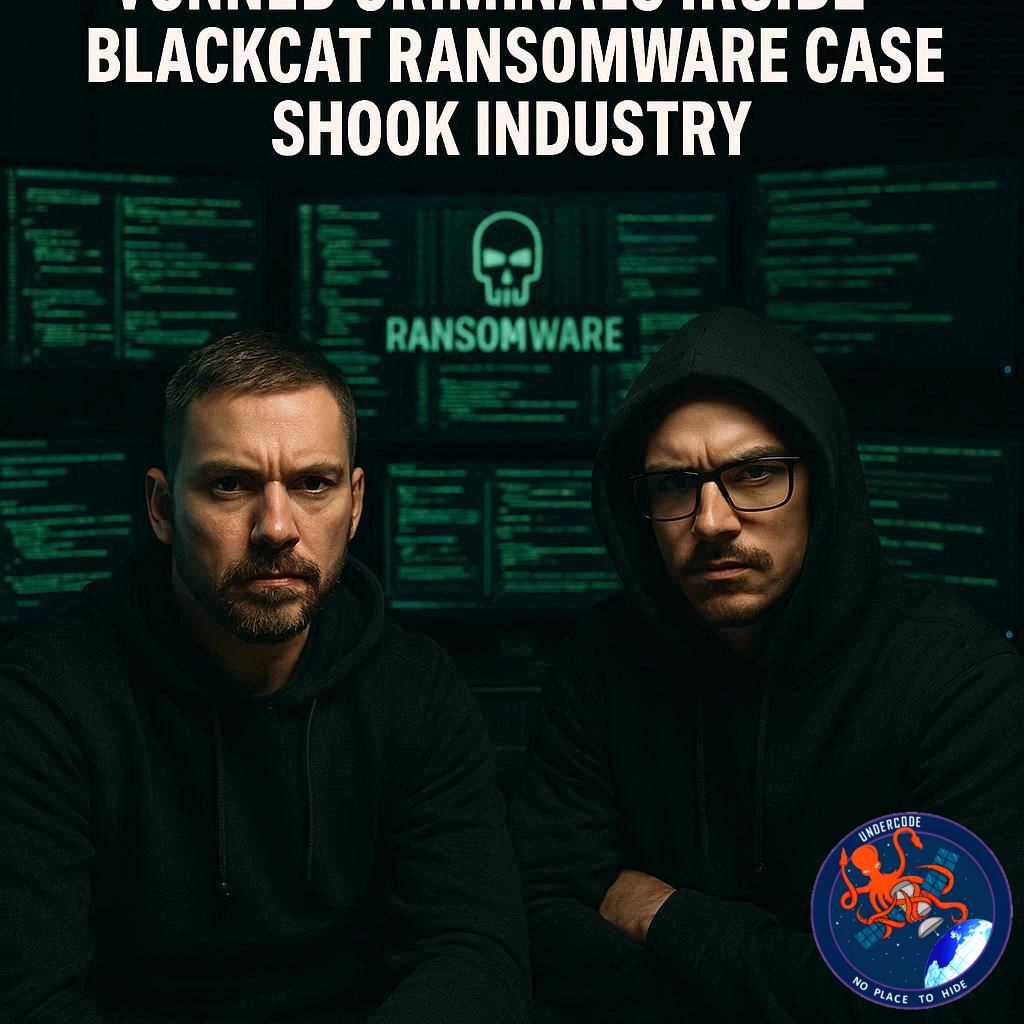
A Disturbing Shift in Cybersecurity Ethics
The line between defender and attacker has always been thin in cybersecurity, but this case pushes that boundary into deeply troubling territory. Two American cybersecurity professionals, once trusted with protecting digital infrastructure, have now been sentenced to four years in federal prison for actively participating in ransomware attacks. Their story is not just about crime, but about the misuse of expertise in a field built on trust, responsibility, and defense.
The Rise of Insider Threats in Cybercrime
Ryan Goldberg, aged 40, and Kevin Martin, 36, leveraged their advanced technical knowledge not to safeguard systems, but to exploit them. Between April and December 2023, the pair orchestrated attacks that targeted businesses across the United States. Their operations involved locking down critical networks, stealing sensitive data, and demanding large cryptocurrency payments. The case underscores a growing concern in the cybersecurity world: insiders who weaponize their skills for financial gain.
How the BlackCat Ransomware Operation Worked
Goldberg and Martin were not lone actors. They functioned as affiliates within the ALPHV BlackCat ransomware ecosystem, a sophisticated Ransomware-as-a-Service model. In this structure, core developers design and maintain the malware, while affiliates execute attacks. Goldberg and Martin took on the role of identifying targets, deploying ransomware payloads, and managing extortion negotiations.
The Profit-Sharing Criminal Model
The financial arrangement was straightforward yet highly lucrative. The duo agreed to give 20% of their earnings to the BlackCat administrators in exchange for access to the ransomware tools and infrastructure. In return, they retained 80% of the ransom payments. In one major incident, they extracted approximately $1.2 million in Bitcoin from a single victim, later laundering the funds through various channels.
Targeting Critical Industries
Their attacks were not random. They specifically targeted sectors such as healthcare and engineering, where downtime and data sensitivity significantly increase the likelihood of ransom payments. In one particularly alarming case, when a medical provider hesitated to pay, the attackers escalated pressure by leaking sensitive patient data. This tactic highlights the ethical collapse of individuals who once understood the importance of data privacy.
Expertise Turned Into a Weapon
What makes this case especially severe is the professional background of the perpetrators. Both men had careers in cybersecurity, meaning they were fully aware of defensive mechanisms and vulnerabilities. Instead of reinforcing these systems, they exploited them with precision. Their insider knowledge allowed them to bypass protections that would typically stop less experienced attackers.
The Global Hunt for Justice
The investigation into their activities was extensive and international in scope. Led by the FBI’s Cyber Division, authorities tracked the duo’s operations across multiple jurisdictions. When pressure mounted, Goldberg attempted to evade capture by fleeing the country. However, law enforcement tracked him across ten countries before successfully apprehending him, demonstrating the global reach and coordination of modern cybercrime investigations.
Legal Consequences and Guilty Pleas
Both Goldberg and Martin ultimately pleaded guilty in December 2025 to conspiracy to obstruct commerce through extortion. Another associated individual, Martino, entered a similar plea in April 2026 and is awaiting sentencing. Their convictions mark a significant milestone in the fight against ransomware groups that operate across borders and jurisdictions.
A Broader Crackdown on BlackCat
This case is part of a larger campaign targeting the ALPHV BlackCat syndicate, which has been linked to over 1,000 victims worldwide. In December 2023, authorities successfully disrupted the group’s core infrastructure. This operation was not only a law enforcement victory but also a technical one.
The Role of Decryption Tools in Mitigation
During the takedown, investigators developed a specialized decryption tool capable of unlocking systems compromised by BlackCat ransomware. This tool was distributed to hundreds of affected organizations, allowing them to recover their data without paying ransoms. The intervention is estimated to have saved victims approximately $99 million, significantly weakening the group’s financial incentives.
What Undercode Say:
The Real Danger Lies Within the Industry
This case exposes a fundamental vulnerability that goes beyond software flaws or network misconfigurations. The real risk is human. When trained cybersecurity professionals turn malicious, they become exponentially more dangerous than typical cybercriminals. Their understanding of defense systems allows them to anticipate responses and exploit weaknesses with surgical precision.
Ransomware-as-a-Service Is Scaling Crime
The BlackCat model reflects how cybercrime has evolved into a structured business ecosystem. Ransomware-as-a-Service lowers the barrier to entry, enabling even moderately skilled attackers to launch sophisticated operations. Affiliates like Goldberg and Martin act as force multipliers, extending the reach of the core developers without direct involvement.
Financial Incentives Are Driving the Threat
The profit-sharing structure reveals why ransomware continues to thrive. With affiliates keeping the majority of the ransom, there is strong motivation to conduct repeated attacks. Cryptocurrency further complicates enforcement by enabling relatively anonymous transactions and cross-border fund movement.
Healthcare Remains a Prime Target
The deliberate targeting of medical providers is not accidental. Healthcare systems often operate under urgent conditions, making them more likely to pay quickly to restore services. This creates a dangerous cycle where attackers prioritize industries where human lives and sensitive data are at stake.
Law Enforcement Is Becoming More Effective
Despite the scale of the threat, this case demonstrates that global law enforcement collaboration is improving. Tracking a suspect across ten countries and successfully capturing them reflects a level of coordination that was rare a decade ago. Cybercriminals can no longer assume anonymity guarantees safety.
Technical Countermeasures Are Changing the Game
The deployment of a decryption tool during the BlackCat takedown represents a shift in defensive strategy. Instead of only preventing attacks, authorities are now actively reducing the financial impact of ransomware by enabling recovery without payment. This directly undermines the business model of ransomware groups.
Insider Threat Programs Need Urgent Attention
Organizations must rethink how they evaluate and monitor cybersecurity professionals. Traditional trust models assume that defenders act in good faith. This case proves that assumption can be dangerously flawed. Behavioral monitoring and stricter access controls are becoming essential.
The Psychological Shift in Cybercrime
There is also a deeper psychological element at play. When professionals cross over into cybercrime, it is rarely due to lack of opportunity. Instead, it reflects a calculated decision driven by financial gain, risk tolerance, and perceived anonymity. Addressing this requires not just technical controls but ethical reinforcement within the industry.
Fact Checker Results
Verified Sentencing Outcome ✅
The individuals were sentenced to four years in federal prison for their involvement in ransomware deployment.
Confirmed BlackCat Disruption ✅
Law enforcement successfully disrupted the ALPHV BlackCat infrastructure and released a decryption tool.
Financial Impact Accuracy ✅
The intervention is reported to have saved victims approximately $99 million in ransom payments.
Prediction
Ransomware Ecosystems Will Fragment 🔍
As major groups like BlackCat face disruption, smaller and more decentralized ransomware networks are likely to emerge.
Insider Threat Cases Will Increase ⚠️
More cases involving cybersecurity professionals turning malicious may surface as financial incentives remain high.
Defensive Technology Will Become More Proactive 🚀
Expect greater investment in automated decryption tools and real-time response systems to neutralize ransomware attacks before payments occur.
🕵️📝Let’s dive deep and fact‑check.
References:
Reported By: cyberpress.org
Extra Source Hub (Possible Sources for article):
https://www.medium.com
Wikipedia
OpenAi & Undercode AI
Image Source:
Unsplash
Undercode AI DI v2
Bing
🔐JOIN OUR CYBER WORLD [ CVE News • HackMonitor • UndercodeNews ]
📢 Follow UndercodeNews & Stay Tuned:
𝕏 formerly Twitter 🐦 | @ Threads | 🔗 Linkedin | 🦋BlueSky | 🐘Mastodon


