
Listen to this Post
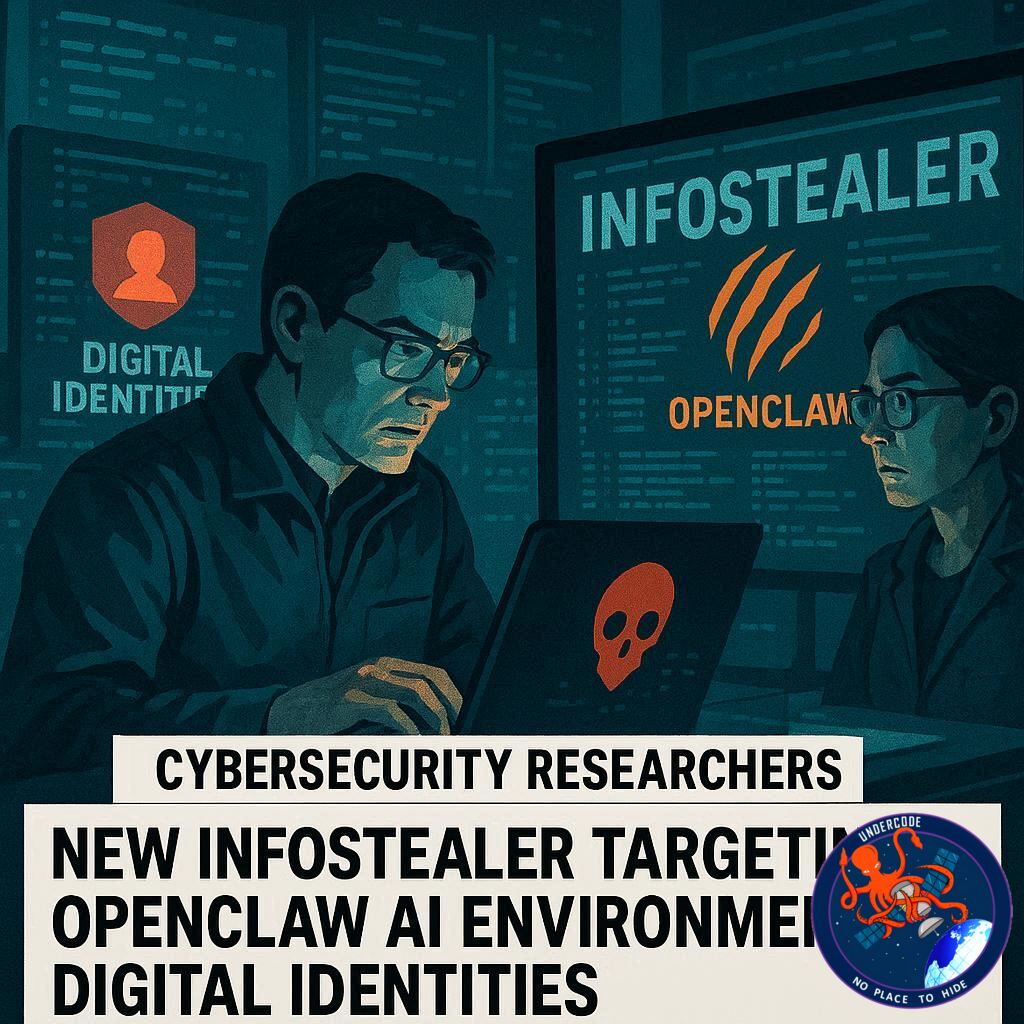
Introduction: The Rise of AI-Focused Malware Threats
Cybercriminals are no longer satisfied with stealing passwords and banking credentials. A new wave of malware is emerging, one that goes deeper than browser autofill data or crypto wallets. Security researchers have uncovered an information-stealing campaign that targets the operational core of personal AI assistants, specifically the OpenClaw configuration environment. This shift signals a profound evolution in cybercrime, where attackers aim not just to access accounts but to capture the entire digital identity embedded within AI-driven systems.
the OpenClaw Infostealer Incident
Cybersecurity firm Hudson Rock has identified a live infection in which an infostealer exfiltrated a victim’s OpenClaw configuration environment. OpenClaw, previously known as ClawdBot and MoltBot, is an open-source personal AI assistant platform designed to extend functionality through community-built “skills.” It often integrates with tools such as Claude Code and can run locally or through messaging platforms.
The researchers described the attack as a “grab-bag” operation. Rather than deploying a specialized module engineered specifically for OpenClaw, the malware executed a broad file-harvesting routine. This routine swept through sensitive directories and extensions, unintentionally capturing the full operational ecosystem of the victim’s AI agent.
Among the exfiltrated files was openclaw.json, a configuration file functioning as the central control layer of the AI agent. This file contained a redacted email address, workspace path information, and a high-entropy gateway authentication token. The exposure of gateway.auth.token creates a serious technical risk. If a local OpenClaw instance has an exposed port, attackers could connect remotely. Even without direct network exposure, the stolen token enables impersonation of the client in authenticated gateway requests.
The attackers also retrieved device.json, which stores private cryptographic keys associated with the user’s machine. These keys could potentially allow attackers to impersonate the device itself or gain unauthorized access to encrypted services. Beyond that, so-called “soul” and memory files were extracted. These files define the AI agent’s behavioral parameters, preferences, and contextual data, effectively mirroring the user’s digital habits and interactions.
According to Hudson Rock, this incident represents a milestone in infostealer evolution. Historically, infostealers focused on browser credentials, cryptocurrency wallets, and session cookies. Now, they are targeting the identities, contextual settings, and behavioral frameworks of personal AI systems. Instead of merely stealing a password, attackers can now acquire a complete digital portrait of the victim.
The researchers emphasize that this transformation marks the beginning of a new phase in malware development. As AI assistants transition from experimental tools into daily operational companions for coding, productivity, and communication, their configuration environments become high-value targets. Malware authors are likely to develop increasingly specialized “AI-stealer” modules in the near future.
Expanding Threat Landscape Around Personal AI Agents
Personal AI assistants like OpenClaw are built to integrate deeply into a user’s digital ecosystem. They automate tasks, manage workflows, and store contextual memory. This integration makes them powerful productivity tools, but also creates concentrated repositories of sensitive information.
Unlike traditional software, AI agents maintain persistent contextual awareness. They remember preferences, project details, and user-specific operational instructions. When malware captures these environments, attackers gain more than credentials. They obtain decision-making logic, workflow automation scripts, and behavioral metadata that can be weaponized for impersonation or social engineering.
The architectural design of open-source AI platforms can also introduce risk. Community-created “skills” expand functionality but may inadvertently widen the attack surface. Malicious or poorly vetted extensions could introduce vulnerabilities. Even when the infostealer does not directly target OpenClaw, broad harvesting techniques can still compromise it due to the centralized storage of sensitive configuration files.
The incident underscores a critical reality: AI assistants are becoming identity containers. Their configuration files encapsulate user context, API tokens, device keys, and personalized automation logic. This convergence transforms AI systems into prime cybercriminal assets.
What Undercode Say:
The OpenClaw infostealer case is not just another malware story. It represents a structural shift in how cybercriminals evaluate digital value. For years, the underground economy revolved around credentials, cookies, and financial data. Now, the focus is migrating toward contextual intelligence.
An AI assistant like OpenClaw does not simply store login information. It embodies the user’s digital behavior. The openclaw.json file functions as an identity blueprint. The gateway token acts as an authentication passport. The device.json file stores cryptographic credentials that anchor machine-level trust. When these elements are exfiltrated together, the attacker gains layered access potential.
This is where the real danger emerges. With a stolen gateway token, an attacker can impersonate legitimate traffic. With cryptographic keys, they may exploit encrypted services. With memory files, they can reconstruct personal context. That combination allows highly convincing impersonation attacks, automated phishing campaigns tailored to the victim’s environment, or even manipulation of AI-generated outputs.
Another critical dimension is the psychological aspect of AI reliance. As users entrust AI agents with daily workflows, they reduce friction in their digital routines. That convenience often leads to reduced scrutiny of security settings. Local deployments, exposed ports, and poorly segmented networks create openings. The very flexibility that makes OpenClaw attractive can amplify its attack surface.
This event also foreshadows the rise of purpose-built AI-targeted malware. Today’s grab-bag harvesting technique may evolve into precision-engineered modules explicitly designed to locate and exploit AI configuration directories. Cybercriminal forums will likely begin advertising AI-environment dumps as premium commodities.
Organizations and individual users must rethink endpoint security in the AI era. Traditional antivirus solutions focus on credential theft and ransomware patterns. They may not yet prioritize detection of AI configuration exfiltration. Security awareness training must expand to include AI hygiene practices, such as isolating local AI services, restricting port exposure, and encrypting configuration backups.
The OpenClaw incident should serve as a warning. As AI becomes infrastructure rather than novelty, its operational environment becomes critical infrastructure. The digital soul of an AI agent is, in essence, an extension of the user’s identity. Protecting it requires a mindset shift from account-level security to contextual identity protection.
Fact Checker Results
✅ Hudson Rock reported a live infection involving OpenClaw configuration exfiltration.
✅ Stolen files included gateway tokens, cryptographic keys, and behavioral memory files.
❌ There is no confirmed evidence yet of a specialized OpenClaw-targeted malware module.
Prediction
🔮 AI-specific infostealers will emerge within the next 12 to 24 months as standalone malware families.
📈 Underground marketplaces will begin trading AI configuration dumps as high-value digital identity packages.
⚠️ Security vendors will integrate AI-environment monitoring into mainstream endpoint detection platforms.
▶️ Related Video (84% Match):
https://www.youtube.com/watch?v=6XA4GY9feRY
🕵️📝✔️Let’s dive deep and fact‑check.
References:
Reported By: securityaffairs.com
Extra Source Hub (Possible Sources for article):
https://www.instagram.com
Wikipedia
OpenAi & Undercode AI
Image Source:
Unsplash
Undercode AI DI v2
Bing
🔐JOIN OUR CYBER WORLD [ CVE News • HackMonitor • UndercodeNews ]
📢 Follow UndercodeNews & Stay Tuned:
𝕏 formerly Twitter 🐦 | @ Threads | 🔗 Linkedin | 🦋BlueSky | 🐘Mastodon


