
Listen to this Post
Introduction: A Defining Moment for Cybersecurity Leadership
The RSAC Conference 2026 opened with an unmistakable shift in tone, signaling a critical turning point for the cybersecurity industry. While artificial intelligence has been a recurring theme in recent years, this time it felt different, louder, more ambitious, and far more controversial. Industry leaders, CISOs, and analysts gathered not just to showcase innovation, but to confront an uncomfortable question: can cybersecurity still rely on human judgment in an age increasingly driven by autonomous AI systems? The discussions revealed a sector wrestling with rapid transformation, where excitement and skepticism now coexist in equal measure.
RSAC 2026 Discussions and Emerging Cybersecurity Trends
The first day of RSAC 2026 delivered a dense mix of insights, debates, and forward-looking predictions, with artificial intelligence firmly at the center of every conversation. Observers noted that AI is no longer just a supporting tool in cybersecurity but is rapidly evolving into a core operational force. Vendors across the conference aggressively promoted AI-powered solutions, showcasing capabilities that go far beyond earlier iterations seen in 2023 and 2024. These systems now promise not only to analyze vast datasets but also to act autonomously, generating threat intelligence, producing executive-level reports, and even simulating or replacing traditional security operations.
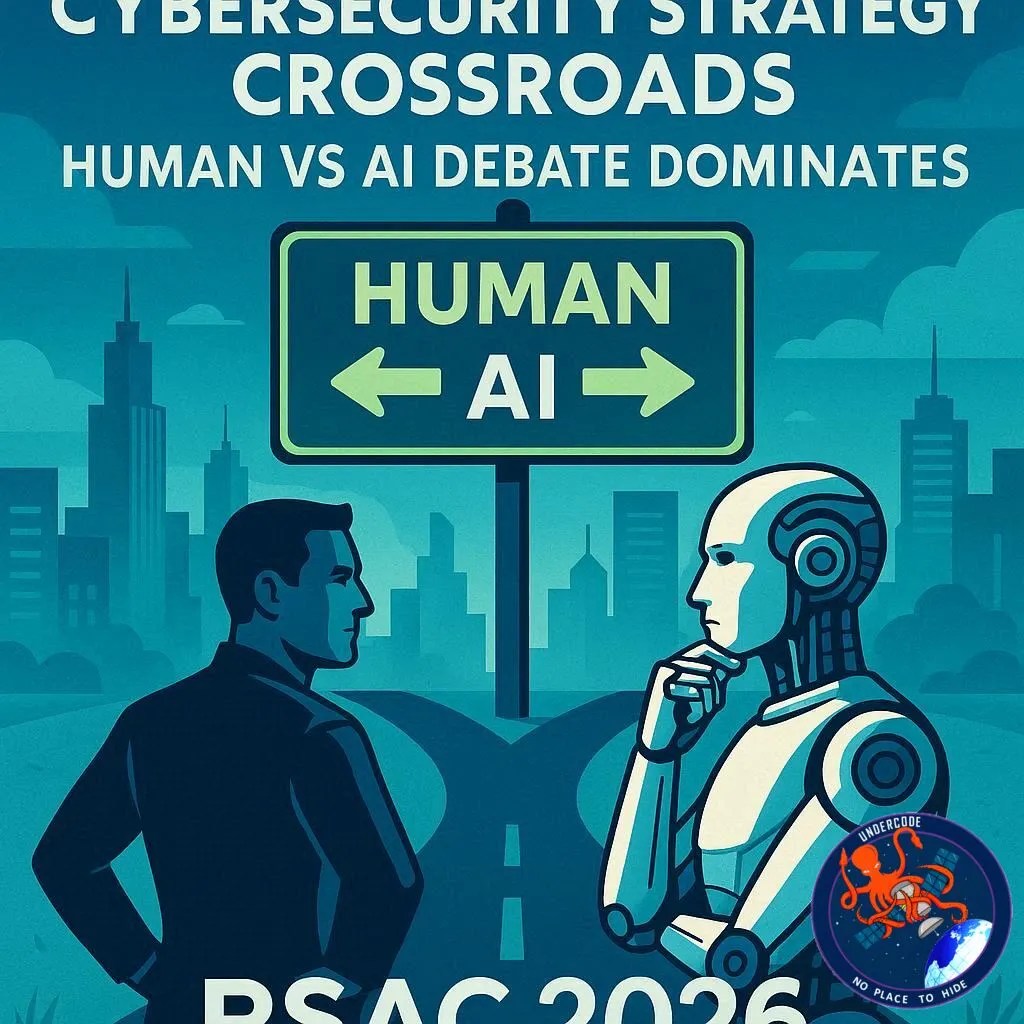
One of the most striking developments is the rise of “agentic AI,” a concept where AI systems are designed to act independently, making decisions without constant human input. This shift reflects a broader ambition within the industry to scale cybersecurity operations in response to increasingly sophisticated threats. However, this ambition has sparked intense debate among cybersecurity leaders. The long-standing principle of keeping a “human in the loop” is now being challenged, with some executives arguing that it is no longer practical in large-scale environments.
Emma Smith, a leading CISO voice at the conference, introduced the idea of “human on the loop,” suggesting that AI should take primary control while humans intervene only when necessary. This approach aims to address the scalability problem, as organizations struggle to keep up with the sheer volume of alerts and decisions generated by AI systems. Yet, this shift raises concerns about trust, accountability, and the potential risks of over-relying on technology that is still evolving.
Beyond AI, the conference highlighted significant changes in the threat landscape. Supply chain attacks targeting open-source ecosystems have become more aggressive and complex, with attackers exploiting dependencies to infiltrate multiple layers of software development. These attacks are particularly dangerous because they can spread silently across systems, affecting organizations far beyond the initial point of compromise.
At the same time, ransomware trends show a mixed but somewhat encouraging picture. Organizations are improving their defenses, leading to a decline in ransom payments and better recovery capabilities. However, attackers are adapting by shifting their focus toward data theft rather than encryption. This evolution underscores a critical reality: while some threats may diminish, new ones quickly take their place.
Another notable observation from RSAC 2026 was the absence of government representation, which traditionally plays a key role in cybersecurity collaboration. This absence created a noticeable gap in discussions, highlighting the growing reliance on private sector leadership in shaping cybersecurity strategies.
Overall, the conference painted a picture of an industry in transition. AI is no longer a future concept but a present force reshaping how security is managed. Yet, with this transformation comes uncertainty, as organizations must balance innovation with caution, efficiency with oversight, and automation with human expertise.
What Undercode Say: The Real Risk Is Not AI, But Overconfidence in It
The cybersecurity industry is entering a phase where technological capability is advancing faster than strategic maturity. The aggressive push toward AI-driven security solutions reveals not just innovation, but also a subtle pressure to adopt tools before their long-term implications are fully understood. This creates a dangerous imbalance, where organizations may prioritize speed and scalability over resilience and control.
The shift from “human in the loop” to “human on the loop” sounds efficient on paper, but it fundamentally alters the philosophy of cybersecurity. It moves decision-making authority away from human analysts and into systems that, despite their sophistication, still lack contextual judgment and ethical reasoning. This is not just a technical adjustment, it is a cultural transformation within security operations.
One of the most overlooked risks is the illusion of control. AI systems can process data and generate insights at unprecedented speed, but they also introduce new blind spots. When organizations rely too heavily on automated decisions, they may fail to question anomalies or challenge incorrect outputs. This creates a scenario where errors are not just possible, but scalable.
Another critical issue is the asymmetry between defenders and attackers. While organizations are experimenting with AI cautiously, threat actors are adopting it aggressively. They are not constrained by compliance, ethics, or governance, which allows them to exploit AI capabilities more freely. This imbalance means that even advanced defensive systems may struggle to keep pace with offensive innovation.
The evolution of ransomware into data theft operations is a perfect example of how attackers adapt faster than defenders. As organizations improve their backup and recovery strategies, attackers simply shift their focus to more profitable and less detectable methods. This highlights a fundamental truth in cybersecurity: defense improvements do not eliminate threats, they redirect them.
The absence of government presence at RSAC 2026 also signals a deeper issue. Cybersecurity is no longer just a technical challenge, it is a geopolitical and economic one. Without strong collaboration between public and private sectors, the industry risks fragmentation, where standards, responses, and intelligence sharing become inconsistent.
Perhaps the most concerning trend is the normalization of AI hype. When every vendor claims to offer AI-driven solutions, it becomes difficult to distinguish genuine innovation from marketing exaggeration. This environment encourages rushed adoption, where organizations invest in tools without fully understanding their limitations or integration challenges.
The future of cybersecurity will not be determined by how advanced AI becomes, but by how wisely it is implemented. Organizations that treat AI as a replacement for human expertise will likely face unexpected vulnerabilities. In contrast, those that view AI as an augmentation tool, enhancing rather than replacing human decision-making, will be better positioned to navigate this transition.
Ultimately, the debate is not about whether AI should be used, but about how much trust should be placed in it. Trust, in cybersecurity, is not given freely, it is earned through reliability, transparency, and consistent performance. Until AI systems can meet these standards, human oversight will remain not just valuable, but essential.
Fact Checker Results
✅ AI dominance at RSAC 2026 is accurate and widely reported across industry coverage
✅ Ransomware payments declining while data theft increases reflects current cybersecurity data trends
❌ Full replacement of human oversight by AI is not yet supported by proven large-scale implementations
Prediction
📊 AI will become the backbone of cybersecurity operations, but human oversight will remain mandatory in high-risk environments
📊 Organizations will adopt hybrid models, blending automation with selective human intervention
📊 Supply chain attacks will intensify, forcing stricter controls on open-source ecosystems
▶️ Related Video (84% Match):
🕵️📝✔️Let’s dive deep and fact‑check.
References:
Reported By: www.darkreading.com
Extra Source Hub (Possible Sources for article):
https://www.facebook.com
Wikipedia
OpenAi & Undercode AI
Image Source:
Unsplash
Undercode AI DI v2
Bing
🔐JOIN OUR CYBER WORLD [ CVE News • HackMonitor • UndercodeNews ]
📢 Follow UndercodeNews & Stay Tuned:
𝕏 formerly Twitter 🐦 | @ Threads | 🔗 Linkedin | 🦋BlueSky | 🐘Mastodon


