
Listen to this Post
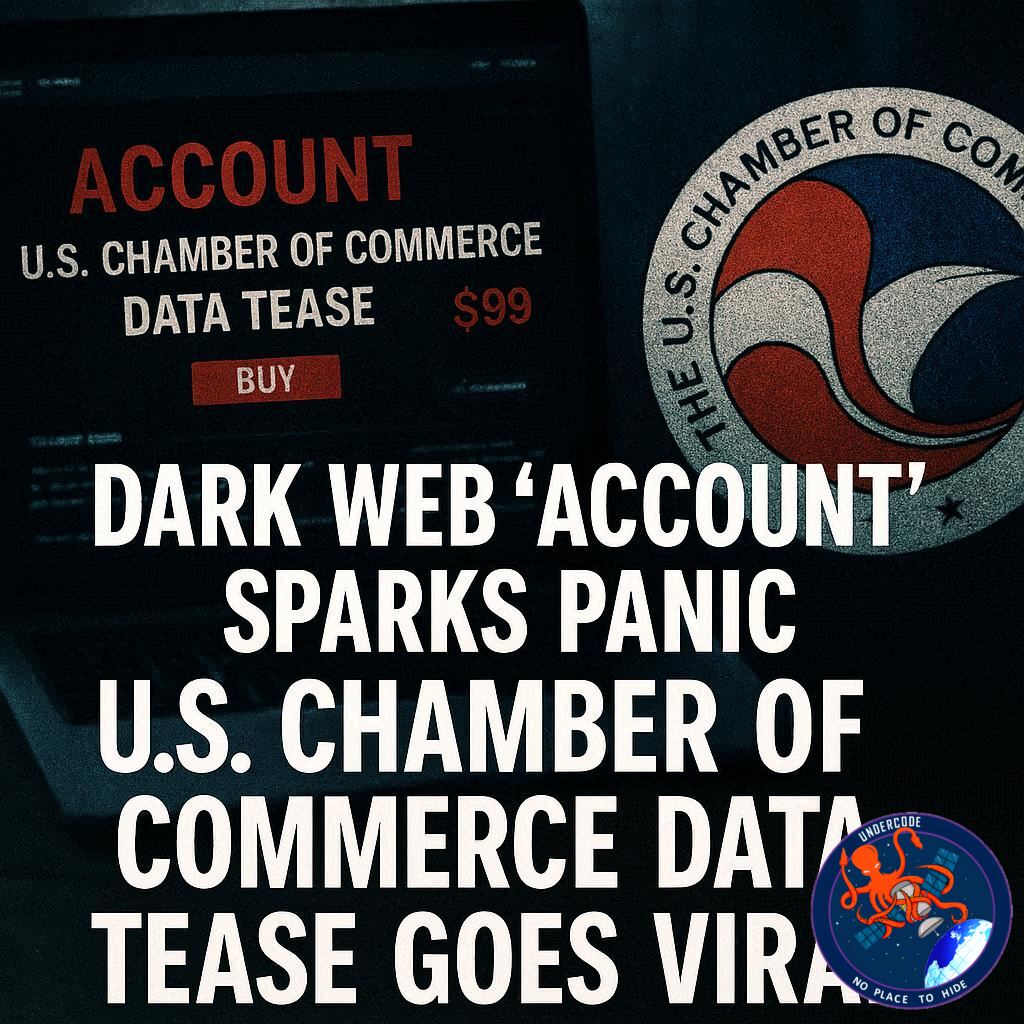
Introduction: A Mysterious Post That Raised More Questions Than Answers
A brief but alarming post circulating under the handle “Dark Web Intelligence” has triggered speculation across online monitoring communities. The message references alleged United States Chamber of Commerce data and appears in a fragmented format, suggesting either an incomplete leak disclosure or a deliberately cryptic intelligence drop. With no verified dataset, document, or technical proof attached, the post has nonetheless gained attention due to its association with dark web monitoring narratives and data breach discussions. The ambiguity of the content has fueled debate about whether this is a genuine cybersecurity signal, a marketing-style teaser, or an unverified claim amplified by social media algorithms.
the Original Post
The post originates from an account identifying itself as “Dark Web Intelligence,” which claims to operate under the motto “We work in the dark to bring clarity to the light.”
It references “United States – US Chamber of Commerce Data L…” with the remainder of the phrase truncated or cut off.
The time stamp indicates it was posted at 7:19 PM on May 16, 2026.
The engagement level shown is minimal, with only a few views and no visible replies or verified confirmations.
No attached files, datasets, or screenshots accompany the claim.
The wording implies a possible data exposure involving the US Chamber of Commerce.
However, no technical details such as hashes, breach vectors, or sample records are included.
The account posting the message is known for sharing dark web-related intelligence-style updates.
The phrasing is structured like a headline rather than a formal cybersecurity report.
This increases ambiguity around whether it is informational or speculative.
There is no confirmation from official US government or Chamber of Commerce sources.
The post appears in isolation without supporting threads or contextual evidence.
No cybersecurity firm has publicly validated the claim at the time of posting.
The content has been interpreted by some users as a teaser for a larger dataset leak.
Others view it as engagement bait within niche cybersecurity communities.
The post has not been widely amplified across mainstream media outlets.
No leaked documents or proof-of-concept files have been made available.
The language suggests a partial or incomplete disclosure.
The structure mirrors common “dark web alert” style posts seen on social platforms.
Despite its brevity, it has generated curiosity due to the high-profile institution mentioned.
The US Chamber of Commerce is a significant economic organization, increasing perceived sensitivity.
No technical analysis can be performed due to lack of data.
The post remains unverified and speculative in nature.
Its credibility depends entirely on future disclosures or corroboration.
As of now, it stands as an unconfirmed intelligence-style social media claim.
What Undercode Say: The Anatomy of a Viral “Shadow Leak” Narrative
The structure of this post reflects a recurring pattern in modern cybersecurity social media culture, where incomplete information is deliberately released to trigger curiosity loops. By referencing a high-value institution like the US Chamber of Commerce, the message immediately activates perceived threat levels in readers, even without technical validation. This tactic is increasingly common in dark web monitoring accounts that rely on attention-driven ecosystems rather than formal disclosure protocols.
What stands out most is the absence of any forensic evidence. Real breach disclosures typically include hashes, sample records, or at least a confirmation of breach scope. Here, none of that exists. Instead, the message relies purely on implication. This creates what analysts often call a “soft disclosure signal,” where information is hinted at rather than proven.
Another important layer is credibility inflation through branding. The account name “Dark Web Intelligence” itself functions as an authority signal, even if no institutional backing is verified. This allows minimal content to appear more significant than it actually is. In cybersecurity discourse, this is a known amplification strategy.
The timing and formatting also resemble engagement farming behavior. Short fragmented posts referencing major organizations tend to spread faster than detailed technical reports because they leave interpretive gaps. Those gaps are then filled by community speculation, often amplifying visibility without adding factual grounding.
From a risk intelligence perspective, such posts should be treated as “unverified indicators” rather than confirmed breaches. They may still serve a purpose in early warning systems, but only when corroborated by additional sources such as breach databases, cybersecurity firm alerts, or official statements.
There is also the possibility of misinformation fatigue. As users are repeatedly exposed to similar vague “dark web leak” claims, distinguishing between real incidents and attention-driven content becomes harder. This gradually lowers trust in legitimate cybersecurity reporting channels.
Ultimately, the key issue is not whether the claim is true or false, but whether it contains actionable intelligence. In its current form, it does not. It remains a signal without substance, awaiting validation or dismissal.
🔍 Fact Checker Results
No confirmed breach of the US Chamber of Commerce is verified by official or cybersecurity sources.
The post contains no technical evidence such as data samples, hashes, or breach methodology.
The claim currently stands as unverified social media content with no corroboration.
📊 Prediction: What Happens Next After This Kind of Leak Teaser
If history is any indicator, posts like this typically follow one of three trajectories. The first and most common outcome is complete silence, where no additional data is ever released and the claim fades away. The second possibility is delayed amplification, where fragments or “samples” appear later on underground forums, attempting to retroactively validate the initial teaser.
A third scenario involves external validation, where cybersecurity firms or affected organizations confirm or deny the incident. In that case, the original vague post often becomes retrospectively cited as an early warning signal.
Given the current lack of supporting evidence, the most likely outcome is dormancy. The post may continue circulating in niche communities but without evolving into a verified incident unless new data emerges.
🕵️📝Let’s dive deep and fact‑check.
References:
Reported By: x.com
Extra Source Hub (Possible Sources for article):
https://www.twitter.com
Wikipedia
OpenAi & Undercode AI
Image Source:
Unsplash
Undercode AI DI v2
Bing
🔐JOIN OUR CYBER WORLD [ CVE News • HackMonitor • UndercodeNews ]
📢 Follow UndercodeNews & Stay Tuned:
𝕏 formerly Twitter 🐦 | @ Threads | 🔗 Linkedin | 🦋BlueSky | 🐘Mastodon


