
Listen to this Post
Introduction: A Familiar Ransomware Name Returns to the Dark Web
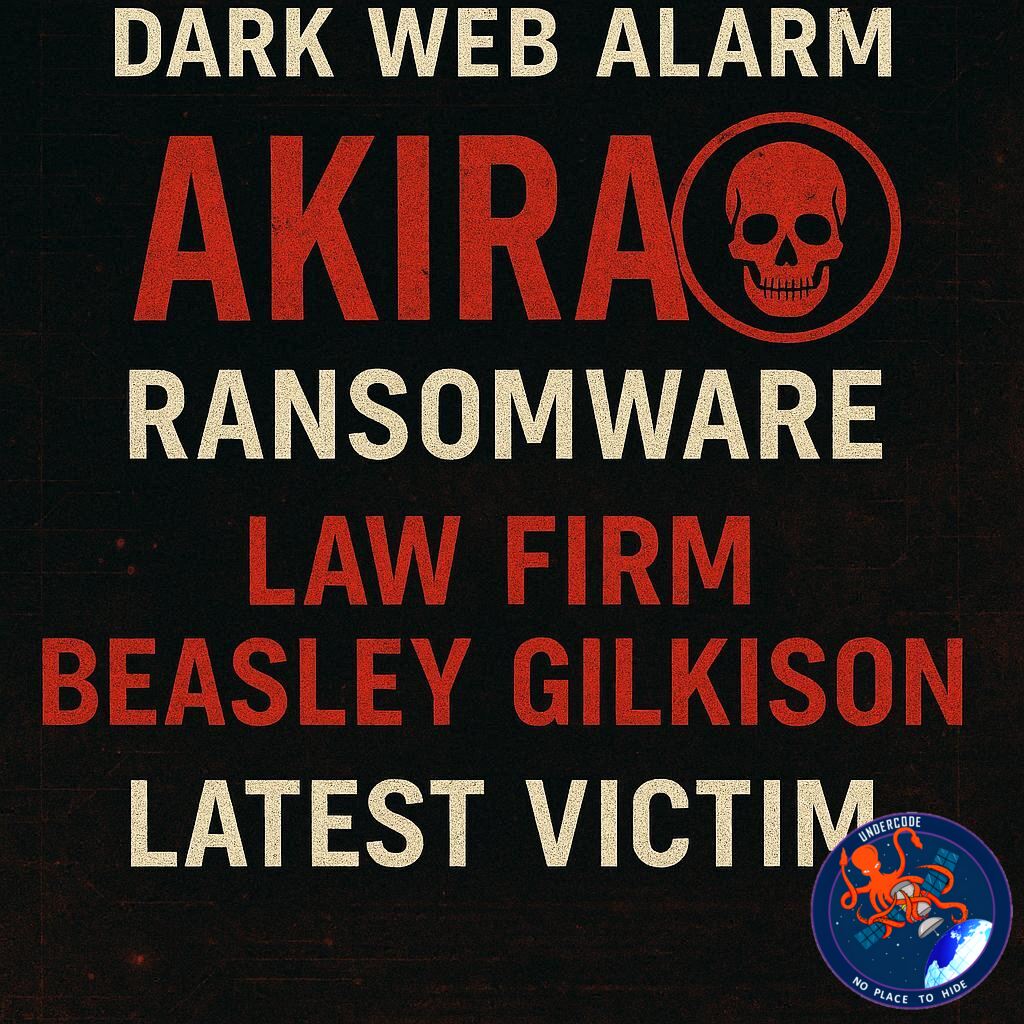
The global ransomware ecosystem continues to churn, and once again, a familiar threat actor has surfaced on the dark web. On February 10, 2026, cybersecurity monitors flagged a new claim by the Akira ransomware group, alleging a successful attack against Beasley & Gilkison, a law firm now listed among the group’s victims. The disclosure, detected by ThreatMon’s Threat Intelligence Team, adds another data point to Akira’s growing track record and underscores the ongoing vulnerability of professional services firms to targeted cyber extortion.
Incident Overview: Akira Adds a New Name to Its Victim List
On February 10, 2026, at approximately 11:52 AM UTC+3, dark web monitoring systems observed Akira ransomware activity referencing Beasley & Gilkison. The claim was publicly surfaced through threat intelligence tracking, highlighting the firm as a newly added victim on Akira’s leak infrastructure. While no technical details or ransom amounts were disclosed in the public notice, the inclusion alone suggests a potential data breach, encryption event, or extortion attempt consistent with Akira’s past operations.
Source of Detection: ThreatMon’s Dark Web Monitoring
The alert originated from the ThreatMon Threat Intelligence Team, which actively monitors ransomware groups, underground forums, and leak sites for indicators of compromise and victim disclosures. ThreatMon’s platform aggregates IOC data and command-and-control (C2) intelligence, enabling early detection of emerging threats and confirmation of actor activity. In this case, their monitoring identified Akira’s claim and associated metadata, including the victim name and timestamp.
About the Threat Actor: Who Is Akira Ransomware?
Akira is a well-established ransomware operation known for double-extortion tactics. Like many modern ransomware groups, Akira typically combines file encryption with data theft, pressuring victims to pay by threatening public disclosure. The group has historically targeted a broad range of sectors, with a notable focus on professional services, manufacturing, healthcare, and legal organizations—entities that often hold sensitive data and face high operational pressure to restore access quickly.
The Victim Profile: Why Law Firms Are High-Value Targets
Law firms such as Beasley & Gilkison represent particularly attractive targets for ransomware actors. They manage confidential client data, legal strategies, contracts, and personally identifiable information. Even a limited breach can carry severe reputational, legal, and financial consequences. For attackers, this sensitivity increases the likelihood of ransom negotiations, making legal practices a recurring fixture on ransomware leak sites.
Public Disclosure Timing: Why the Date Matters
The February 10, 2026 disclosure date is significant because ransomware groups often publish victim names only after initial contact or failed negotiations. While not definitive proof of data exfiltration, public listing usually signals that the attackers believe they have leverage. In many cases, such disclosures precede partial data leaks designed to pressure victims into compliance.
Lack of Technical Details: A Common Ransomware Pattern
Notably, the publicly available information does not include encryption proofs, sample data leaks, or ransom demands. This absence is not unusual in early-stage disclosures. Ransomware groups frequently stagger information releases, starting with a simple victim listing before escalating to file samples or countdown timers if negotiations stall.
Visibility Through Social Platforms and OSINT
The detection gained visibility through open-source intelligence channels and social platforms that track ransomware activity. These signals, while not official confirmations from the victim organization, are widely used by cybersecurity professionals to assess emerging risks and correlate threat actor behavior across incidents.
Broader Context: Ransomware Activity in Early 2026
This incident fits into a broader trend observed in early 2026: ransomware groups maintaining pressure despite increased law enforcement scrutiny. Rather than disappearing, many groups have refined their operations, improved encryption reliability, and doubled down on sectors with slower incident response maturity, including small-to-mid-sized professional firms.
Operational Silence: What We Don’t Know Yet
As of the detection timestamp, there has been no public statement from Beasley & Gilkison confirming or denying the incident. Such silence is common during active incident response, as organizations assess scope, notify stakeholders, and consult legal and cybersecurity advisors before making disclosures.
What Undercode Say:
The Akira claim involving Beasley & Gilkison highlights a persistent reality: ransomware is no longer a purely technical problem—it is a business risk problem. Law firms, in particular, sit at the intersection of sensitive data, strict confidentiality expectations, and regulatory exposure. From an attacker’s perspective, that combination is ideal.
What stands out in this case is not the sophistication of the claim, but its predictability. Akira’s operational playbook has been consistent: name the victim, apply public pressure, and let uncertainty do the rest. Even without leaked files, the reputational damage begins the moment a firm’s name appears on a dark web list.
Another key takeaway is the role of third-party intelligence platforms like ThreatMon. These platforms increasingly function as early warning systems, often surfacing incidents before victims go public. This asymmetry means organizations may already be under scrutiny by clients, partners, or regulators by the time they finish internal assessments.
The legal sector’s ongoing exposure also raises questions about cybersecurity investment priorities. Many firms still treat security as a compliance checkbox rather than a resilience strategy. Ransomware actors understand this gap and exploit it ruthlessly, especially where legacy systems, limited segmentation, and minimal endpoint monitoring persist.
There is also a psychological element at play. Public victim listings are designed to induce urgency and fear, not just in the affected organization but across the sector. Each new name serves as a warning shot to peers, reinforcing the attacker’s reputation and reach.
From a strategic standpoint, Akira’s continued visibility suggests that takedowns and sanctions have not meaningfully disrupted its operations. Instead, the group appears adaptive, opportunistic, and patient—traits that make it particularly dangerous in 2026’s threat landscape.
Finally, incidents like this underscore the importance of incident readiness. Whether or not Beasley & Gilkison ultimately confirms the attack, the mere appearance of its name in ransomware intelligence feeds is enough to trigger client concern and internal crisis management. In today’s environment, perception moves faster than verification.
🔍 Fact Checker Results
✅ Akira is a known ransomware group associated with dark web victim disclosures.
✅ ThreatMon actively tracks ransomware activity and publishes IOC and C2 intelligence.
❌ No public confirmation yet exists regarding data exfiltration or ransom demands in this case.
📊 Prediction
Akira is likely to escalate pressure if negotiations fail, potentially releasing sample data or additional proof on its leak site. More law firms and professional services organizations may appear in similar disclosures throughout 2026 unless sector-wide cybersecurity maturity improves.
🕵️📝✔️Let’s dive deep and fact‑check.
References:
Reported By: x.com
Extra Source Hub (Possible Sources for article):
https://www.twitter.com
Wikipedia
OpenAi & Undercode AI
Image Source:
Unsplash
Undercode AI DI v2
Bing
🔐JOIN OUR CYBER WORLD [ CVE News • HackMonitor • UndercodeNews ]
📢 Follow UndercodeNews & Stay Tuned:
𝕏 formerly Twitter 🐦 | @ Threads | 🔗 Linkedin | 🦋BlueSky | 🐘Mastodon


