
Listen to this Post
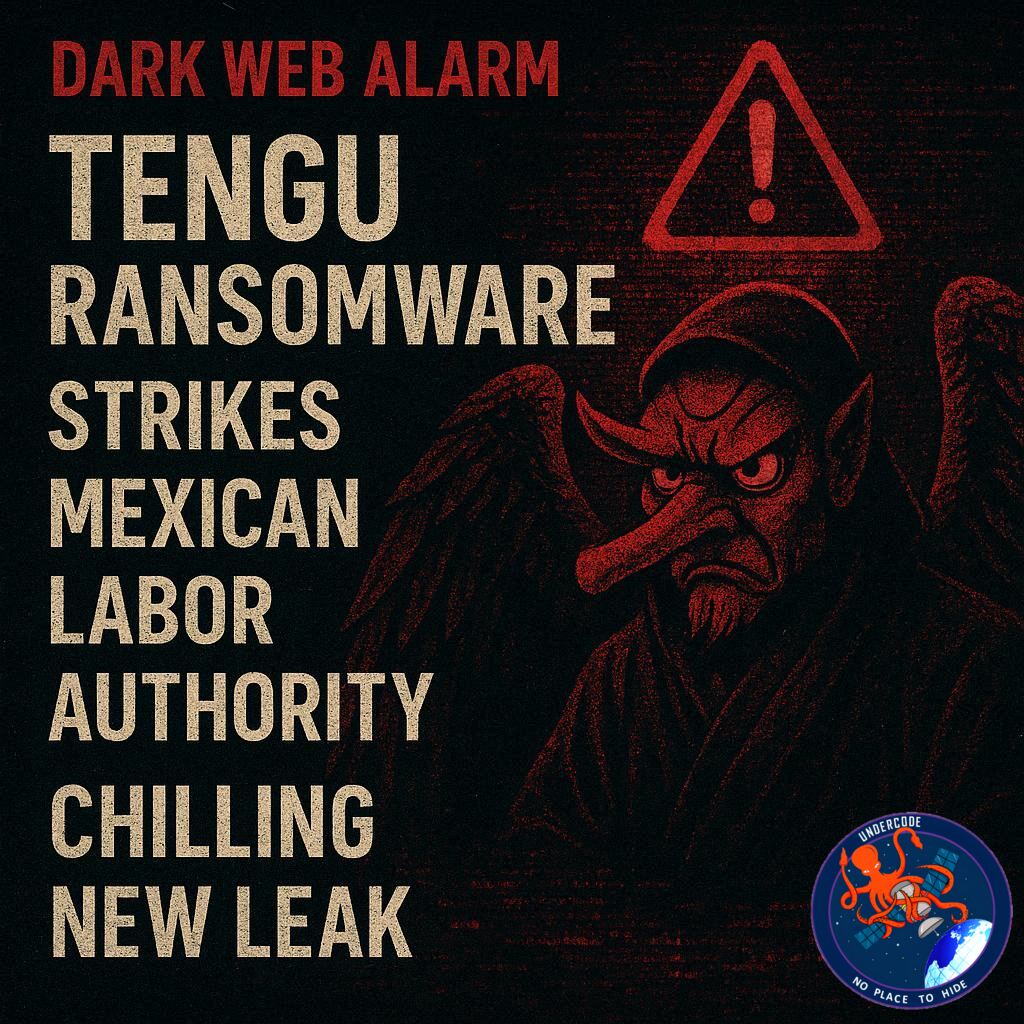
Introduction: A New Signal From the Dark Web
A fresh alert from the cybercrime underground is raising serious concerns about the security of public institutions in Latin America. Threat intelligence monitors have detected that the Tengu ransomware group, an increasingly aggressive actor on the dark web, has listed Junta Local de Conciliación y Arbitraje, a key Mexican labor and arbitration authority, as one of its latest victims. While official confirmation from the institution is still absent, the appearance of this claim in ransomware leak channels is a warning sign that sensitive labor and legal data may already be compromised.
the Original Report
According to activity tracked by the ThreatMon Threat Intelligence Team, the ransomware group known as Tengu has added Junta Local de Conciliación y Arbitraje to its victim list as of February 10, 2026. The detection was shared publicly through social media monitoring, highlighting ongoing ransomware operations discussed on dark web forums and leak sites. The post identifies Tengu as the threat actor and the Mexican labor authority as the victim, with a precise timestamp indicating when the claim surfaced. ThreatMon, a platform developed for end-to-end threat intelligence, ransomware monitoring, IOC tracking, and command-and-control data, flagged this incident as part of its continuous surveillance of cybercriminal ecosystems. While no technical details, ransom amount, or proof-of-compromise files were included in the initial alert, the listing itself strongly suggests that Tengu believes it has successfully infiltrated the organization’s systems. Such announcements are typically used by ransomware groups to pressure victims into negotiations by threatening to leak stolen data publicly. The report also reflects a broader trend in which public-sector institutions are increasingly targeted due to legacy systems, limited cybersecurity budgets, and the high sensitivity of the data they manage, especially in labor, legal, and arbitration cases involving citizens and private companies.
What Undercode Say:
This incident, even at the claim stage, fits a familiar and troubling ransomware playbook. Groups like Tengu rarely list victims casually; doing so risks exposing themselves if the claim is false. In most cases, a public-sector organization appears on a leak site only after attackers have achieved network access, exfiltrated data, and deployed encryption or at least proven persistence. For a labor and arbitration authority, the potential impact is severe, as such institutions often store personal identification data, employment records, dispute documentation, and legal filings tied to both individuals and corporations.
From a strategic perspective, targeting labor authorities is a calculated move. These organizations sit at the intersection of government, workers, and private employers, meaning any data breach has ripple effects across multiple sectors. Ransomware operators understand that the reputational damage alone can be enough to force rapid negotiations, even before service disruption becomes public.
The appearance of this claim also highlights how dark web intelligence has become an early warning system. Platforms like ThreatMon do not wait for press releases or official disclosures; they track attacker behavior in real time, often detecting incidents days or weeks before victims acknowledge them. This gap between detection and confirmation is where the real risk lives, because affected organizations may still be assessing damage while stolen data is already being packaged for extortion.
Another critical angle is the growing sophistication of ransomware branding. Tengu, like many modern groups, operates less like a loose gang and more like a business, complete with victim listings, timelines, and media pressure strategies. Publicly naming Junta Local de Conciliación y Arbitraje is part of that psychological warfare, designed to signal credibility and dominance.
For governments, this case reinforces an uncomfortable reality: cybersecurity is now inseparable from public trust. When labor institutions are hit, citizens may fear not just service outages but exposure of deeply personal disputes and employment histories. Even if systems are restored, confidence can take far longer to rebuild.
Ultimately, whether or not Tengu releases stolen data, the listing alone should trigger immediate incident response, transparency planning, and cross-agency coordination. Silence in these moments often benefits attackers more than defenders, especially in an era where dark web narratives can spread faster than official statements.
Fact Checker Results
The claim originates from dark web ransomware monitoring rather than an official government disclosure.
ThreatMon is a known threat intelligence platform that tracks ransomware leak activity and attacker infrastructure.
As of now, there is no public confirmation or denial from Junta Local de Conciliación y Arbitraje.
Prediction
If the pattern holds, Tengu may escalate by publishing sample data or issuing a countdown to pressure negotiations. Public-sector ransomware targeting is likely to intensify in 2026, with labor and legal institutions remaining high-value targets due to the sensitivity of their records.
🕵️📝✔️Let’s dive deep and fact‑check.
References:
Reported By: x.com
Extra Source Hub (Possible Sources for article):
https://www.quora.com/topic/Technology
Wikipedia
OpenAi & Undercode AI
Image Source:
Unsplash
Undercode AI DI v2
Bing
🔐JOIN OUR CYBER WORLD [ CVE News • HackMonitor • UndercodeNews ]
📢 Follow UndercodeNews & Stay Tuned:
𝕏 formerly Twitter 🐦 | @ Threads | 🔗 Linkedin | 🦋BlueSky | 🐘Mastodon


