
Listen to this Post
 Introduction: A Cybersecurity Shockwave Allegedly Emerging From the Dark Web
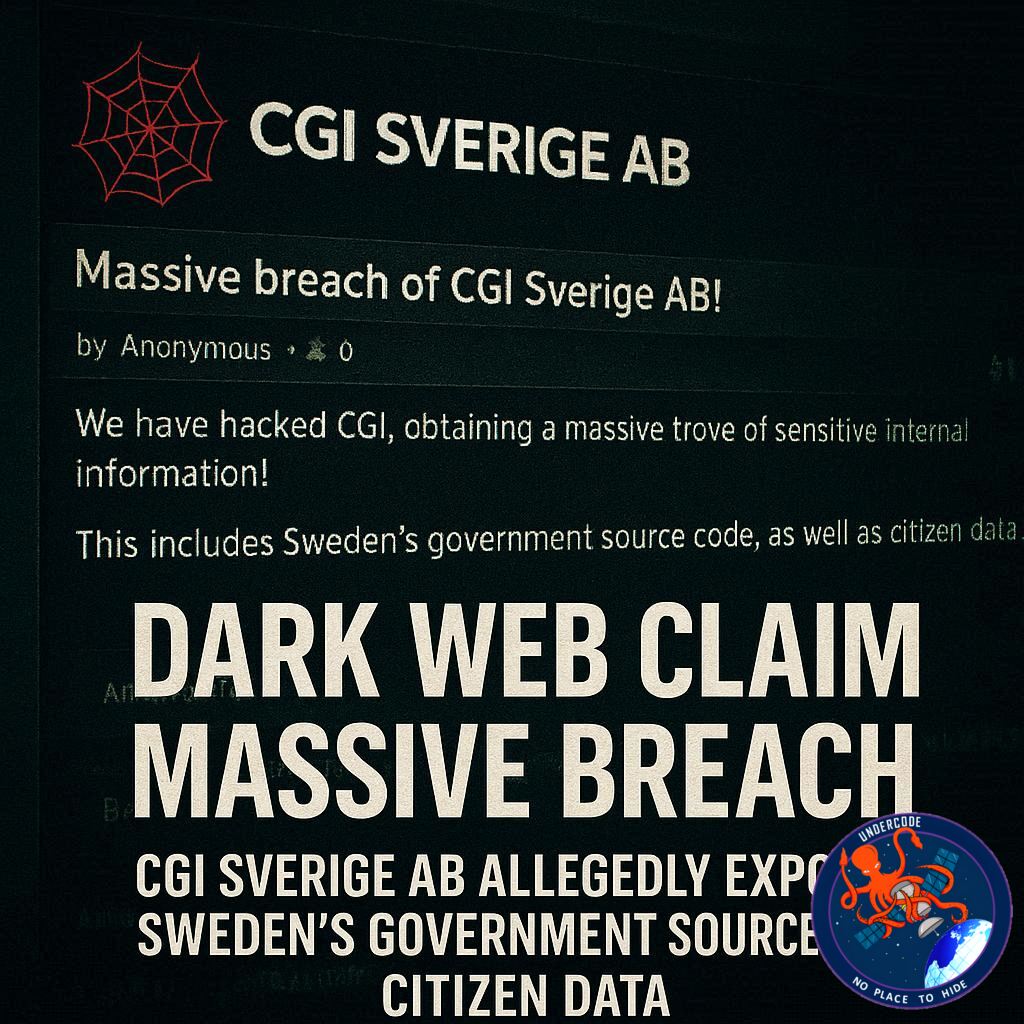
A startling allegation circulating across cybersecurity monitoring channels suggests that CGI Sverige AB, a major IT contractor in Sweden, may have suffered a devastating infrastructure breach. According to posts shared by DailyDarkWeb, the attack allegedly resulted in the leak of sensitive source code belonging to Sweden’s digital government systems and the exposure of extensive citizen personally identifiable information (PII).
If verified, the incident could represent one of the most serious cybersecurity threats to Swedish public infrastructure in recent years. Government platforms manage everything from digital identity services to taxation systems and administrative portals, meaning a breach of this magnitude could have far-reaching implications not just for institutions—but for millions of citizens relying on digital governance.
The claim remains under scrutiny, and as with many reports originating from dark web monitoring channels, confirmation from official sources is still pending. Yet the possibility alone raises urgent questions about cybersecurity resilience, third-party contractor risks, and the vulnerability of modern digital governments.
Dark Web Report Raises Alarm Over Alleged Infrastructure Breach
Reports circulating online claim that CGI Sverige AB experienced a major infrastructure compromise that allowed attackers to infiltrate internal systems and extract critical data. The alleged breach was highlighted by DailyDarkWeb, a monitoring account that frequently reports cyber incidents discovered on underground forums and hacker marketplaces.
According to the report, attackers claim to possess source code associated with Sweden’s e-government platform. Such code typically forms the backbone of digital services used by citizens to access government portals, verify identities, file taxes, or interact with administrative agencies.
Alleged Exposure of Swedish Citizen Personal Data
One of the most concerning aspects of the claim is the reported exposure of citizen databases containing personally identifiable information. PII may include details such as names, addresses, identification numbers, or contact information.
If these claims are accurate, the breach could potentially impact a large portion of Sweden’s population. PII leaks are particularly dangerous because the data can be used for identity theft, fraud schemes, and targeted phishing campaigns.
Government Platform Source Code Allegedly Leaked
The alleged leak of e-government source code could have severe long-term security consequences. Source code acts as the blueprint for how systems function, including authentication procedures, security logic, and backend integrations.
If malicious actors obtain such code, they may be able to identify hidden vulnerabilities, design sophisticated attacks, or bypass security protections in the future. Even if immediate exploitation does not occur, the exposure of code could weaken trust in the infrastructure supporting digital governance.
CGI Sverige AB’s Role in Sweden’s Digital Infrastructure
CGI Sverige AB is part of the global IT consulting and services giant CGI Group, which provides digital transformation services for governments, enterprises, and public sector organizations. In Sweden, the company has played a significant role in developing and maintaining digital infrastructure used by government agencies.
Because contractors like CGI manage critical systems, any breach involving their infrastructure could indirectly affect multiple public institutions at once. This makes third-party IT providers a frequent target for cybercriminal groups seeking high-value access.
Why Cybercriminals Target Government Platforms
Government platforms represent valuable targets for attackers because they combine large user bases with sensitive information. Citizen registries, national identification systems, and tax databases hold highly valuable data that can be monetized or weaponized.
Hackers may seek to sell such data on underground markets, use it for financial scams, or leverage it in politically motivated cyber operations.
The Growing Threat of Supply-Chain Cyberattacks
Many major cyber incidents in recent years have exploited vulnerabilities in third-party providers rather than government agencies themselves. When a contractor manages infrastructure, software, or cloud services, it becomes a gateway into multiple institutions.
This phenomenon—known as a supply-chain attack—can amplify the scale of a breach dramatically. Instead of targeting a single organization, attackers compromise a trusted partner and inherit access to its clients.
The Difficulty of Verifying Dark Web Claims
Cybersecurity reporting that originates from dark web monitoring channels must always be approached cautiously. Threat actors often exaggerate or fabricate breach claims in order to attract buyers or boost their reputation within hacker communities.
In some cases, leaked data samples prove genuine. In other cases, the claims turn out to be recycled information from older breaches or entirely fabricated datasets.
Until official statements or independent forensic verification appear, the situation surrounding CGI Sverige AB remains an allegation rather than a confirmed cybersecurity incident.
What Undercode Says:
The Rise of Digital Governments Creates New Attack Surfaces
Over the past decade, governments across Europe—including Sweden—have aggressively digitized public services. Online tax filing, digital identity systems, electronic healthcare records, and online administrative portals are now central to daily life.
While these systems dramatically improve efficiency, they also expand the potential attack surface. Every database, API, or authentication service becomes a possible entry point for attackers. The more integrated these systems become, the more catastrophic a breach could be.
Third-Party IT Contractors Are Now Critical National Infrastructure
Organizations like CGI Sverige AB are not merely service vendors anymore—they are effectively part of a nation’s critical infrastructure ecosystem. When governments outsource development and maintenance of digital platforms, they entrust private companies with national-level data.
This dependency creates a new security paradigm where protecting government systems requires protecting contractor ecosystems as well.
Source Code Exposure Can Lead to Future Cyber Campaigns
Even if attackers do not immediately exploit leaked source code, possession of such information gives them an advantage. Cybercriminals can spend months analyzing codebases, identifying vulnerabilities, and preparing long-term attack strategies.
This method is increasingly common among sophisticated threat groups that conduct patient reconnaissance before launching targeted intrusions.
Citizen Data Breaches Are More Dangerous Than Corporate Breaches
When a private company suffers a breach, the consequences typically involve financial damage or reputational harm. But when government platforms leak citizen data, the stakes are dramatically higher.
Citizens cannot simply “opt out” of national identity systems or public databases. That means the data exposed in such breaches can remain valuable to criminals for years, even decades.
The Psychological Impact of Government Data Leaks
Beyond technical risks, government breaches damage public trust. Citizens expect national digital systems to be secure because they are tied to essential services like taxation, voting records, healthcare systems, and social benefits.
Even an alleged breach—if widely reported—can erode confidence in digital governance.
Dark Web Intelligence Accounts Are Double-Edged Sources
Accounts like DailyDarkWeb often act as early warning systems for cybersecurity incidents. Many major breaches were first spotted by researchers monitoring underground forums.
However, these reports must be treated as signals rather than confirmed facts. Cybersecurity professionals often rely on such intelligence to begin investigations, but verification remains essential.
Europe’s Cybersecurity Framework Faces Increasing Pressure
The European Union has been strengthening its cybersecurity regulations, including frameworks such as NIS2, which aims to increase resilience among critical infrastructure providers.
If the alleged Swedish breach proves legitimate, it could become a case study for evaluating whether current regulations are sufficient to protect national digital ecosystems.
The Broader Lesson: Digital Transformation Must Include Security Transformation
The rush toward digital government has sometimes prioritized efficiency over resilience. Secure coding practices, infrastructure segmentation, continuous monitoring, and penetration testing must evolve alongside digital services.
Without these safeguards, the same systems designed to simplify governance could become large-scale vulnerability points.
🔍 Fact Checker Results
✅ Claim Origin
The allegation originates from a post by DailyDarkWeb, a monitoring account that reports cyber incidents discovered on dark web forums.
❌ Official Confirmation
As of now, there has been no publicly verified confirmation from CGI Sverige AB or Swedish authorities validating the breach claim.
⚠️ Evidence Status
No independently verified dataset samples or forensic reports have yet confirmed the alleged exposure of Sweden’s e-government source code or citizen databases.
📊 Prediction
🔮 Increased Investigation by Swedish Cybersecurity Authorities
Authorities in Sweden will likely investigate the claim rapidly, especially given the potential national security implications of a government platform breach.
🛡️ Stronger Security Requirements for Government Contractors
If the allegations gain credibility, Sweden and other European governments may tighten cybersecurity requirements for private contractors managing public infrastructure.
🌐 More Dark Web Monitoring of Government Systems
The incident highlights how cyber intelligence communities monitor underground forums for early breach signals. Governments may invest more heavily in dark web intelligence capabilities to detect threats sooner.
🕵️📝✔️Let’s dive deep and fact‑check.
References:
Reported By: x.com
Extra Source Hub (Possible Sources for article):
https://www.quora.com/topic/Technology
Wikipedia
OpenAi & Undercode AI
Image Source:
Unsplash
Undercode AI DI v2
Bing
🔐JOIN OUR CYBER WORLD [ CVE News • HackMonitor • UndercodeNews ]
📢 Follow UndercodeNews & Stay Tuned:
𝕏 formerly Twitter 🐦 | @ Threads | 🔗 Linkedin | 🦋BlueSky | 🐘Mastodon


