
Listen to this Post
Introduction: Why This Chess.com Leak Is Raising Eyebrows
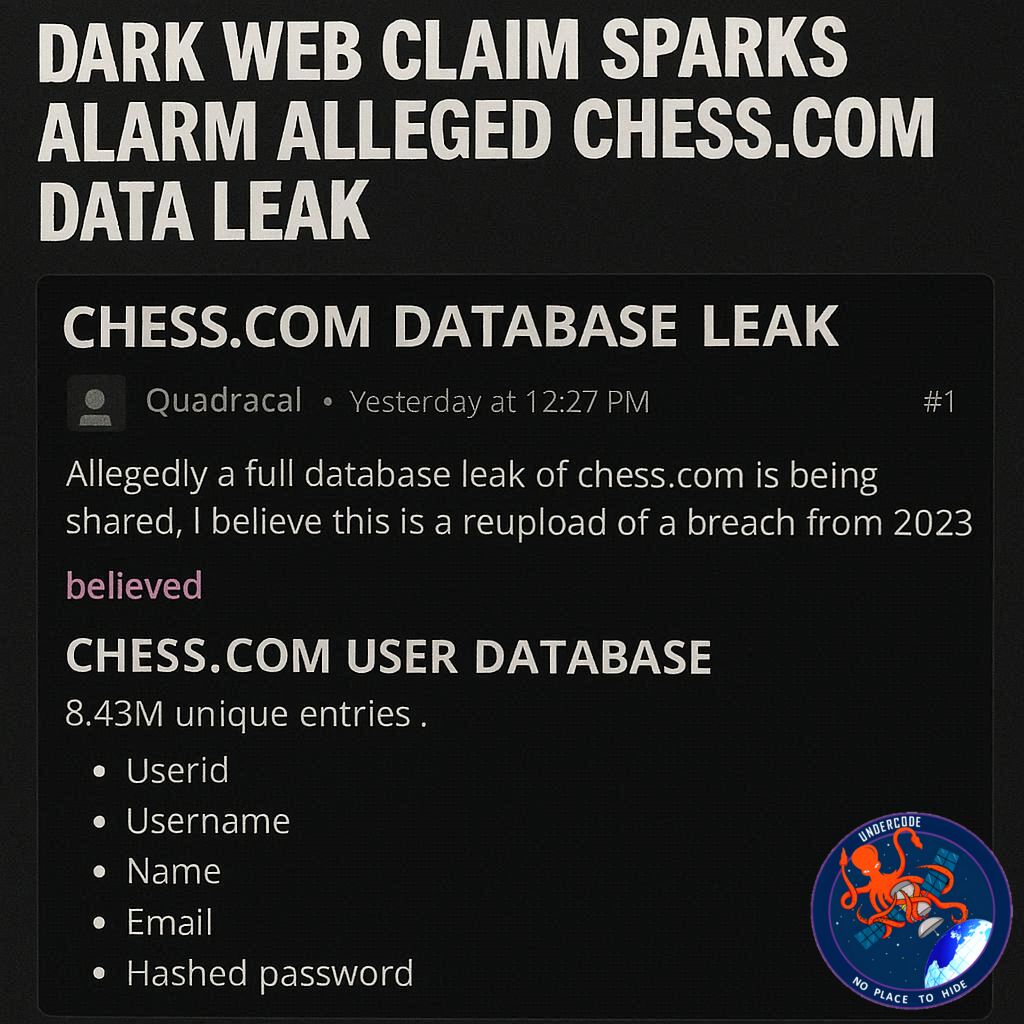
A fresh claim circulating on dark web monitoring channels has reignited concerns about user data security on Chess.com, one of the world’s largest online chess platforms. According to threat intelligence posts, a dataset allegedly containing over 800,000 Chess.com user records has been shared by a threat actor. At first glance, the numbers look serious. But cybersecurity experts are already warning that this may not be a new breach at all—just old data dressed up as a new leak.
the Original Incident and Claims
A threat actor, flagged by the account Dark Web Informer, claimed to have obtained and published a dataset allegedly originating from Chess.com. The dataset reportedly contains 828,327 records, shared in JSONL format, with a total size of 517MB. The exposed fields are extensive and include email addresses, UUIDs, usernames, real names, profile URLs, avatar links, country identifiers, country names, membership start dates, user bios, chess points, and other profile-related metadata.
The post quickly gained traction, drawing attention from the cybersecurity community and Chess.com users alike. Any suggestion of a fresh breach involving hundreds of thousands of users naturally raises alarms, especially given the sensitivity of email addresses and account-linked identifiers.
However, renowned security researcher Troy Hunt, the creator of Have I Been Pwned, reviewed the dataset and publicly pushed back on the claim. According to Hunt, the data appears to be identical to the Chess.com breach disclosed in 2023. He noted that not only do the records match previous data, but they are also sorted in the exact same order, a strong indicator that this is recycled information rather than newly exfiltrated data.
Hunt referenced the existing Chess.com breach entry on Have I Been Pwned, suggesting that no new compromise has occurred. In other words, while the dataset is real, the incident itself is not new. The threat actor’s post appears to be a re-release or resale of previously leaked information, a common tactic on dark web forums to generate attention or profit from outdated data.
What Undercode Say:
From an analytical standpoint, this incident highlights a recurring and troubling pattern in the cybercrime ecosystem: old breaches rarely die. Once data is leaked, it can resurface years later, repackaged and rebranded as a “new” incident to exploit fear, confusion, and short attention spans.
The Chess.com case fits this pattern almost perfectly. The dataset size, structure, and ordering strongly suggest that no fresh intrusion took place. Instead, threat actors are leveraging historical data to maintain relevance and credibility in underground communities. This strategy requires far less technical effort than hacking a live system, yet still delivers visibility and potential financial gain.
For users, the distinction between a new breach and recycled data is critical but often overlooked. Even if the leak is old, the risk does not disappear. Email addresses, usernames, and profile metadata can still be used for phishing, account takeover attempts, or credential stuffing—especially if users reused passwords elsewhere at the time of the original breach.
From a platform perspective, Chess.com is once again facing reputational exposure despite no evidence of a new failure. This underscores how long the shadow of a breach can last and why transparency, user education, and long-term remediation matter just as much as the initial incident response.
There is also a broader industry lesson here. Dark web breach claims should never be taken at face value. Verification by trusted third parties—such as Have I Been Pwned—is essential before media outlets, bloggers, or social platforms amplify alarmist narratives. Failure to do so only benefits threat actors who thrive on misinformation and recycled panic.
Finally, this situation reinforces the importance of breach confirmation workflows. Security researchers, journalists, and even everyday users should ask the same questions: Is the data new? Has it appeared before? Do independent experts подтверждают the claim? In this case, those questions quickly deflated what initially looked like a major new security event.
🔍 Fact Checker Results
❌ No evidence supports this being a new Chess.com breach.
✅ Dataset matches the 2023 Chess.com incident already documented by Have I Been Pwned.
✅ Record ordering and structure strongly indicate reused, not freshly stolen, data.
📊 Prediction
Dark web actors will continue recycling high-profile breach data in 2026, as older leaks remain profitable tools for scams, fear-driven clicks, and underground reputation building—making breach verification more important than ever.
🕵️📝✔️Let’s dive deep and fact‑check.
References:
Reported By: x.com
Extra Source Hub (Possible Sources for article):
https://www.discord.com
Wikipedia
OpenAi & Undercode AI
Image Source:
Unsplash
Undercode AI DI v2
Bing
🔐JOIN OUR CYBER WORLD [ CVE News • HackMonitor • UndercodeNews ]
📢 Follow UndercodeNews & Stay Tuned:
𝕏 formerly Twitter 🐦 | @ Threads | 🔗 Linkedin | 🦋BlueSky | 🐘Mastodon


