
Listen to this Post
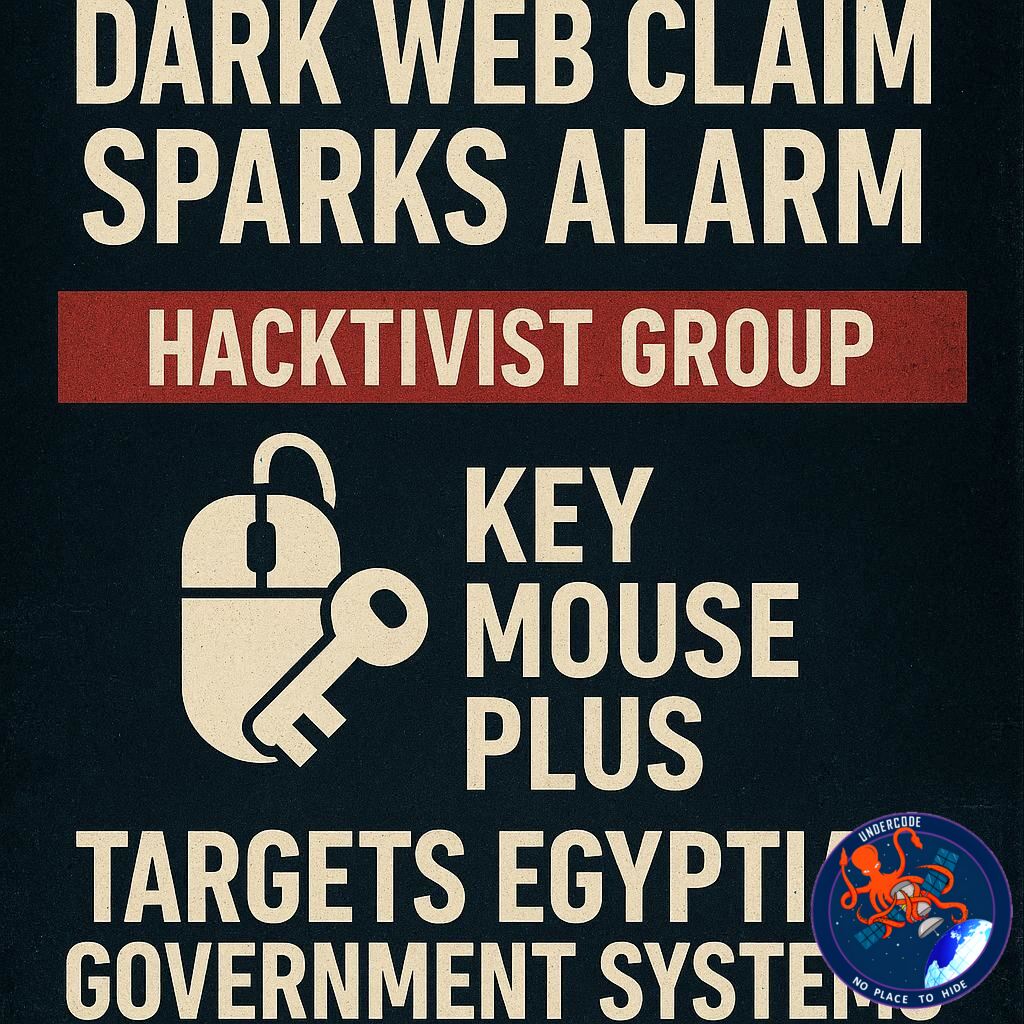
A Sudden Surge in Cyber Tensions Across Egypt
In a development that has raised eyebrows within cybersecurity circles, a hacktivist group known as Keymous Plus has reportedly launched a coordinated cyber campaign targeting several high-profile Egyptian government websites. The claims surfaced via dark web monitoring channels, suggesting disruptions across key national platforms. While the authenticity of these claims remains unverified, the scale and specificity of the alleged targets have drawn significant attention from threat intelligence analysts worldwide.
Reported Targets Include Core Government Infrastructure
According to the group’s statements, the attack campaign focused on a wide range of critical government portals. These include Egypt’s central government portal, the Cabinet’s official website, and several ministries such as the Ministry of Interior, Finance, Petroleum, and Water Resources & Irrigation. These institutions represent essential pillars of governance, making them frequent targets for politically motivated cyber activity.
Evidence Presented Through Monitoring Tools
To support their claims, Keymous Plus reportedly shared monitoring links from Check-Host, a service used to track website availability across global nodes. These links allegedly showed disruptions in accessibility, hinting at possible service outages. However, such evidence is not definitive proof of a successful attack, as temporary outages can occur for various technical reasons unrelated to malicious activity.
Unverified Claims and the Nature of Hacktivism
At this stage, there is no independent confirmation that these disruptions were caused by a coordinated cyberattack. Experts caution that hacktivist groups often exaggerate or misrepresent their impact to gain visibility. The tactics described in this case align closely with Distributed Denial-of-Service (DDoS) attacks, where traffic floods a website to overwhelm its servers and render it temporarily inaccessible.
The Growing Pattern of Regional Cyber Campaigns
This incident appears consistent with a broader trend of escalating cyber campaigns in politically sensitive regions. Hacktivist groups frequently target government infrastructure as a form of digital protest or geopolitical signaling. Egypt, given its strategic importance and regional influence, has increasingly found itself in the crosshairs of such operations.
Cybersecurity Community Responds with Caution
Cybersecurity professionals are approaching these claims with measured skepticism. Without corroboration from official sources or independent monitoring organizations, it is difficult to assess the true extent of the alleged disruptions. Nonetheless, the incident highlights the persistent vulnerability of public-facing government systems to low-cost, high-impact cyber tactics.
What Undercode Says:
The Psychological Warfare Behind Hacktivist Claims
Hacktivist campaigns are not always about technical damage—they are often about perception. By announcing attacks on high-profile government institutions, groups like Keymous Plus aim to create a narrative of disruption and instability. Even unverified claims can erode public confidence and amplify fear, which is a strategic victory in itself.
DDoS Attacks: Simple Yet Effective Digital Weapons
Distributed Denial-of-Service attacks remain one of the most accessible tools in the cyber arsenal. They require relatively low technical sophistication but can cause widespread disruption if not properly mitigated. Government websites, especially those with outdated infrastructure, are particularly susceptible to these attacks due to their high visibility and critical function.
The Role of OSINT in Modern Cyber Conflict
Open-Source Intelligence (OSINT) plays a crucial role in both validating and amplifying such incidents. Monitoring tools like Check-Host provide transparency but can also be manipulated or misinterpreted. Analysts must carefully distinguish between genuine outages and staged evidence designed to support false claims.
Why Egypt Is a Strategic Target
Egypt’s geopolitical position makes it a recurring focus for cyber operations. Its involvement in regional politics, economic influence, and strategic alliances place it in a high-risk category. Targeting Egyptian infrastructure allows hacktivist groups to gain visibility while aligning themselves with broader political narratives.
The Blurred Line Between Hacktivism and Cyber Warfare
Incidents like this highlight the increasingly blurred boundary between hacktivism and state-sponsored cyber warfare. While groups like Keymous Plus present themselves as independent actors, their campaigns can sometimes align with larger geopolitical agendas, intentionally or otherwise.
Media Amplification and the Risk of Misinformation
Social media platforms play a significant role in spreading these claims rapidly. Without proper verification, such reports can quickly become accepted as fact. This creates a dangerous environment where misinformation spreads faster than accurate analysis, complicating the work of cybersecurity professionals.
Infrastructure Resilience Remains a Critical Weakness
Even the possibility of disruption underscores the need for stronger cybersecurity defenses. Governments must invest in resilient infrastructure capable of withstanding high-volume traffic attacks. This includes implementing advanced mitigation systems and conducting regular stress testing.
The Economics of Cyber Disruption
From a cost perspective, launching a DDoS attack is far cheaper than defending against one. This asymmetry gives attackers a significant advantage, especially when targeting public sector systems with limited cybersecurity budgets. The financial imbalance continues to fuel the rise of such attacks globally.
Attribution Challenges in Cyber Incidents
One of the biggest challenges in incidents like this is attribution. Determining who is truly behind an attack—or whether it occurred at all—is notoriously difficult. Hacktivist groups often operate anonymously, making it nearly impossible to verify their claims without forensic investigation.
The Importance of Government Transparency
In situations like these, timely communication from official sources is critical. Governments that fail to address such claims risk allowing speculation to fill the information vacuum. Transparent reporting can help maintain public trust and counteract misinformation.
🔍 Fact Checker Results
Verification Status of the Attack Claims
❌ No confirmed evidence currently supports the claim that Egyptian government sites were successfully disrupted.
Reliability of Hacktivist Sources
⚠️ Hacktivist groups often exaggerate impact; independent validation is required before accepting such claims.
Technical Plausibility of the Incident
✅ The described DDoS-style disruptions are technically feasible and commonly observed in similar campaigns.
📊 Prediction
Escalation of Hacktivist Campaigns in 2026
The frequency of politically motivated cyberattacks is expected to rise, particularly in regions with high geopolitical tension.
Increased Investment in Cyber Defense Infrastructure
Governments, including Egypt, will likely accelerate spending on cybersecurity resilience and DDoS mitigation technologies.
Growing Influence of Information Warfare
Future cyber campaigns will increasingly focus on psychological impact and media manipulation rather than purely technical disruption.
🕵️📝✔️Let’s dive deep and fact‑check.
References:
Reported By: x.com
Extra Source Hub (Possible Sources for article):
https://www.discord.com
Wikipedia
OpenAi & Undercode AI
Image Source:
Unsplash
Undercode AI DI v2
Bing
🔐JOIN OUR CYBER WORLD [ CVE News • HackMonitor • UndercodeNews ]
📢 Follow UndercodeNews & Stay Tuned:
𝕏 formerly Twitter 🐦 | @ Threads | 🔗 Linkedin | 🦋BlueSky | 🐘Mastodon


