
Listen to this Post
Introduction: A Disturbing Claim Emerges From the Dark Web
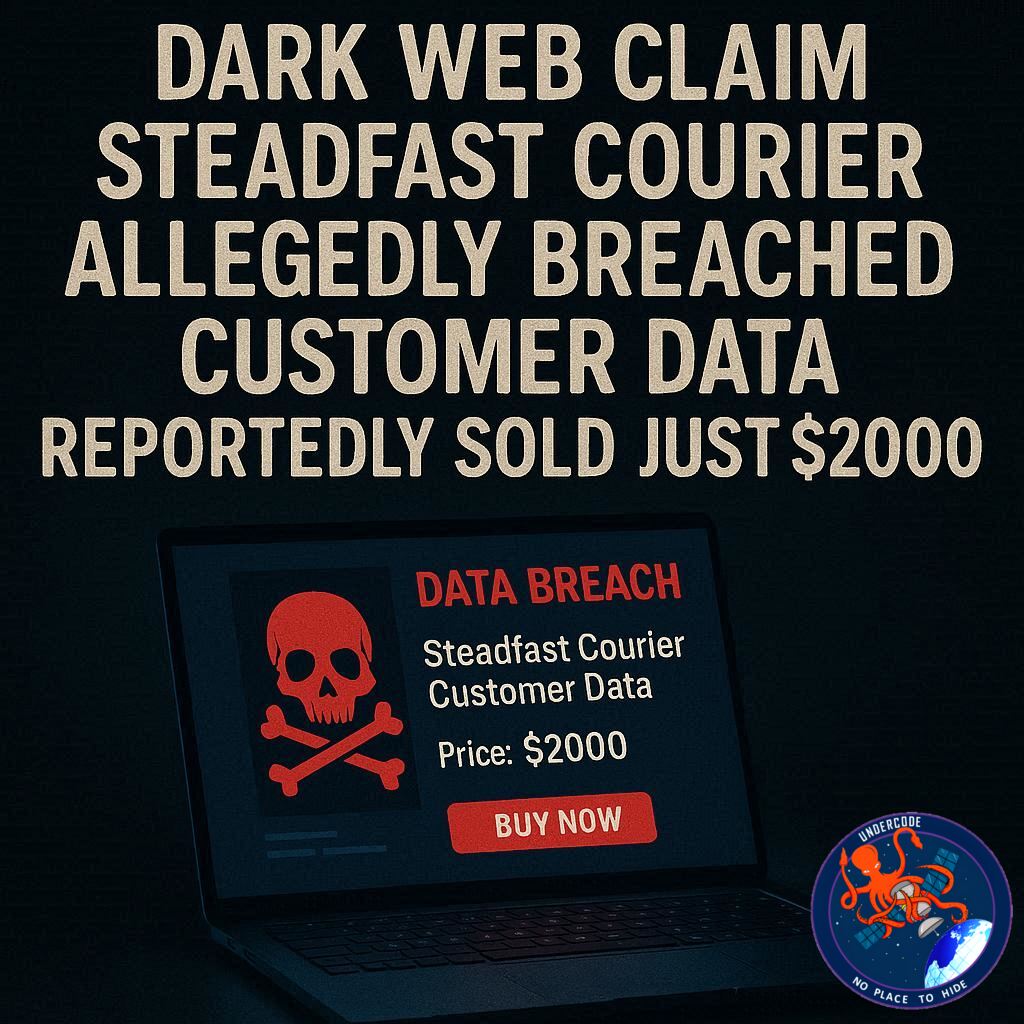
Reports circulating within dark web monitoring communities claim that Steadfast Courier, a logistics and delivery service operating in Bangladesh, may have suffered a serious data breach. According to a post highlighted by dark web intelligence trackers, a hacker is allegedly offering the company’s entire database for sale for only $2,000 USD. If the claim is accurate, the leak could expose thousands—possibly millions—of customers’ personal details, including names, phone numbers, delivery addresses, and shipment tracking IDs.
The alleged breach was first mentioned by the monitoring account Daily Dark Web, which tracks cybercrime activity and data leaks across underground forums. Although the claim remains unverified, cybersecurity experts warn that such incidents are becoming increasingly common as logistics companies accumulate large volumes of personal data. In today’s digital economy, courier services often hold more sensitive information than users realize—making them attractive targets for hackers looking to profit from stolen databases.
Alleged Data Breach Emerges on the Dark Web
A post shared by the cyber intelligence account Daily Dark Web claims that Steadfast Courier’s internal database has appeared on underground cybercrime marketplaces. According to the claim, the entire dataset is being offered for sale for approximately $2,000 USD, a price that suggests the seller may be attempting to quickly monetize the stolen information rather than conduct targeted exploitation.
Dark web marketplaces have become the primary distribution channels for stolen databases. Once posted for sale, these datasets can be purchased by scammers, identity thieves, or competing cybercriminal groups who use the information for fraud schemes, phishing campaigns, or resale.
Sensitive Customer Data Reportedly Included in the Leak
The alleged dataset reportedly contains several types of personally identifiable information (PII). According to the dark web listing described in the report, the exposed data may include:
Customer names
Phone numbers
Delivery addresses
Package tracking IDs
While these details may seem relatively routine for a delivery service, combined datasets like this can become extremely valuable to cybercriminals. When aggregated, such information can allow attackers to conduct targeted scams or impersonation attempts.
For example, scammers could contact customers pretending to be from a courier company and reference specific shipment details to build credibility. This tactic dramatically increases the success rate of phishing attacks.
Logistics Companies: An Increasingly Popular Target
Courier services and logistics companies have quietly become prime targets for cybercriminals over the past decade. Unlike banks or financial institutions, logistics platforms often receive less cybersecurity scrutiny despite storing massive amounts of personal data.
Every shipment processed by a courier typically includes:
Full name of the recipient
Physical address
Phone number
Delivery details
Order identifiers
This combination creates a detailed behavioral profile of customers’ purchasing and shipping habits.
If attackers gain access to such systems, they obtain a ready-made dataset for fraud campaigns or resale on cybercrime markets.
Why the Price Tag Is Surprisingly Low
The alleged $2,000 USD sale price raises questions about the nature of the breach. Large data leaks involving millions of users often sell for far higher prices on underground forums.
However, cybercrime markets operate under supply-and-demand economics. Some sellers deliberately set low prices for stolen databases in order to sell quickly or to prove credibility as a new marketplace vendor.
In many cases, a hacker may also leak or sell data cheaply simply to damage a company’s reputation rather than maximize profit.
Social Media Debate: Is It Real or a Honeypot?
Following the report, cybersecurity commentators began debating whether the breach is legitimate. One social media user suggested the listing could be a “honeypot”, meaning a fake data leak designed either to attract cybercriminals or expose security weaknesses.
Honeypots are sometimes deployed by researchers or law enforcement agencies to monitor illegal data trading. However, they can also be created by scammers attempting to trick buyers into purchasing nonexistent data.
Without direct confirmation from Steadfast Courier or independent cybersecurity researchers, the authenticity of the leak remains uncertain.
The Larger Risk: Data Breaches Are Becoming Routine
Even if this particular claim turns out to be false or exaggerated, it highlights a broader reality. Data breaches have become a routine part of the digital ecosystem.
Every year, thousands of companies experience unauthorized database access due to vulnerabilities such as:
Misconfigured cloud servers
Weak administrative passwords
Unpatched software
Insider threats
Once attackers gain access, extracting and selling the data can take only minutes.
Potential Impact on Customers
If the alleged breach proves legitimate, the consequences for customers could extend beyond simple privacy concerns.
Cybercriminals often combine courier data with other leaked datasets to build more complete identity profiles. These profiles can then be used for:
Account takeover attempts
SIM swap attacks
Targeted phishing campaigns
Fraudulent package delivery scams
Because logistics data reflects real consumer activity, it can make scams appear highly convincing.
What Undercode Says:
The Dark Web Economy Thrives on Data Commodities
The alleged Steadfast Courier breach reflects a larger transformation in cybercrime: personal data has become a commodity traded almost like oil or currency. Databases containing user information are routinely packaged, priced, and sold on underground forums in a thriving digital black market.
This economic structure incentivizes hackers to target businesses that store large quantities of everyday consumer information. Courier services, food delivery platforms, and e-commerce retailers all hold massive datasets that can be monetized quickly.
Logistics Platforms Hold More Power Than People Realize
Many consumers underestimate how much information delivery services actually collect. A courier database doesn’t simply store a name and address—it often reveals behavioral patterns such as where people shop, how frequently they receive packages, and even approximate income levels based on purchase frequency.
When this data leaks, it becomes a powerful intelligence tool for cybercriminals. Attackers can identify frequent shoppers, corporate employees, or high-value targets who regularly receive expensive deliveries.
Cheap Data Breaches Reveal Market Saturation
One of the most interesting aspects of the alleged $2,000 USD price tag is how low it is. Historically, massive data leaks were sold for tens or hundreds of thousands of dollars.
Today, however, the underground market is flooded with stolen datasets. This oversupply has driven prices down dramatically. In some forums, entire databases are given away for free simply to attract reputation or attention.
If the Steadfast Courier data truly contains large numbers of records, the low price suggests the hacker is prioritizing speed over profit.
Cybersecurity in Emerging Digital Economies Faces Unique Challenges
Bangladesh and other rapidly digitizing economies are experiencing explosive growth in e-commerce and delivery services. However, cybersecurity infrastructure often struggles to keep pace with that expansion.
Companies that scale quickly sometimes prioritize logistics efficiency and market share over security architecture. As a result, databases may be exposed through poorly configured servers, outdated software systems, or weak access controls.
This gap between digital growth and cybersecurity maturity creates an attractive target environment for hackers.
Social Media Is Now a Cyber Threat Intelligence Network
Another fascinating aspect of this incident is how the information surfaced. Dark web monitoring accounts like Daily Dark Web have become informal threat intelligence sources for journalists, researchers, and security professionals.
While not always fully verified, these reports provide early warnings about potential breaches long before companies publicly acknowledge them.
However, the downside is that unverified claims can spread quickly online, potentially damaging reputations before facts are confirmed.
The Growing Normalization of Data Breaches
Perhaps the most troubling aspect of modern cybercrime is how normalized breaches have become. Ten years ago, a database leak of this scale would dominate headlines worldwide.
Today, new breaches appear almost daily, often disappearing from public attention within hours.
This normalization risks creating complacency among both companies and consumers, even though the long-term consequences of identity data leaks can last for years.
Trust in Centralized Data Systems Is Being Challenged
The debate triggered by this alleged breach also reflects a broader ideological conflict within cybersecurity circles.
Some experts argue that centralized databases containing millions of users’ personal information are inherently dangerous. They advocate decentralized verification systems or cryptographic identity models where companies never store raw personal data.
Whether such systems become mainstream remains uncertain, but incidents like this strengthen arguments for alternative approaches to digital identity management.
🔍 Fact Checker
Verification Status of the Alleged Breach
✅ The claim about the Steadfast Courier database being sold originates from a dark web monitoring report.
Lack of Official Confirmation
❌ As of now, no verified public statement confirms that Steadfast Courier has experienced a breach.
Possibility of Fake Listings
⚠️ Dark web marketplaces frequently contain fake or recycled datasets, meaning the listing may not represent a genuine breach.
📊 Prediction
Rising Attacks on Logistics Infrastructure
Courier companies worldwide will likely become increasingly attractive cybercrime targets as global e-commerce continues expanding rapidly.
Dark Web Data Markets Will Continue to Grow
The underground economy for stolen personal data will likely expand further, with prices fluctuating as supply increases.
Companies May Face Pressure for Stronger Security
Incidents like this—whether verified or not—will push logistics firms toward stronger cybersecurity frameworks, real-time breach monitoring, and stricter data protection policies.
🕵️📝✔️Let’s dive deep and fact‑check.
References:
Reported By: x.com
Extra Source Hub (Possible Sources for article):
https://www.instagram.com
Wikipedia
OpenAi & Undercode AI
Image Source:
Unsplash
Undercode AI DI v2
Bing
🔐JOIN OUR CYBER WORLD [ CVE News • HackMonitor • UndercodeNews ]
📢 Follow UndercodeNews & Stay Tuned:
𝕏 formerly Twitter 🐦 | @ Threads | 🔗 Linkedin | 🦋BlueSky | 🐘Mastodon


