
Listen to this Post
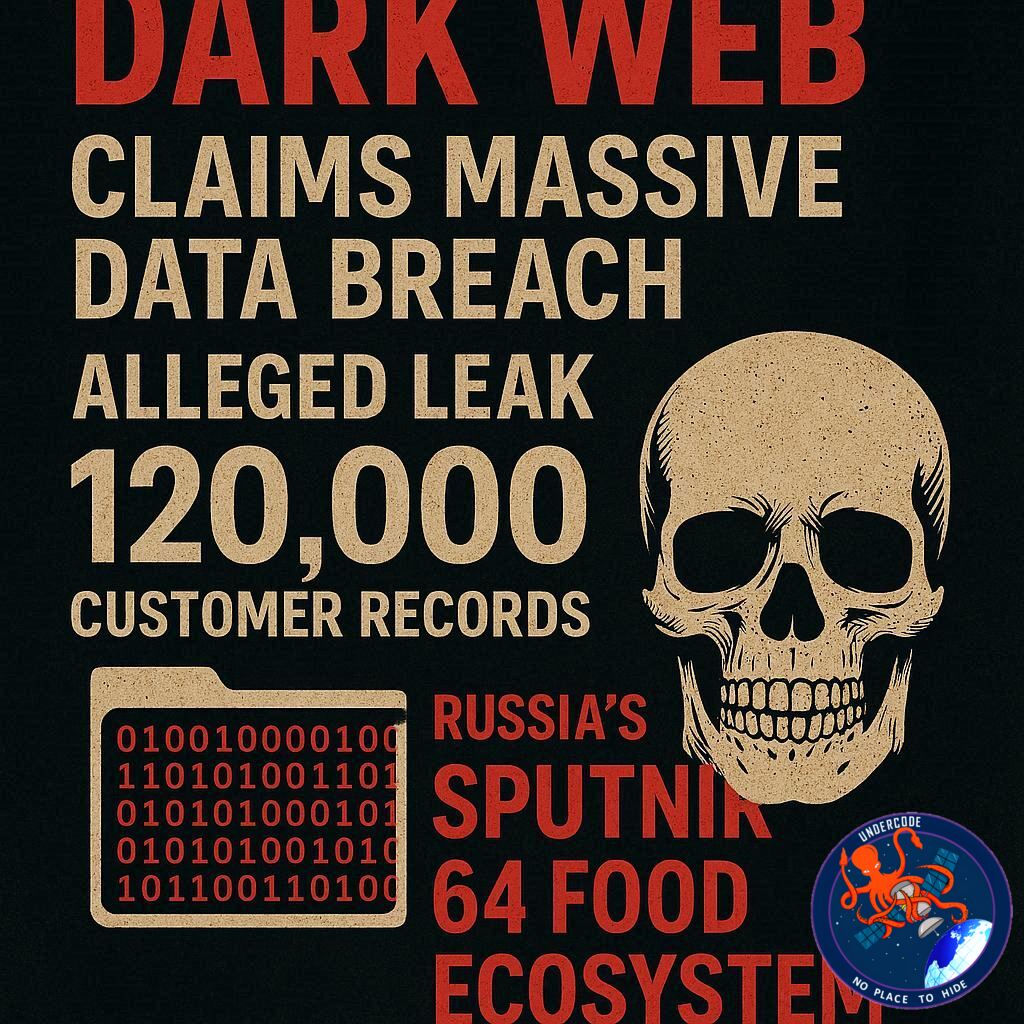 Introduction: A New Dark Web Leak Raises Alarms Over Consumer Data Security
Cybersecurity concerns are once again dominating online discussions after reports emerged from dark web monitoring channels claiming that a major Russian food ecosystem platform, Sputnik64, has suffered a large-scale data breach. According to information circulating on underground forums and highlighted by dark web intelligence trackers, the alleged breach may have exposed sensitive data belonging to tens of thousands of customers. While official confirmation remains unclear, the reported scale of the leak—nearly 120,000 records—has sparked renewed fears about how vulnerable consumer data remains in modern digital ecosystems. If the claims prove accurate, the incident could represent another reminder that even everyday platforms such as food services and loyalty programs are prime targets for cybercriminals seeking valuable personal information.
the Alleged Sputnik64 Data Breach
Dark Web Post Claims Large Database Exposure
A report circulating on dark web monitoring platforms claims that the Russian service ecosystem Sputnik64 has allegedly been compromised, resulting in a substantial leak of customer information. The information reportedly appeared on a cybercrime forum, where a dataset containing close to 120,000 records was posted or advertised. According to the report, the leaked data includes personal details of customers along with loyalty card information tied to the company’s ecosystem.
Personal Information Among the Leaked Records
The leaked records allegedly contain a combination of personal and program-specific data fields. These may include customer names, contact details, loyalty card identifiers, and other account-related information connected to Sputnik64’s food and retail services. Loyalty programs often store extensive customer profiles, making them particularly attractive targets for attackers seeking datasets that can later be monetized through identity theft, phishing campaigns, or targeted fraud operations.
Loyalty Program Data Seen as Valuable Target
Loyalty programs represent a unique cybersecurity vulnerability because they combine behavioral, financial, and personal information into a single database. If the reported breach is accurate, attackers may gain insights into consumer purchasing habits, locations, and contact details. Such information can significantly enhance the effectiveness of social engineering attacks or marketing fraud schemes. Criminal marketplaces on the dark web frequently trade these datasets, especially when they involve active customer accounts tied to retail ecosystems.
Dark Web Forums as Primary Distribution Channels
The leak reportedly surfaced on a dark web forum where threat actors commonly distribute stolen databases. These forums act as marketplaces where hackers sell, trade, or publicly release stolen data to build reputation or attract buyers. When a dataset appears in these communities, it often spreads quickly across multiple underground platforms, increasing the likelihood that the information will eventually reach a wide network of cybercriminals.
Nearly 120,000 Records Allegedly Compromised
One of the most striking details in the report is the scale of the leak. Approximately 120,000 customer records were allegedly exposed in the dataset posted on the forum. While this number is relatively small compared with massive breaches involving millions of users, it still represents a significant privacy risk for affected individuals. Even smaller datasets can be highly valuable when they contain detailed personal information linked to active services.
Unclear Timeline of the Breach
At the time the leak was reported, it was not immediately clear when the breach actually occurred. In many cyber incidents, stolen data appears on dark web forums weeks or even months after the initial compromise. This delay often happens because attackers spend time extracting, organizing, and packaging the data before releasing or selling it online.
No Immediate Official Confirmation
Reports circulating on dark web monitoring platforms rely heavily on intelligence gathered from underground forums and threat actor activity. As a result, such claims often emerge before official statements from the affected companies. In the case of Sputnik64, the available information originates from monitoring sources rather than a confirmed public disclosure, meaning the details remain subject to verification.
Rising Trend of Retail and Service Ecosystem Breaches
If confirmed, the incident would join a growing list of cyberattacks targeting consumer service platforms. Food delivery networks, grocery ecosystems, and retail loyalty programs increasingly operate as integrated digital infrastructures. These systems store massive amounts of personal information, making them appealing targets for hackers seeking easily monetizable datasets.
Consumer Data as a Cybercrime Commodity
In the cybercriminal economy, stolen customer databases function like commodities. Attackers gather large collections of personal information and then sell them to fraud networks, spam operators, or identity thieves. The alleged Sputnik64 leak highlights how even regional service platforms can become valuable sources of data for these underground markets.
Broader Implications for Customer Privacy
For customers whose information may have been included in the dataset, the potential consequences could extend beyond simple privacy concerns. Stolen personal data can be used in phishing attempts, scam phone calls, account takeover attacks, or fraudulent loyalty program redemptions. Once information appears on the dark web, it becomes extremely difficult to control how widely it spreads or how it will be used.
What Undercode Says:
The Silent Expansion of Cybercrime Into Everyday Services
The alleged Sputnik64 breach highlights a trend that many cybersecurity analysts have been warning about for years: cybercriminals are increasingly targeting everyday digital ecosystems rather than high-profile government or financial institutions. Platforms connected to food services, retail networks, and loyalty programs often receive less security scrutiny than banking infrastructure, yet they store huge volumes of personal information. That imbalance makes them extremely attractive targets.
Loyalty Programs Are a Hidden Cybersecurity Goldmine
Loyalty systems may look harmless on the surface, but from a hacker’s perspective they are data goldmines. These platforms often store personal identification data, purchase histories, phone numbers, and behavioral analytics about customers. When attackers obtain such datasets, they gain not only identity information but also a blueprint of consumer habits. That information can be weaponized in sophisticated phishing campaigns that feel unusually convincing.
Why Mid-Sized Data Breaches Still Matter
Many people dismiss breaches involving tens of thousands of records because they appear small compared with mega breaches involving hundreds of millions of users. However, mid-sized leaks like the alleged 120,000-record Sputnik64 dataset often have higher quality data. Smaller ecosystems tend to maintain more detailed customer profiles, making each record more valuable on underground markets.
Dark Web Forums Function Like Cybercrime Stock Exchanges
Dark web forums operate similarly to financial markets, but instead of trading stocks, participants trade stolen data. Reputation systems, escrow services, and verified seller ratings exist in many of these communities. When a hacker releases a dataset publicly, it may serve as a demonstration of credibility—an advertisement for future sales. If the Sputnik64 leak was posted in such a context, it could signal that the attacker is attempting to establish reputation within cybercriminal circles.
The Delay Between Breach and Discovery
One of the most troubling realities of modern cybersecurity incidents is the delay between compromise and discovery. Organizations frequently remain unaware of breaches until stolen data appears on underground marketplaces. This delay can last weeks, months, or sometimes even years. During that time, attackers may quietly extract additional information or exploit internal systems further.
Consumer Trust Is the Real Casualty
Beyond the technical damage, breaches like this erode consumer trust. Customers expect loyalty programs and service platforms to safeguard their information because they voluntarily provide personal details in exchange for benefits. When those systems are compromised—even allegedly—the psychological impact can be significant. Trust, once lost, is extremely difficult for companies to rebuild.
The Geopolitical Context of Cyber Incidents
Cyber incidents connected to organizations in Russia often attract international attention due to the complex geopolitical landscape surrounding cyber operations. While most retail breaches are financially motivated rather than politically driven, the location of the affected organization can shape global narratives around the incident. This often leads to rapid amplification of the story across cybersecurity communities.
The Real Risk: Data Recycling in Future Attacks
One of the lesser-discussed aspects of breaches is data recycling. Information stolen today may resurface years later in completely different attacks. Cybercriminals frequently merge multiple breached datasets into larger databases to improve accuracy and targeting. If the alleged Sputnik64 dataset becomes part of such collections, it could contribute to future phishing, fraud, or identity theft campaigns long after the original breach fades from headlines.
🔍 Fact Checker Results
Verified Reporting Sources
✅ Dark web monitoring accounts did report a claimed leak involving approximately 120,000 Sputnik64 customer records.
Lack of Official Confirmation
❌ No widely confirmed official statement has verified the breach details at the time of reporting.
Plausibility of the Breach Scenario
✅ Loyalty program databases are common targets for hackers, making the reported breach technically plausible.
📊 Prediction
Rising Attacks on Loyalty Ecosystems
Cybersecurity trends suggest that loyalty programs and retail ecosystems will face increasing attack attempts in the coming years. As companies integrate payment systems, mobile apps, and consumer analytics into a single platform, the value of these databases grows dramatically. If the alleged Sputnik64 breach proves genuine, it may become another early example of a much larger pattern: cybercriminals shifting their focus toward everyday consumer ecosystems where valuable personal data often sits behind weaker security defenses.
🕵️📝✔️Let’s dive deep and fact‑check.
References:
Reported By: x.com
Extra Source Hub (Possible Sources for article):
https://www.linkedin.com
Wikipedia
OpenAi & Undercode AI
Image Source:
Unsplash
Undercode AI DI v2
Bing
🔐JOIN OUR CYBER WORLD [ CVE News • HackMonitor • UndercodeNews ]
📢 Follow UndercodeNews & Stay Tuned:
𝕏 formerly Twitter 🐦 | @ Threads | 🔗 Linkedin | 🦋BlueSky | 🐘Mastodon


