
Listen to this Post
Introduction: A New Wave of Digital Fear Campaigns Emerges
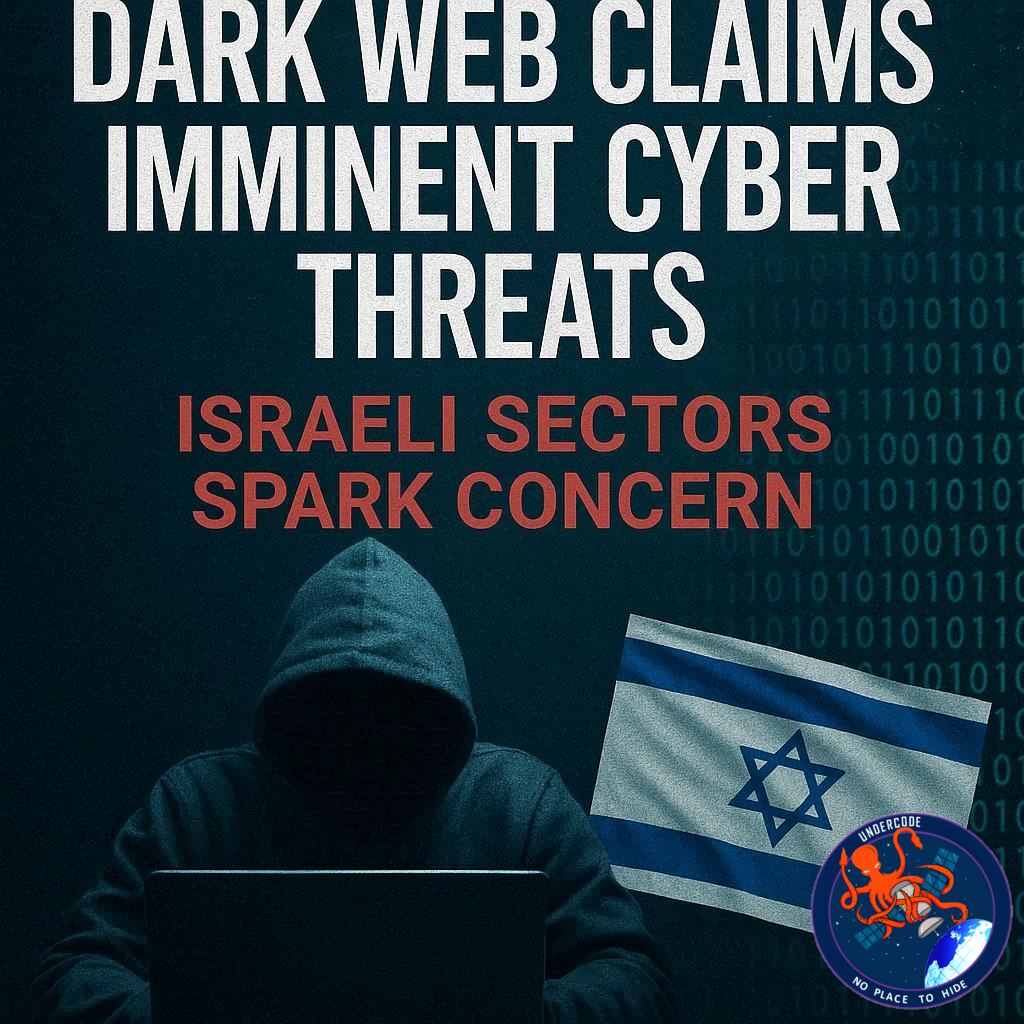
A recent message circulating across dark web–linked Telegram channels has raised alarms within cybersecurity circles, as it appears to target multiple sectors in Israel with ominous and highly suggestive claims. The post, shared by a known dark web intelligence monitoring account, blends Arabic and Hebrew messaging with striking visuals tied to Israeli infrastructure and institutions. While no verified breach has been confirmed, the tone and content of the message hint at a coordinated psychological campaign designed to instill uncertainty and fear. As cyber tensions continue to evolve globally, this latest development underscores how digital influence operations are becoming increasingly sophisticated and difficult to distinguish from real threats.
the Original Report
The initial report highlights a newly surfaced message attributed to an unidentified threat actor circulating across various Telegram channels known for hacktivist activity. The message is particularly notable for its use of both Arabic and Hebrew languages, suggesting a deliberate attempt to reach multiple audiences while reinforcing its thematic focus on Israeli targets. Accompanying the text are visuals that appear to reference Israeli homes, infrastructure, and possibly sensitive systems, amplifying the perceived credibility of the claims.
According to the report, the threat actor asserts access to extensive surveillance and intelligence capabilities. These claims include references to personal data, residential locations, and critical infrastructure, painting a picture of deep infiltration. However, no concrete evidence has been provided to substantiate these assertions, leaving analysts cautious about their authenticity.
The message further suggests that multiple sectors could be affected, including military operations, aviation systems, and other essential services. This broad scope raises concerns about potential disruption, even if the claims are exaggerated or fabricated. One of the most striking elements of the message is a line stating that “the next phase is coming soon,” which has been interpreted as a possible warning of future action or escalation.
Despite the alarming tone, experts emphasize that these claims remain unverified. The messaging appears consistent with previous psychological operations conducted by hacktivist groups, where the primary goal is to create fear, confusion, and media attention rather than execute actual cyberattacks. Such tactics are often used to amplify perceived power and influence without requiring significant technical capabilities.
The report also notes that this message is part of a broader wave of similar communications observed across multiple groups on the same day. This pattern suggests a coordinated effort to escalate narratives and maintain visibility within the cyber threat landscape. While the immediate risk remains unclear, the situation is being closely monitored by cybersecurity professionals and intelligence analysts.
What Undercode Say:
Understanding the Strategy Behind the Message
The structure and tone of this threat strongly indicate a psychological operation rather than a confirmed cyber intrusion. By combining multiple languages and visually compelling elements, the actor is attempting to maximize reach and emotional impact. This approach is common in modern cyber influence campaigns, where perception often matters more than technical execution.
The Role of Hacktivism in Modern Cyber Conflicts
Hacktivist groups have increasingly blurred the line between activism and cyber warfare. While some groups possess genuine technical capabilities, many rely on exaggerated claims to build reputation and intimidate targets. This message fits into that pattern, leveraging fear as a strategic tool rather than demonstrating verifiable access.
Multi-Sector Targeting as a Fear Amplifier
By naming multiple sectors—military, aviation, and infrastructure—the message creates a sense of widespread vulnerability. This tactic is effective because it avoids specificity, making it harder to disprove while increasing public anxiety. It also forces defenders to consider multiple threat scenarios simultaneously.
The Power of Ambiguity in Cyber Threat Messaging
One of the most effective elements of this communication is its ambiguity. The lack of concrete details allows the message to remain plausible while avoiding scrutiny. This is a hallmark of influence operations, where uncertainty is intentionally cultivated.
Language Choice as a Psychological Weapon
The use of both Arabic and Hebrew is not accidental. It reflects an understanding of the sociopolitical context and aims to resonate with different audiences simultaneously. This dual-language strategy enhances credibility and increases the likelihood of the message being taken seriously.
Visual Elements and Perceived Legitimacy
Visual references to infrastructure and personal spaces can significantly increase the perceived authenticity of a threat. Even if these visuals are generic or fabricated, they create a sense of realism that text alone cannot achieve.
Timing and Coordination Across Channels
The report’s mention of multiple groups sharing similar messages on the same day suggests a coordinated campaign. This synchronization amplifies the message’s visibility and creates the illusion of a larger, more organized threat actor network.
Psychological Operations vs. Real Cyber Attacks
It is crucial to distinguish between psychological operations and actual cyber intrusions. While both can have serious consequences, the former relies on perception and narrative control rather than technical exploitation. This case appears to lean heavily toward the former.
The “Next Phase” Statement as a Trigger Mechanism
The phrase “the next phase is coming soon” serves as a trigger for anticipation and anxiety. It keeps the audience engaged and alert, even in the absence of concrete action. This tactic is commonly used to maintain relevance and prolong the impact of a message.
Media Amplification and Its Impact
Once such messages are picked up by monitoring accounts and shared widely, they gain additional credibility. Media amplification can unintentionally support the goals of the threat actor by spreading their narrative further.
Risk of Overreaction by Targets
One of the dangers of such campaigns is the potential for overreaction. Organizations may divert resources or implement emergency measures based on unverified claims, which can be costly and disruptive.
The Importance of Verification in Cyber Intelligence
This situation highlights the critical role of verification in cybersecurity. Analysts must balance caution with skepticism, ensuring that responses are proportionate to the actual level of risk.
Historical Patterns of Similar Campaigns
Similar campaigns have been observed in past geopolitical conflicts, where threat actors use messaging to create psychological pressure. These operations often coincide with periods of heightened tension.
The Evolution of Cyber Threat Communication
Cyber threat communication has evolved from simple defacements to complex narratives involving multimedia and multilingual elements. This reflects a broader shift toward information warfare.
Implications for National Security
Even if unverified, such messages can have real-world implications by influencing public perception and policy decisions. Governments must be prepared to address both technical and psychological aspects of cyber threats.
Fact Checker Results
Verification Status of Claims
❌ There is no confirmed evidence supporting the claims of surveillance or data access mentioned in the message.
Nature of the Threat
✅ The messaging aligns with known patterns of psychological and influence operations rather than confirmed cyberattacks.
Credibility Assessment
❌ The lack of technical proof or independent verification significantly reduces the credibility of the threat actor’s claims.
📊 Prediction
The rise of hybrid cyber-psychological campaigns is likely to accelerate, with threat actors increasingly focusing on perception manipulation rather than direct system breaches. Future operations may incorporate more advanced visuals, AI-generated content, and coordinated messaging across multiple platforms to enhance credibility. As a result, organizations and governments will need to invest not only in technical defenses but also in narrative analysis and rapid response strategies to counter misinformation and prevent unnecessary escalation.
🕵️📝✔️Let’s dive deep and fact‑check.
References:
Reported By: x.com
Extra Source Hub (Possible Sources for article):
https://www.twitter.com
Wikipedia
OpenAi & Undercode AI
Image Source:
Unsplash
Undercode AI DI v2
Bing
🔐JOIN OUR CYBER WORLD [ CVE News • HackMonitor • UndercodeNews ]
📢 Follow UndercodeNews & Stay Tuned:
𝕏 formerly Twitter 🐦 | @ Threads | 🔗 Linkedin | 🦋BlueSky | 🐘Mastodon


