
Listen to this Post
Introduction
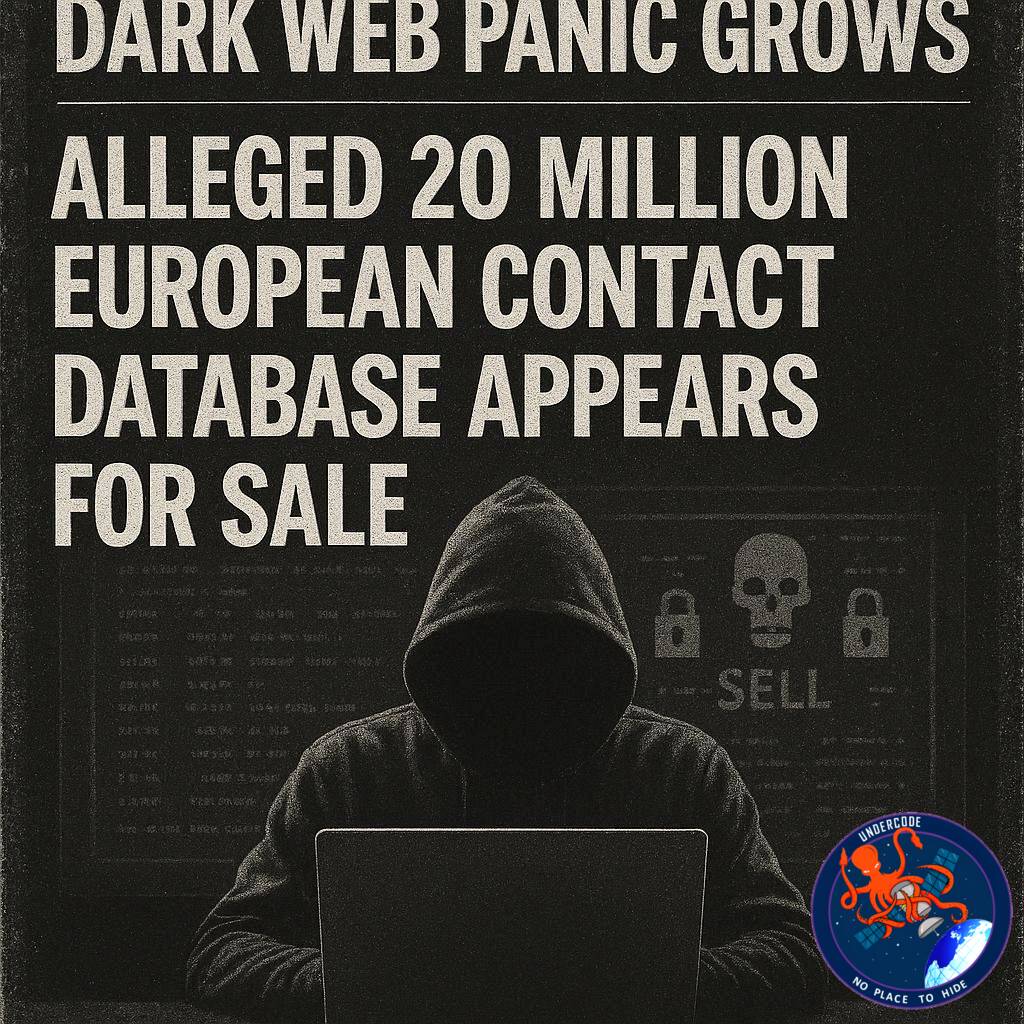
A new claim emerging from underground cybercrime communities is raising fresh concerns across Europe’s cybersecurity landscape. According to posts shared by Daily Dark Web, a vendor on a dark web forum is allegedly offering access to what is described as a “20 million European contact database,” supposedly containing records linked to several countries including Switzerland, Spain, Italy, and Portugal.
While the legitimacy of the data remains unverified, the listing highlights a growing underground economy centered around massive collections of personal information. Cybercriminal groups increasingly rely on aggregated contact databases to fuel phishing campaigns, social engineering attacks, and identity profiling operations targeting both individuals and businesses.
The alleged leak has not yet been connected to a confirmed breach of any single company or institution. Instead, screenshots circulating online suggest the dataset may be a broad aggregation compiled from multiple unknown sources. Security researchers warn that even outdated or partially accurate contact records can still be highly valuable to threat actors operating across Europe’s expanding cybercrime ecosystem.
Alleged Database Sparks Concern Across European Cybersecurity Circles
The underground listing reportedly advertises access to millions of European contact records tied to multiple countries. The countries mentioned in the screenshots include Switzerland, Spain, Italy, and Portugal, though the full scope of the alleged dataset remains unclear.
According to the post, the seller claims the package includes large-scale contact information, downloadable references, and samples distributed through underground channels. At this stage, however, investigators and independent researchers have not verified whether the records are authentic, current, duplicated, or artificially compiled.
Cybersecurity analysts note that many underground sellers intentionally exaggerate the scale or freshness of their data to attract buyers. Some listings contain recycled information gathered from old breaches, scraped public sources, or leaked marketing databases that have circulated online for years.
Why Massive Contact Databases Are Valuable to Cybercriminals
Even without passwords or financial information, large contact databases can become dangerous tools in cybercrime operations. Modern attackers no longer rely exclusively on direct hacking. Instead, many campaigns focus on manipulating human behavior through deception and social engineering.
A database containing millions of names, phone numbers, or email addresses can significantly improve the effectiveness of phishing attacks. Threat actors can customize messages based on location, language, or business affiliation, making fraudulent emails and SMS messages appear more legitimate.
Criminal groups often use this type of information for:
SMS phishing campaigns known as smishing
Fake banking alerts and account notifications
Business email compromise operations
AI-generated impersonation scams
Telecom fraud schemes
Credential stuffing attempts
Identity correlation and behavioral profiling
In many cases, attackers combine multiple leaked datasets to build highly detailed digital profiles of potential victims.
Europe Remains a Prime Target for Data Aggregation Operations
Europe has become an increasingly attractive target for underground data traders due to the continent’s large digital economy and extensive consumer databases. Threat actors frequently collect information from marketing platforms, CRM exports, telecom systems, loyalty programs, and publicly exposed business records.
Not every dataset sold underground originates from a direct hack. Some are assembled gradually using:
Public scraping operations
Data broker leaks
Previously breached databases
Malicious mobile applications
Third-party marketing providers
Misconfigured cloud storage systems
Cybercriminal marketplaces have evolved into sophisticated ecosystems where data is treated as a commercial product. Sellers often categorize information by geography, language, profession, or purchasing behavior to maximize profitability.
Businesses Face Growing Pressure to Detect Exposure Early
Organizations operating across Europe are under increasing pressure to identify data exposure risks before threat actors weaponize them. Even if a company itself was never hacked, customer information may still appear in aggregated datasets obtained from external partners or brokers.
Security teams are being urged to monitor for unusual phishing activity, suspicious SMS campaigns, and unauthorized customer targeting patterns. Companies are also investing more heavily in dark web monitoring services capable of identifying leaked data references before large-scale abuse begins.
Experts warn that attackers are increasingly blending traditional phishing with artificial intelligence tools capable of generating realistic voice calls, multilingual emails, and personalized impersonation attempts.
Individuals Could Face a Surge in Sophisticated Scams
Consumers may also face heightened risk if large-scale European contact records are actively circulating underground. Modern scam operations increasingly depend on psychological manipulation rather than technical hacking.
Individuals should remain cautious about:
Unexpected verification messages
Fake delivery notifications
Cryptocurrency investment scams
Fraudulent banking alerts
Voice phishing calls
AI-generated impersonation attempts
Security researchers emphasize that attackers often exploit urgency and fear to pressure victims into revealing passwords, authentication codes, or financial details.
Underground Markets Continue Expanding Despite Global Crackdowns
Law enforcement agencies across Europe and North America have intensified operations against dark web marketplaces over the past several years. However, underground data trading remains highly resilient.
When one marketplace disappears, others rapidly emerge to replace it. Many sellers now operate through encrypted communication channels, invitation-only forums, and decentralized platforms that make investigations increasingly difficult.
The commercialization of stolen or aggregated data has effectively created a cybercrime supply chain where different groups specialize in collection, resale, phishing infrastructure, or financial fraud.
What Undercode Says:
The Real Threat May Not Be the Database Itself
The most important detail in this story is not whether the alleged 20 million records are authentic. The bigger issue is the normalization of industrial-scale data aggregation within underground economies.
Cybercriminal operations are no longer isolated hacker groups stealing passwords for entertainment or reputation. Modern threat ecosystems function more like multinational businesses with supply chains, resellers, brokers, affiliates, and customer service models.
Even partially accurate datasets can generate enormous value for attackers. A database with outdated phone numbers may still provide geographic patterns, naming conventions, or business relationships useful for targeted fraud campaigns.
Europe’s Digital Infrastructure Is Creating More Attack Surfaces
European businesses have rapidly digitized customer services, telecom systems, and online verification platforms over the last decade. While this transformation improved accessibility and efficiency, it also expanded the amount of consumer information stored across interconnected systems.
The challenge is that customer data rarely stays confined to one company. Marketing agencies, analytics firms, cloud providers, payment processors, and CRM vendors often handle overlapping datasets. One weak link anywhere in that chain can expose millions of individuals.
This is why aggregated databases continue appearing on underground forums even when no single catastrophic breach is publicly confirmed.
AI Is Changing the Economics of Social Engineering
Artificial intelligence is making contact databases dramatically more dangerous than they were only a few years ago. Previously, scammers needed significant manual effort to personalize phishing campaigns. Today, AI tools can automatically generate convincing multilingual messages at massive scale.
Attackers can now create fake customer support conversations, cloned executive voices, or highly realistic SMS notifications in seconds. Combined with large contact databases, this creates a dangerous multiplier effect.
A leaked phone number alone may not seem critical. But when combined with AI-generated voice impersonation and behavioral targeting, the potential damage increases significantly.
Data Brokers May Become the Next Major Cybersecurity Battleground
One overlooked issue is the role of legitimate data brokerage ecosystems. Many underground datasets are not necessarily stolen through hacking alone. Some originate from poorly regulated data-sharing industries that collect enormous volumes of personal information.
As governments tighten regulations around direct cyberattacks, attention may increasingly shift toward commercial data aggregation practices. Regulators could eventually face pressure to impose stricter oversight on how consumer data is collected, traded, and retained across Europe.
The line between “marketing data” and “security liability” is becoming increasingly blurred.
Companies Must Shift From Prevention to Continuous Monitoring
Traditional cybersecurity models focused heavily on perimeter defense — preventing breaches before they happen. That approach is no longer enough in an environment where data constantly flows between third parties, vendors, and cloud platforms.
Organizations now need continuous exposure monitoring strategies capable of detecting leaked references, phishing patterns, and underground mentions in real time.
The companies that respond fastest to emerging exposure indicators will likely reduce long-term damage more effectively than those relying solely on preventive controls.
Consumers Are Becoming Permanent Targets
One harsh reality of modern cybercrime is that leaked information rarely disappears permanently. Once contact data enters underground circulation, it may continue resurfacing for years across different marketplaces and scam operations.
Consumers increasingly exist in a permanent threat environment where personal information can be reused indefinitely for fraud attempts, impersonation campaigns, or identity correlation.
This means cybersecurity awareness is no longer optional. Digital skepticism is becoming a survival skill for both businesses and ordinary users.
🔍 Fact Checker Results
✅ The Underground Listing Was Publicly Reported
The claims regarding the alleged 20 million European contact database were publicly shared by Daily Dark Web on social media on May 10, 2026.
❌ No Independent Verification Exists Yet
There is currently no confirmed evidence proving the database is authentic, recent, or tied to a verified breach involving a specific European organization.
✅ Contact Databases Are Frequently Used in Cybercrime
Cybersecurity experts widely recognize that large-scale contact datasets are commonly exploited for phishing, smishing, credential stuffing, and social engineering campaigns.
📊 Prediction
AI-Powered Phishing Campaigns Will Intensify Across Europe
If large multi-country datasets continue circulating underground, Europe could experience a sharp rise in highly personalized phishing attacks over the next 12 months. AI-generated scam calls, multilingual impersonation campaigns, and automated SMS fraud are expected to become increasingly common.
Data Aggregation Markets Will Grow Faster Than Traditional Malware Markets
The underground economy is gradually shifting toward information brokerage rather than purely technical exploits. Databases containing consumer profiles, telecom records, and behavioral data may become more profitable than malware kits themselves.
Regulators Could Launch New Investigations Into Data Brokers
European regulators may eventually expand investigations beyond direct hackers and begin scrutinizing how commercial data brokers, marketing firms, and third-party analytics providers contribute to large-scale data exposure risks.
🕵️📝Let’s dive deep and fact‑check.
References:
Reported By: x.com
Extra Source Hub (Possible Sources for article):
https://stackoverflow.com
Wikipedia
OpenAi & Undercode AI
Image Source:
Unsplash
Undercode AI DI v2
Bing
🔐JOIN OUR CYBER WORLD [ CVE News • HackMonitor • UndercodeNews ]
📢 Follow UndercodeNews & Stay Tuned:
𝕏 formerly Twitter 🐦 | @ Threads | 🔗 Linkedin | 🦋BlueSky | 🐘Mastodon


