
Listen to this Post
Introduction
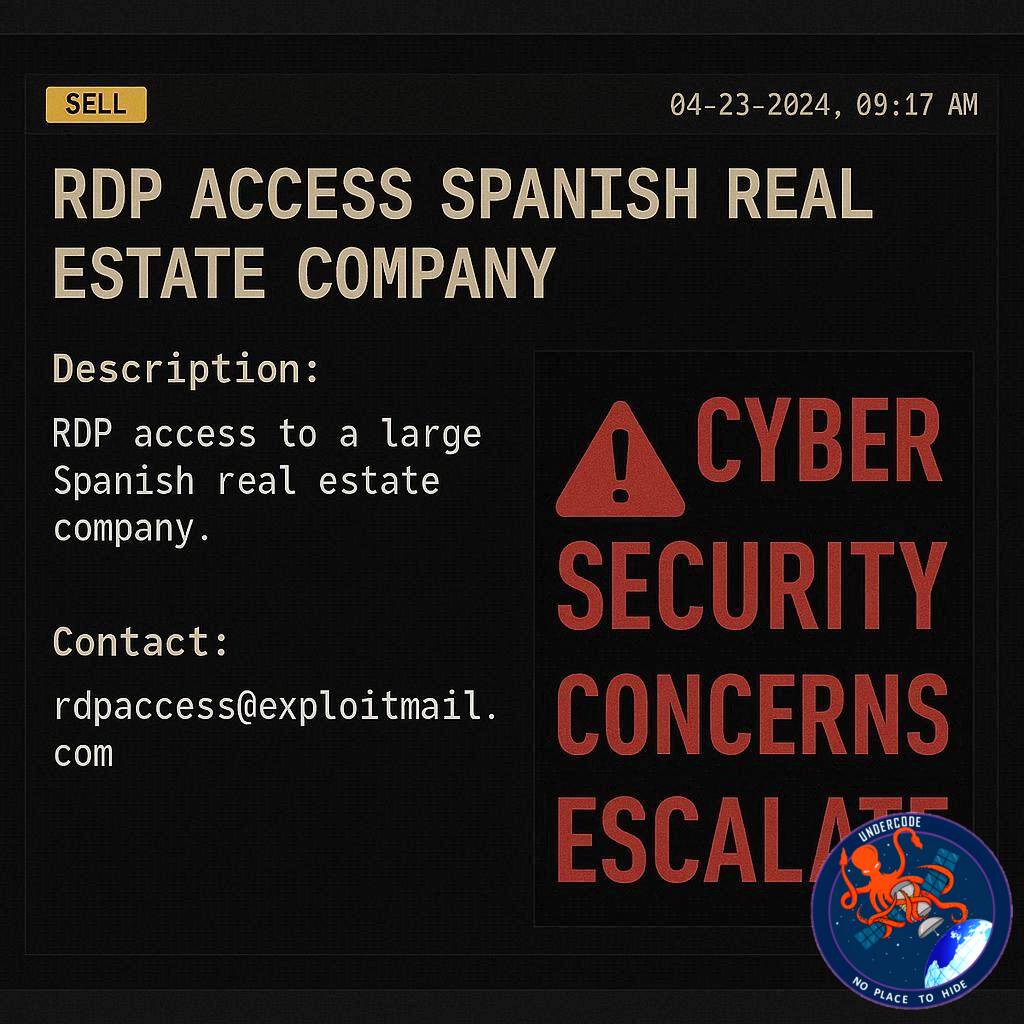
A new post circulating on the dark web has raised fresh concerns about cybersecurity vulnerabilities inside Europe’s real estate sector. The claim, published by the account known as Dark Web Intelligence on social platform X (formerly Twitter)
, alleges that Remote Desktop Protocol (RDP) access linked to a Spanish real estate entity is being offered or discussed within underground cybercriminal communities.
Although the post itself contains limited technical details, the implications are serious. RDP access is one of the most valuable assets traded on dark web marketplaces because it can provide attackers with direct entry into corporate networks. Once such access is obtained, threat actors can deploy ransomware, steal sensitive documents, monitor communications, or use compromised systems as launching points for larger attacks.
The incident highlights how real estate companies have increasingly become attractive targets for cybercriminals due to their handling of financial transactions, client identification records, contracts, and property ownership databases.
Dark Web Listing Sparks Attention
The brief message published online referenced “RDP Access for Spanish Real Estate Entity,” without naming the specific organization involved. Despite the lack of detailed evidence, cybersecurity researchers often monitor such posts closely because underground sellers frequently advertise stolen or compromised access before major cyberattacks occur.
RDP, or Remote Desktop Protocol, allows users to remotely control computers and servers over a network connection. Businesses use it legitimately for IT administration and remote work. However, improperly secured RDP systems have become one of the most abused entry points in cybercrime operations worldwide.
Attackers commonly obtain access through weak passwords, credential leaks, phishing attacks, or brute-force login attempts. In many cases, the compromised credentials are later sold on dark web forums to ransomware groups and data thieves.
Why Real Estate Firms Are Increasingly Vulnerable
The real estate industry has undergone rapid digital transformation over the past decade. Agencies now rely heavily on cloud platforms, online document sharing, digital signatures, customer relationship management systems, and remote access infrastructure.
While these technologies improve efficiency, they also expand the attack surface available to cybercriminals.
Real estate organizations store highly sensitive information, including:
Passport and identity documents
Banking information
Property ownership records
Mortgage agreements
Legal contracts
Tax documentation
This data makes them highly attractive targets for extortion and identity theft operations.
In Europe specifically, attackers may also seek access to corporate systems containing information protected under the European Union’s General Data Protection Regulation (GDPR), where breaches can trigger massive financial penalties and reputational damage.
Underground Markets Continue Expanding
Dark web marketplaces have evolved into sophisticated cybercrime ecosystems. Access brokers now specialize in infiltrating organizations and selling that access to other criminals rather than conducting attacks themselves.
These brokers often categorize listings by country, industry, and company size. Access to firms in finance, healthcare, logistics, and real estate tends to command higher prices because of the perceived value of their data and operational importance.
Spanish businesses have increasingly appeared in cybercrime discussions over the last several years as ransomware groups expanded operations across Europe.
Cybersecurity experts warn that even a single compromised administrator account can lead to devastating consequences if attackers move laterally across internal networks.
RDP Access Remains a Critical Security Weakness
Remote Desktop Protocol has repeatedly appeared in major cyber incidents around the world. During the pandemic-era shift toward remote work, many organizations exposed RDP services directly to the internet without sufficient security controls.
Threat actors continuously scan the internet searching for exposed systems. Once identified, they attempt credential stuffing attacks using leaked passwords from previous data breaches.
The danger becomes significantly greater when companies fail to implement:
Multi-factor authentication
IP restrictions
VPN protection
Network segmentation
Login monitoring
Strong password policies
Without these protections, attackers can quietly maintain persistence inside networks for weeks or months before launching destructive operations.
Cybercriminal Advertising Tactics Are Becoming More Aggressive
One notable aspect of modern cybercrime culture is the public advertising of stolen access. Threat actors increasingly use social media platforms, encrypted channels, and underground forums to market compromised systems.
These posts are often intentionally vague to avoid immediate platform moderation while still attracting buyers within cybercriminal communities.
Sometimes the listings are legitimate. Other times they are exaggerated or completely fabricated to build reputation and attract attention. This uncertainty makes verification difficult without forensic investigation.
However, cybersecurity analysts still treat such claims seriously because many ransomware attacks have been preceded by similar advertisements.
What Undercode Says:
Cybercrime Has Shifted Toward “Access Economies”
The most important detail in this situation is not necessarily whether the claim is authentic, but rather what it represents about the modern cybercrime ecosystem. Cybercriminal operations are no longer isolated hackers working independently. They now function like interconnected businesses.
Access brokers specialize in infiltrating organizations. Ransomware groups specialize in encryption and extortion. Data thieves specialize in extracting sensitive information. Each group monetizes a different stage of the attack chain.
This industrialization of cybercrime has dramatically lowered the barrier to entry for attackers.
Real Estate Firms Often Underestimate Their Risk Profile
Many real estate companies still believe they are less attractive targets compared to banks or hospitals. That assumption is increasingly outdated.
Property transactions involve large financial transfers, identity verification documents, and confidential negotiations. Attackers understand that disrupting these operations can pressure victims into paying quickly to avoid legal or operational chaos.
Smaller and medium-sized firms are particularly exposed because they frequently lack mature cybersecurity infrastructure.
Europe Faces a Rising Wave of Infrastructure Attacks
European organizations continue experiencing heightened cyber pressure from both financially motivated groups and politically aligned threat actors.
Spain has seen repeated targeting across multiple sectors, including transportation, telecommunications, healthcare, and local government systems. The appearance of Spanish entities on dark web access markets reflects a broader regional trend rather than an isolated anomaly.
Cybercriminal groups increasingly prioritize countries where organizations may have strong financial resources but inconsistent cybersecurity maturity.
The Human Factor Remains the Weakest Link
Despite technological advances, most compromises still originate from basic operational failures:
Weak passwords
Reused credentials
Phishing emails
Misconfigured remote services
Delayed software patching
Organizations continue investing heavily in advanced cybersecurity products while overlooking employee awareness and basic security hygiene.
Attackers know this. They exploit people far more often than they exploit software vulnerabilities.
Public Exposure Creates Secondary Risks
Even if no attack occurs, public association with dark web listings can create reputational damage.
Clients may lose trust. Business partners may question security standards. Regulators may demand audits. Investors may become concerned about operational resilience.
This reputational pressure explains why many companies quietly investigate dark web exposure claims without publicly acknowledging them.
The Dark Web Is Becoming More Commercialized
Underground marketplaces increasingly resemble legitimate digital marketplaces. Sellers advertise “customer support,” guarantees, subscription models, and even reputation scoring systems.
This commercialization has accelerated the speed and scale of cyberattacks worldwide.
In older cybercrime models, attackers needed technical expertise to infiltrate systems. Today, compromised access can simply be purchased.
That transformation has fundamentally changed the cybersecurity landscape.
RDP Exposure Continues Despite Years of Warnings
Security professionals have warned about exposed RDP services for years, yet organizations continue making the same mistakes.
The reason is often operational convenience. Companies prioritize fast remote connectivity over layered security protections.
Unfortunately, attackers understand this tradeoff extremely well.
Once RDP access is compromised, the attacker may effectively gain the same visibility and permissions as an internal employee.
Threat Intelligence Monitoring Is No Longer Optional
Modern organizations must actively monitor dark web forums, leak sites, and underground marketplaces for mentions of their infrastructure or credentials.
Reactive security models are no longer sufficient.
By the time ransomware is deployed, the compromise may have already existed for weeks. Early detection through threat intelligence monitoring can provide critical time for containment and remediation.
Cybersecurity Is Becoming a Boardroom Issue
Incidents like this demonstrate how cybersecurity is no longer just an IT department concern.
Executives, legal teams, compliance officers, insurers, and investors are increasingly involved in cyber risk management decisions.
The financial impact of breaches now extends far beyond technical recovery costs. Regulatory penalties, litigation, reputational fallout, and operational disruption can collectively threaten entire businesses.
🔍 Fact Checker Results
✅ Verified Information
The social media post referencing alleged RDP access linked to a Spanish real estate entity was publicly visible and attributed to the account known as Dark Web Intelligence.
✅ Cybersecurity Context Matches Industry Trends
RDP access sales are a well-documented component of modern cybercrime operations and are frequently associated with ransomware attacks and unauthorized network intrusions.
❌ Unverified Claim About the Specific Victim
No independently verified evidence currently confirms that a particular Spanish real estate company has actually been compromised based solely on the referenced dark web post.
📊 Prediction
Cybercriminal Access Markets Will Continue Growing
The underground market for corporate access is likely to expand significantly over the next few years as ransomware groups continue outsourcing initial intrusion operations to specialized brokers.
Real Estate Firms May Face Increased Regulatory Pressure
European regulators may push for stricter cybersecurity standards across the property and real estate sector, especially for firms handling large volumes of personal and financial data.
Dark Web Monitoring Will Become Standard Practice
Threat intelligence monitoring services will likely become a routine requirement for medium and large businesses seeking cyber insurance coverage or regulatory compliance in the future.
🕵️📝Let’s dive deep and fact‑check.
References:
Reported By: x.com
Extra Source Hub (Possible Sources for article):
https://www.discord.com
Wikipedia
OpenAi & Undercode AI
Image Source:
Unsplash
Undercode AI DI v2
Bing
🔐JOIN OUR CYBER WORLD [ CVE News • HackMonitor • UndercodeNews ]
📢 Follow UndercodeNews & Stay Tuned:
𝕏 formerly Twitter 🐦 | @ Threads | 🔗 Linkedin | 🦋BlueSky | 🐘Mastodon


