
Listen to this Post
Introduction: A Quiet Post With Loud Consequences
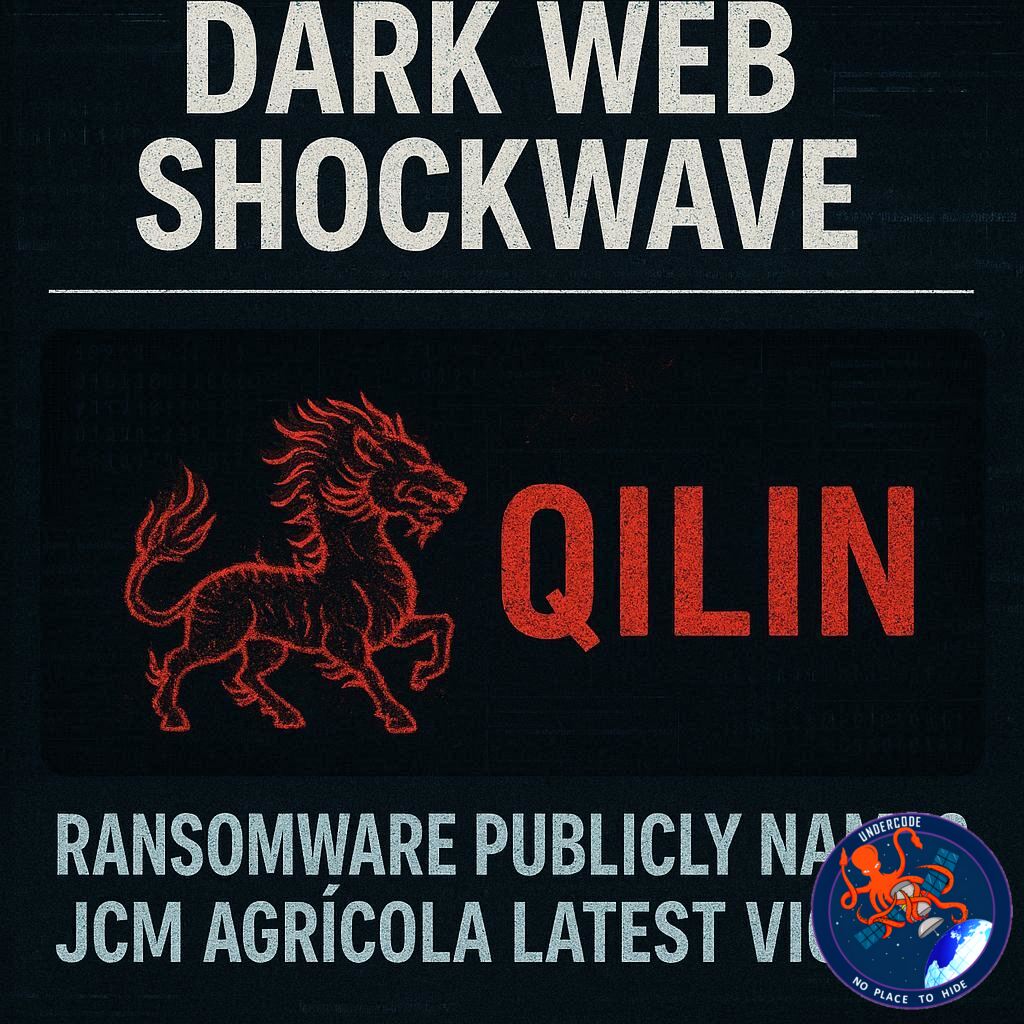
A short, almost routine post on social media has once again exposed the harsh reality of modern cybercrime. According to intelligence surfaced by ThreatMon, the Qilin ransomware group has added JCM Agricola to its growing list of victims, marking another confirmed case of ransomware activity traced back to dark web operations. While the public disclosure itself was brief, the implications behind it are anything but small, especially for organizations operating in agriculture and industrial supply chains.
Incident Overview: What Was Publicly Disclosed
The alert emerged on February 2, 2026, when ThreatMon’s Threat Intelligence Team detected dark web ransomware activity tied to the Qilin group. The post explicitly named JCM Agricola as a victim, confirming that the company’s data had allegedly been compromised and added to Qilin’s victim roster. No technical details were shared publicly regarding the attack vector, encryption scope, or ransom demand, which is typical for early-stage disclosures tied to ransomware leak sites.
Actor Profile: Who Is Qilin Ransomware
Qilin is a well-established ransomware group operating primarily through dark web infrastructure. Known for targeting mid-sized and large enterprises, the group often employs double-extortion tactics, combining data encryption with the threat of public data leaks. Over the past year, Qilin has steadily increased its visibility by publicly naming victims, leveraging reputational pressure to accelerate ransom negotiations.
Victim Snapshot: Understanding JCM Agricola
JCM Agricola operates within the agricultural and industrial equipment ecosystem, a sector increasingly targeted by ransomware actors due to its operational sensitivity and limited tolerance for downtime. Organizations in this space often rely on interconnected systems for logistics, production, and distribution, making them attractive targets for financially motivated threat groups like Qilin.
Timeline Context: When the Exposure Became Public
The disclosure timestamp places the post in the early hours of February 2, 2026, suggesting that the victim listing may coincide with either a failed negotiation phase or the beginning of Qilin’s extortion countdown. Historically, such public naming often follows initial private ransom demands that did not result in immediate payment.
Intelligence Source: The Role of ThreatMon
ThreatMon’s End-to-End Threat Intelligence Platform identified the activity by monitoring dark web channels, ransomware leak sites, and command-and-control indicators. While the platform did not publish indicators of compromise (IOCs) related to this specific case, its detection confirms that the listing is consistent with known Qilin operational patterns.
Dark Web Dynamics: Why Public Listings Matter
Publicly naming victims is a strategic move in modern ransomware campaigns. By listing JCM Agricola, Qilin increases psychological and reputational pressure, not only on the victim but also on partners, suppliers, and customers who may fear secondary exposure. This tactic has proven effective in accelerating ransom payments across multiple industries.
the Original Disclosure
The original information is concise but clear. ThreatMon detected dark web ransomware activity linked to the Qilin group. JCM Agricola was identified as a newly added victim on February 2, 2026. The disclosure was shared publicly, gaining limited but notable visibility. No ransom amount, stolen data sample, or technical breakdown was released at the time. The post serves primarily as a confirmation of victim status rather than a full incident report, leaving many operational details undisclosed.
What Undercode Say:
Ransomware Strategy Behind the Silence
The lack of technical detail strongly suggests that Qilin is still in an active extortion phase. Groups often withhold specifics until negotiations stall, preserving leverage while keeping the victim under pressure. Silence, in this context, is a strategic weapon rather than an omission.
Agriculture as a Growing Ransomware Target
Agricultural and agribusiness organizations are no longer peripheral targets. Digital transformation, IoT-enabled machinery, and centralized logistics platforms have expanded the attack surface. Threat actors understand that disruptions during production or distribution cycles can translate directly into financial losses, making ransom demands harder to ignore.
Double-Extortion Risks for JCM Agricola
If Qilin follows its established playbook, data exfiltration is likely already complete. This introduces long-term risks beyond system restoration, including regulatory exposure, intellectual property loss, and reputational damage if sensitive data is leaked publicly or sold privately.
Intelligence Gaps and What They Signal
The absence of shared IOCs or C2 infrastructure details may indicate that incident response is still ongoing. It may also reflect a deliberate choice by intelligence teams to avoid tipping off attackers while containment efforts are underway.
Broader Supply Chain Implications
An attack on a single agricultural firm can ripple across suppliers, distributors, and partners. Ransomware incidents increasingly expose interconnected ecosystems, not just standalone victims, raising the stakes for industries that depend on just-in-time operations.
Negotiation Pressure as a Tactical Phase
Public victim listings are rarely the final step. They are part of a phased escalation strategy designed to push victims toward payment before data publication. Historically, the window between listing and leak can range from days to weeks.
Lessons for Other Organizations
This incident reinforces the importance of proactive threat intelligence monitoring. Organizations that track ransomware groups and dark web chatter can gain early warnings, sometimes before public disclosure, allowing faster containment and communication strategies.
The Visibility Problem in Cyber Incidents
Many ransomware cases only become visible when attackers choose to publish names. This creates a skewed perception of threat volume, masking the true scale of ongoing but undisclosed incidents across critical sectors.
Ransomware as a Business Model
Qilin’s methodical victim announcements highlight how mature and process-driven ransomware operations have become. These groups operate with marketing tactics, negotiation playbooks, and reputation management strategies akin to illicit enterprises.
Long-Term Impact Beyond Recovery
Even if systems are restored without paying a ransom, trust erosion can linger. Customers and partners may question security maturity, forcing organizations to invest heavily in transparency, audits, and defensive upgrades after the incident fades from headlines.
🔍 Fact Checker Results
✅ ThreatMon publicly reported dark web activity linking Qilin to JCM Agricola.
✅ Qilin is a known ransomware group with a history of naming victims.
❌ No public evidence yet confirms the scale of data exfiltration or ransom demand.
📊 Prediction
Qilin is likely to escalate pressure by releasing proof-of-data samples if negotiations stall, a pattern consistent with its previous campaigns. Agricultural and industrial firms will continue to see increased ransomware attention throughout 2026 as threat actors chase operationally critical targets.
🕵️📝✔️Let’s dive deep and fact‑check.
References:
Reported By: x.com
Extra Source Hub (Possible Sources for article):
https://www.reddit.com
Wikipedia
OpenAi & Undercode AI
Image Source:
Unsplash
Undercode AI DI v2
Bing
🔐JOIN OUR CYBER WORLD [ CVE News • HackMonitor • UndercodeNews ]
📢 Follow UndercodeNews & Stay Tuned:
𝕏 formerly Twitter 🐦 | @ Threads | 🔗 Linkedin | 🦋BlueSky | 🐘Mastodon


