
Listen to this Post
Introduction: A New Era of Mobile Cyber Espionage
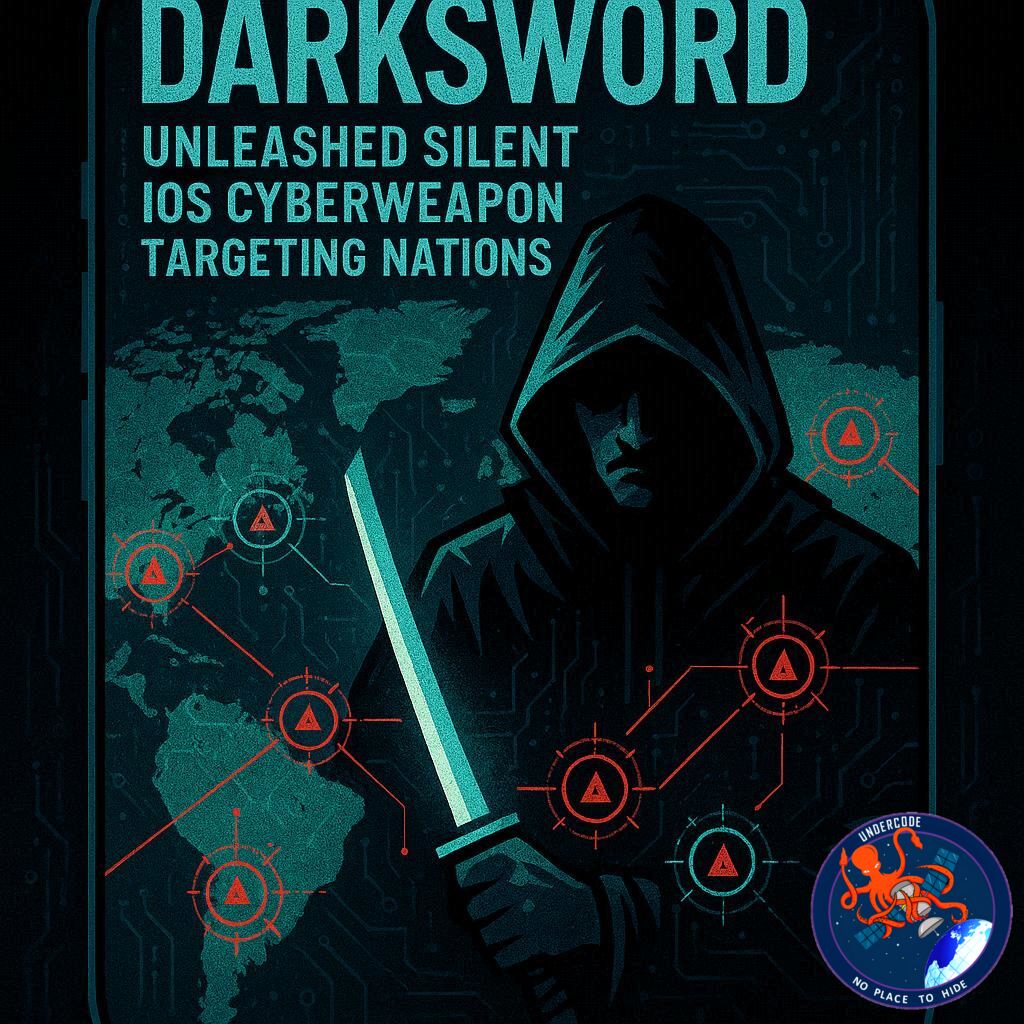
A chilling revelation from Google’s Threat Intelligence Group has exposed a sophisticated cyberattack framework known as DarkSword, a highly advanced exploit chain targeting iOS devices. Built using JavaScript and powered by six distinct vulnerabilities, this attack mechanism delivers a payload referred to as GHOST, signaling a dangerous evolution in mobile-based cyber warfare. The operation has been linked to state-sponsored actors, with victims identified across Saudi Arabia, Turkey, Malaysia, and Ukraine. As smartphones become the backbone of modern communication, this discovery highlights a growing battlefield—one that fits in the palm of your hand and operates almost entirely undetected.
the Original Report
The original report outlines a concerning development in cybersecurity: the emergence of DarkSword, a JavaScript-based exploit chain designed specifically for Apple’s iOS ecosystem. Unlike traditional malware, DarkSword leverages a sequence of six vulnerabilities to infiltrate devices, execute code, and ultimately deploy a payload known as GHOST. This payload appears to function as a stealthy surveillance tool, capable of extracting sensitive information without alerting the user.
Google’s Threat Intelligence Group attributes this campaign to state-backed threat actors, suggesting a level of sophistication and funding that goes beyond typical cybercriminal operations. The targets—Saudi Arabia, Turkey, Malaysia, and Ukraine—indicate a geopolitical motive, possibly linked to intelligence gathering or strategic monitoring.
The exploit chain itself is particularly notable for its use of JavaScript, a language commonly associated with web development rather than deep system exploitation. This approach allows attackers to deliver the payload through seemingly harmless web interactions, making detection significantly more difficult.
In parallel, another alarming development was highlighted: a global phishing campaign orchestrated by Russian intelligence services. This campaign focuses on encrypted messaging platforms, especially Signal, using advanced social engineering tactics to hijack user accounts and gain access to private communications.
Together, these two threats paint a broader picture of the current cybersecurity landscape—one where both technical exploits and psychological manipulation are being deployed in tandem. The DarkSword campaign represents the technical frontier, while the phishing attacks demonstrate the continued effectiveness of human-targeted strategies.
The report emphasizes the increasing vulnerability of mobile devices, which are often perceived as more secure than traditional computers. With the integration of personal, professional, and even governmental data into smartphones, the stakes have never been higher.
What Undercode Say:
The Rise of Mobile-First Cyber Warfare
The DarkSword campaign underscores a critical shift in cyber warfare strategy: attackers are no longer focusing primarily on desktops or servers. Mobile devices have become the new frontline, largely because they store a concentrated mix of personal and sensitive data, often with weaker monitoring systems compared to enterprise networks.
JavaScript as a Weaponized Tool
Using JavaScript as the backbone of an exploit chain is both innovative and alarming. Traditionally, JavaScript operates within a sandboxed environment, limiting its access to system-level functions. However, DarkSword demonstrates how attackers can chain vulnerabilities to break out of these restrictions, effectively turning a benign scripting language into a powerful intrusion tool.
The Strategic Targeting of Nations
The countries targeted—Saudi Arabia, Turkey, Malaysia, and Ukraine—are not random selections. Each plays a significant role in regional or global geopolitics. This strongly suggests that the operation is not financially motivated but rather driven by intelligence collection and strategic surveillance.
GHOST Payload: A Silent Observer
The GHOST payload appears to function as a stealth surveillance mechanism. Unlike ransomware or destructive malware, its purpose is not to disrupt but to observe. This aligns with state-sponsored objectives, where long-term access to information is more valuable than immediate impact.
Exploit Chains Are Becoming the Norm
Single vulnerabilities are no longer sufficient for high-value attacks. Modern threat actors are chaining multiple exploits together to bypass increasingly sophisticated security measures. DarkSword’s use of six vulnerabilities highlights the level of precision and planning involved.
The Human Factor Remains a Weak Link
While DarkSword represents a technical breakthrough, the simultaneous phishing campaign targeting Signal users shows that human psychology is still one of the easiest ways to breach security. Social engineering continues to complement technical exploits, creating a multi-layered threat environment.
Encrypted Apps Are Not Immune
Signal and similar encrypted messaging platforms are often considered secure by design. However, these attacks do not break encryption directly—they bypass it by compromising the user’s account. This distinction is crucial and often misunderstood by the public.
Apple’s Security Model Under Pressure
Apple has long marketed iOS as a secure ecosystem. While this is generally true, campaigns like DarkSword reveal that no system is immune. The reliance on closed-source security may also slow down external research and patching efforts.
The Role of Threat Intelligence
Google’s involvement highlights the importance of global threat intelligence collaboration. Without such organizations actively monitoring and analyzing threats, campaigns like DarkSword could remain undetected for much longer.
Cyber Espionage Is Scaling Rapidly
The scale and coordination of this campaign indicate that cyber espionage is becoming more industrialized. It is no longer limited to isolated operations but involves continuous monitoring, updating, and deployment of new techniques.
The Blurring Line Between War and Cybercrime
State-sponsored attacks like DarkSword blur the line between traditional warfare and cybercrime. These operations can achieve strategic objectives without physical conflict, making them harder to attribute and respond to.
Mobile Security Awareness Is Lagging
Despite the increasing risks, user awareness around mobile security remains relatively low. Many users still believe that simply owning an iPhone provides complete protection, which is a dangerous misconception.
The Importance of Timely Updates
Exploit chains rely heavily on unpatched vulnerabilities. Regular software updates remain one of the most effective defenses, yet many users delay or ignore them.
Surveillance Over Destruction
Modern cyber operations are shifting from destructive attacks to surveillance-focused missions. This allows attackers to remain undetected for longer periods, gathering valuable intelligence.
A Wake-Up Call for Governments
Governments must recognize that mobile devices used by officials are prime targets. Enhanced security protocols and dedicated secure devices may become necessary.
The Expanding Attack Surface
With the increasing integration of apps, cloud services, and IoT devices, the attack surface continues to grow. Each new feature introduces potential vulnerabilities.
The Cost of Complacency
Ignoring these threats can have severe consequences, from data breaches to national security risks. Proactive measures are no longer optional—they are essential.
Cybersecurity Is Now a Global Priority
The international scope of this campaign reinforces the need for global cooperation in cybersecurity. Threats are no longer confined by borders.
The Future of Exploits
As defenses improve, attackers will continue to innovate. The use of unconventional tools like JavaScript is likely just the beginning.
Final Analytical Perspective
DarkSword is not just another malware campaign—it is a glimpse into the future of cyber warfare. Its sophistication, stealth, and strategic targeting mark a significant escalation in how digital attacks are conducted and perceived.
Fact Checker Results
Verification of DarkSword Disclosure
✅ Google Threat Intelligence Group has reported advanced exploit chains targeting mobile platforms.
Attribution to State Actors
⚠️ Attribution to specific state actors remains based on intelligence assessment, not publicly confirmed evidence.
Scope of Targeted Countries
✅ Multiple regions including the Middle East, Europe, and Asia are commonly targeted in cyber espionage campaigns.
Prediction
The Next Wave of Invisible Attacks
The emergence of DarkSword signals a future where mobile exploits become more modular, stealthy, and accessible to well-funded actors. Expect an increase in browser-based attack vectors, deeper integration of social engineering with technical exploits, and a surge in attacks targeting encrypted communication platforms. As cybersecurity defenses evolve, so too will the methods used to bypass them—ushering in an era where the most dangerous threats are the ones users never see.
🕵️📝✔️Let’s dive deep and fact‑check.
References:
Reported By: x.com
Extra Source Hub (Possible Sources for article):
https://www.github.com
Wikipedia
OpenAi & Undercode AI
Image Source:
Unsplash
Undercode AI DI v2
Bing
🔐JOIN OUR CYBER WORLD [ CVE News • HackMonitor • UndercodeNews ]
📢 Follow UndercodeNews & Stay Tuned:
𝕏 formerly Twitter 🐦 | @ Threads | 🔗 Linkedin | 🦋BlueSky | 🐘Mastodon


