
Listen to this Post
Introduction
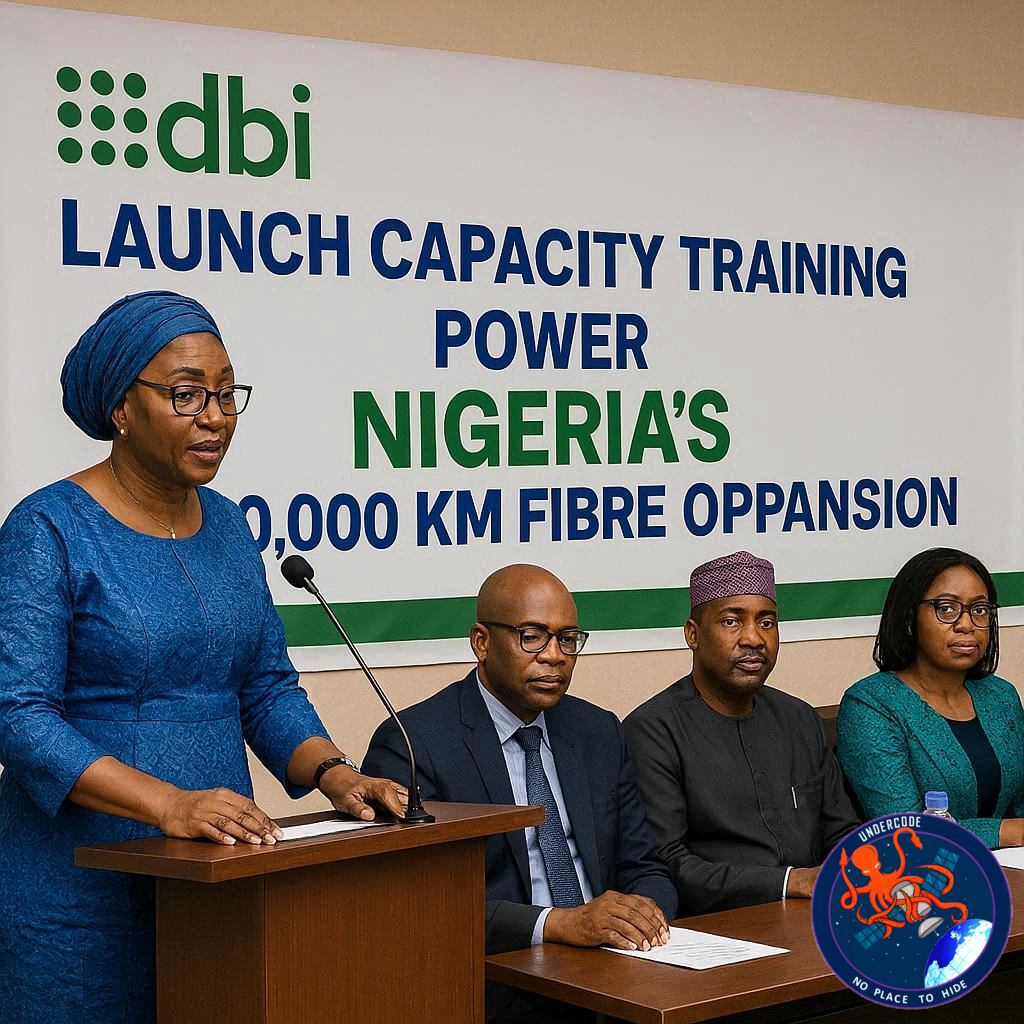
Nigeria’s ambition to build one of the largest fibre optic networks in Africa is taking a major step forward as the Digital Bridge Institute (DBI) and the International Telecommunication Union (ITU) launch a strategic capacity-building programme in Abuja. The initiative is designed to prepare regulators, policymakers, and telecom stakeholders for the massive 90,000-kilometre fibre rollout under the country’s broader digital transformation agenda. With increasing global demand for broadband connectivity, the programme highlights the urgent need for both infrastructure and skilled human capital to drive sustainable digital growth across Nigeria and sub-Saharan Africa.
Summary of the Original
The Digital Bridge Institute (DBI), in partnership with the International Telecommunication Union (ITU), has begun a five-day capacity-building training programme aimed at strengthening Nigeria’s telecom sector ahead of a nationwide 90,000km fibre optic rollout. The programme, hosted in Abuja, brings together participants from Nigeria and several African countries, focusing on improving digital infrastructure planning, regulatory frameworks, and broadband expansion strategies.
The initiative aligns with Nigeria’s national digital transformation agenda and is supported by the Nigerian Communications Commission (NCC), which emphasized the importance of skilled manpower in achieving large-scale fibre deployment. The NCC highlighted that the Federal Government’s Project BRIDGE aims to extend fibre connectivity across all 774 local government areas, boosting economic growth and improving services in sectors such as education, healthcare, agriculture, and governance.
The NCC also pointed out key challenges affecting broadband expansion, including high right-of-way charges, bureaucratic delays, and infrastructure vandalism. However, progress has been made through collaboration with state governments, resulting in the waiver of right-of-way fees in 13 states, which has encouraged investment in the telecom sector.
The DBI leadership stressed that infrastructure expansion must be matched with human capacity development, noting that the training covers fibre planning, deployment strategies, infrastructure sharing, and regulatory coordination. The institute also highlighted its long-standing role in ICT training since its establishment by the NCC in 2004.
The European Union Delegation to Nigeria and ECOWAS added that large-scale digital infrastructure projects require strong public-private partnerships and international support to succeed. Meanwhile, additional financing from development institutions, including a $200 million loan from the African Development Bank, is helping to push forward Nigeria’s estimated $2 billion fibre expansion project, which aims to significantly increase national broadband coverage and connectivity.
What Undercode Say:
The launch of this training programme represents more than just a technical workshop; it signals a structural shift in how Nigeria approaches digital infrastructure development. The 90,000km fibre optic project is not simply a civil engineering effort, but a nationwide digital backbone strategy that will determine the country’s competitiveness in the global digital economy.
One of the most critical aspects of this initiative is the recognition that infrastructure alone is insufficient without skilled human capital. Historically, many large-scale telecom projects in developing economies have failed to meet expectations due to a gap between deployment and operational expertise. DBI and ITU’s intervention directly addresses this weakness by preparing regulators and technical personnel to manage complex fibre ecosystems.
Another important dimension is regulatory harmonization. The NCC’s involvement highlights ongoing efforts to reduce bottlenecks such as right-of-way fees and administrative delays. These issues have long been among the biggest obstacles to broadband expansion in Nigeria. The partial waiver across 13 states is a positive step, but national consistency remains a challenge.
The project also reflects increasing international collaboration in Africa’s digital infrastructure development. With the European Union and African Development Bank contributing funding and technical support, the fibre rollout is becoming a multilateral effort rather than a purely domestic initiative. This raises both opportunities and dependencies, particularly in governance and long-term sustainability.
From an economic perspective, the expected impact of expanded broadband access is significant. Improved connectivity will likely enhance productivity in key sectors such as agriculture, healthcare, education, and fintech. However, these gains depend heavily on execution speed and infrastructure protection, especially in regions vulnerable to vandalism and insecurity.
The mention of Project BRIDGE is particularly notable, as it represents one of the most ambitious connectivity expansion plans in Nigeria’s history. Expanding from roughly 30,000km to 120,000km of fibre backbone infrastructure could reshape the country’s digital landscape, but only if implementation is consistent and corruption-free.
There is also a strategic geopolitical angle. As digital infrastructure becomes a core component of national power, countries with stronger broadband networks gain advantages in data-driven industries, AI development, and global tech integration. Nigeria’s push places it in direct competition with other emerging digital hubs in Africa.
However, risks remain. Funding gaps, policy inconsistencies, and maintenance challenges could slow progress. Additionally, without strong local capacity development, reliance on external expertise may continue even after infrastructure is deployed.
Ultimately, this training initiative is a foundational step, not a final solution. It builds the human infrastructure required to sustain physical infrastructure, which is often the missing link in large-scale digital transformation projects.
Fact Checker Results
✅ DBI and ITU collaboration on capacity building aligns with established telecom development initiatives in Africa
⚠️ Project scale figures (90,000km to 120,000km expansion) depend on phased implementation timelines and funding continuity
⚠️ Economic impact projections are reasonable but not guaranteed without full infrastructure deployment and maintenance
Prediction
Nigeria’s fibre expansion programme is likely to accelerate over the next 3 to 5 years, especially with increasing international funding support and regulatory reforms.
📊 Broadband penetration is expected to rise steadily if right-of-way issues continue to ease.
📡 Public-private partnerships will dominate infrastructure rollout and maintenance strategies.
⚠️ However, deployment delays and regional security challenges may slow full national coverage targets.
🕵️📝✔️Let’s dive deep and fact‑check.
References:
Reported By: www.legit.ng
Extra Source Hub (Possible Sources for article):
https://www.medium.com
Wikipedia
OpenAi & Undercode AI
Image Source:
Unsplash
Undercode AI DI v2
Bing
🔐JOIN OUR CYBER WORLD [ CVE News • HackMonitor • UndercodeNews ]
📢 Follow UndercodeNews & Stay Tuned:
𝕏 formerly Twitter 🐦 | @ Threads | 🔗 Linkedin | 🦋BlueSky | 🐘Mastodon


