
Listen to this Post
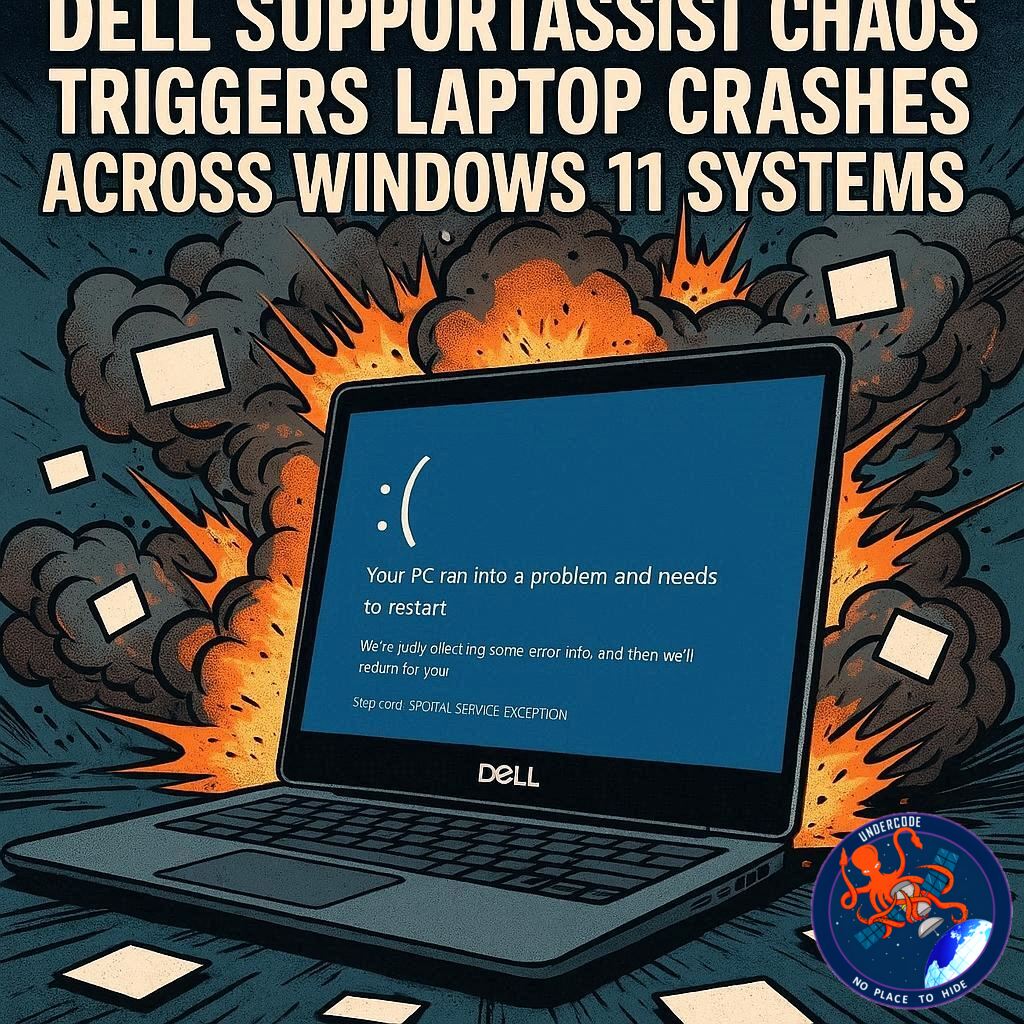
Dell’s Own Support Tool Turns Into a Stability Nightmare
A growing number of Dell laptop users are facing a frustrating wave of crashes linked not to Microsoft or Windows 11 itself, but to Dell’s own SupportAssist software. Reports from business environments, gaming laptop owners, and regular consumers suggest that a recent update to the utility has caused severe system instability, leading to repeated freezes, black screens, forced restarts, and system crashes every 30 minutes or so.
The issue first gained widespread attention after users flooded Dell community forums and Reddit with complaints about sudden Black Screen of Death incidents. Devices affected reportedly include standard Dell notebooks, enterprise systems used in office fleets, and even high-end Alienware gaming laptops such as the Alienware M16 R2. What makes the situation especially ironic is that SupportAssist was originally designed to monitor system health, troubleshoot hardware problems, and automate maintenance tasks. Instead, it appears to have become the source of the very failures it was meant to prevent.
According to user reports, the crashes began shortly after a recent SupportAssist update was pushed to devices. Many affected users observed that their laptops would freeze unexpectedly, forcing a reboot and interrupting work, gaming sessions, or business operations. In some cases, companies managing hundreds of Dell systems reported widespread disruption inside their IT environments. The consistency of the complaints strongly suggests that the issue is tied to the software itself rather than isolated hardware defects.
Several temporary solutions have emerged from the community. The most effective fix, according to users and IT administrators, is removing Dell SupportAssist completely from the system. Users can uninstall the software through the Windows 11 Settings menu by opening the Apps section and locating Dell SupportAssist inside the Installed Apps list. However, simply removing the main application may not be enough. Many reports point toward Dell SupportAssist Remediation as the likely culprit behind the crashes, meaning it also needs to be removed to fully resolve the issue.
Some users additionally recommend uninstalling Dell SupportAssist OS Recovery Plugin, creating a full cleanup of Dell’s support-related services. After uninstalling all related applications, users are advised to reboot their laptops to finalize the process. For many people, this appears to stop the crashes entirely.
Another workaround involves disabling the SupportAssist Remediation service rather than uninstalling the software. This can be done through the Windows Services panel by typing “services.msc” into the taskbar search field. Inside the services list, users can locate Dell SupportAssist Remediation, open its properties, and change the Startup Type from Automatic to Disabled. This prevents the service from launching during startup and has reportedly stabilized systems for some affected users.
Interestingly, similar issues reportedly appeared last year involving Dell SupportAssist, though the workaround was different at the time. Some users previously managed to solve crashes by launching SupportAssist and running a complete hardware scan. That fix may still help in isolated cases, although current reports suggest the latest bug is more severe and widespread.
One major downside to uninstalling SupportAssist is losing automatic firmware and driver updates. Users who remove the software must manually visit Dell’s support website to check for BIOS updates, security patches, and hardware drivers. While this adds inconvenience, many users appear willing to sacrifice automated maintenance if it means restoring system stability.
The situation has sparked criticism toward Dell’s software ecosystem. Modern PC manufacturers increasingly bundle devices with proprietary management tools designed to improve diagnostics and customer support. However, these utilities often operate deep inside the operating system with elevated permissions, meaning any software bug can have serious consequences. In this case, the support utility itself may have become a system-wide reliability threat.
The backlash online has been intense. Reddit discussions have filled with sarcastic comments about the irony of a troubleshooting application creating catastrophic technical problems. Some IT professionals expressed relief at no longer managing large Dell deployments, while others criticized manufacturers for pushing bloated software onto otherwise capable hardware.
Dell has not yet issued an official public statement fully confirming the bug or announcing a permanent fix. That absence of communication has left users relying heavily on community forums and peer-to-peer troubleshooting advice. Until Dell releases an updated patch or acknowledges the issue directly, many users are choosing to disable or completely remove SupportAssist as a precautionary measure.
The controversy also highlights a broader trend in the PC industry. Hardware manufacturers increasingly depend on companion software ecosystems to differentiate products and provide remote diagnostics, warranty services, and AI-driven monitoring features. Yet every additional background service introduces another layer of risk. When those services fail, they can destabilize entire systems, turning convenience features into liabilities.
For Dell, this incident arrives at a delicate time. The company remains one of the largest enterprise PC vendors in the world, and reliability is a critical part of its reputation. Business customers especially depend on stable deployments across large numbers of devices. Even a relatively small software issue can quickly become a serious operational concern when multiplied across thousands of laptops in corporate environments.
At the moment, the safest course for affected users appears straightforward: uninstall or disable SupportAssist-related services until Dell releases an official fix. While not every crash report can be conclusively tied to the software, the overwhelming pattern across user experiences strongly suggests SupportAssist is at the center of the problem.
What Undercode Say:
The Hidden Problem With “Helpful” Manufacturer Software
Dell’s SupportAssist failure exposes a growing weakness inside the modern PC ecosystem. Hardware companies no longer sell only laptops. They now sell software ecosystems layered on top of Windows. Those ecosystems promise smarter diagnostics, predictive maintenance, automatic updates, cloud analytics, and AI-driven optimization. On paper, it sounds useful. In practice, it creates another attack surface for instability.
The deeper these utilities integrate into Windows, the more dangerous their failures become. SupportAssist is not just a lightweight notification app sitting harmlessly in the background. It hooks into firmware, diagnostics, hardware monitoring, update services, and system management layers. That level of integration means a single broken update can ripple across the entire operating system.
This incident also reveals an uncomfortable truth about OEM software quality control. Microsoft often gets blamed whenever Windows devices crash, but third-party vendor utilities are increasingly responsible for system instability. Many laptop manufacturers preload systems with background services that continuously run telemetry, monitor hardware health, and communicate with cloud infrastructure. These tools are often under-tested compared to Windows itself.
The irony surrounding SupportAssist is particularly severe because the software exists specifically to improve reliability. Instead, users are uninstalling Dell’s official support software to restore stability. That contradiction damages trust more than a normal application bug would.
Enterprise environments may suffer the biggest consequences. Individual consumers facing crashes are frustrated, but businesses managing hundreds or thousands of Dell laptops face productivity losses, support ticket floods, and deployment headaches. IT administrators generally value predictability over flashy software features. Incidents like this reinforce why many corporate environments aggressively strip OEM software from new deployments.
There is also a larger philosophical debate here about software bloat in modern PCs. Many enthusiasts perform clean Windows installations specifically to avoid manufacturer utilities. Historically, these programs were dismissed as “bloatware” that consumed memory and slowed startup times. But today, the risk is more serious than reduced performance. Deeply integrated support utilities can destabilize entire systems.
Another concern is the increasing dependency on automated maintenance tools. SupportAssist was marketed as a convenience feature that reduces technical complexity for ordinary users. Yet when such systems break, troubleshooting becomes more difficult because users may not even realize the support utility is responsible. Many affected users initially suspected Windows 11 itself.
This also raises questions about update deployment strategies. If the issue truly came from a recent SupportAssist update, why was the rollout not halted sooner? Major enterprise software providers often use staged deployments, telemetry monitoring, and rollback systems to prevent catastrophic software failures. Consumers now expect similar safeguards from PC manufacturers.
The communication gap from Dell is another important issue. In the absence of official confirmation, users turn to Reddit threads, forums, and tech news websites. That creates uncertainty and misinformation risks. Even a short acknowledgment from Dell could have reassured customers that the company was actively investigating the issue.
The broader PC industry should pay attention to this situation. Lenovo, HP, Asus, Acer, and other manufacturers all bundle similar utilities into their systems. The more manufacturers attempt to build software ecosystems around hardware, the more they inherit responsibilities traditionally associated with software companies.
There is a lesson here for consumers as well. Convenience software should never be blindly trusted simply because it comes preinstalled from the manufacturer. Users should periodically review startup applications and background services to understand what is running on their systems.
At the same time, removing all manufacturer software is not always practical. Utilities like SupportAssist do provide genuine value when functioning properly. Automatic firmware updates can improve security, fix hardware bugs, and optimize performance. The challenge is balancing convenience against reliability.
The timing of this incident also hurts Dell because Windows 11 adoption continues accelerating across businesses and consumers. Every major crash controversy risks feeding narratives that Windows PCs are unstable, even when the root cause lies elsewhere. Ironically, Microsoft may end up receiving public blame for a bug originating from third-party software.
Perhaps the biggest takeaway is that modern computing has become deeply interconnected. A laptop is no longer just hardware running an operating system. It is an ecosystem of firmware, cloud services, telemetry systems, update frameworks, AI tools, and vendor-specific applications. That complexity creates more opportunities for innovation, but also more opportunities for failure.
For now, Dell users are left waiting for clarity. Until an official fix arrives, the community itself has effectively become the primary support channel. That reality alone says a great deal about the current state of modern consumer technology support.
📊 Prediction
Dell will likely release an emergency SupportAssist patch within days or weeks once the scale of the issue becomes impossible to ignore. 🔧
Enterprise IT departments may increasingly deploy clean Windows installations without OEM utilities to reduce future risks. 💻
This controversy could push laptop manufacturers to redesign support tools with stricter isolation from core Windows processes. ⚠️
🔍 Fact Checker Results
✅ Multiple users across Dell forums and Reddit have reported recurring crashes linked to SupportAssist.
✅ Uninstalling or disabling Dell SupportAssist Remediation has reportedly solved the issue for many affected users.
❌ Dell has not officially confirmed the exact root cause or released a permanent public fix yet.
▶️ Related Video (88% Match):
🕵️📝Let’s dive deep and fact‑check.
References:
Reported By: www.techradar.com
Extra Source Hub (Possible Sources for article):
https://www.reddit.com/r/AskReddit
Wikipedia
OpenAi & Undercode AI
Image Source:
Unsplash
Undercode AI DI v2
Bing
🔐JOIN OUR CYBER WORLD [ CVE News • HackMonitor • UndercodeNews ]
📢 Follow UndercodeNews & Stay Tuned:
𝕏 formerly Twitter 🐦 | @ Threads | 🔗 Linkedin | 🦋BlueSky | 🐘Mastodon


