
Listen to this Post
Introduction
Cybersecurity threats are rapidly evolving beyond traditional endpoints and servers.
Attackers are no longer just breaking into systems—they are embedding themselves inside development environments.
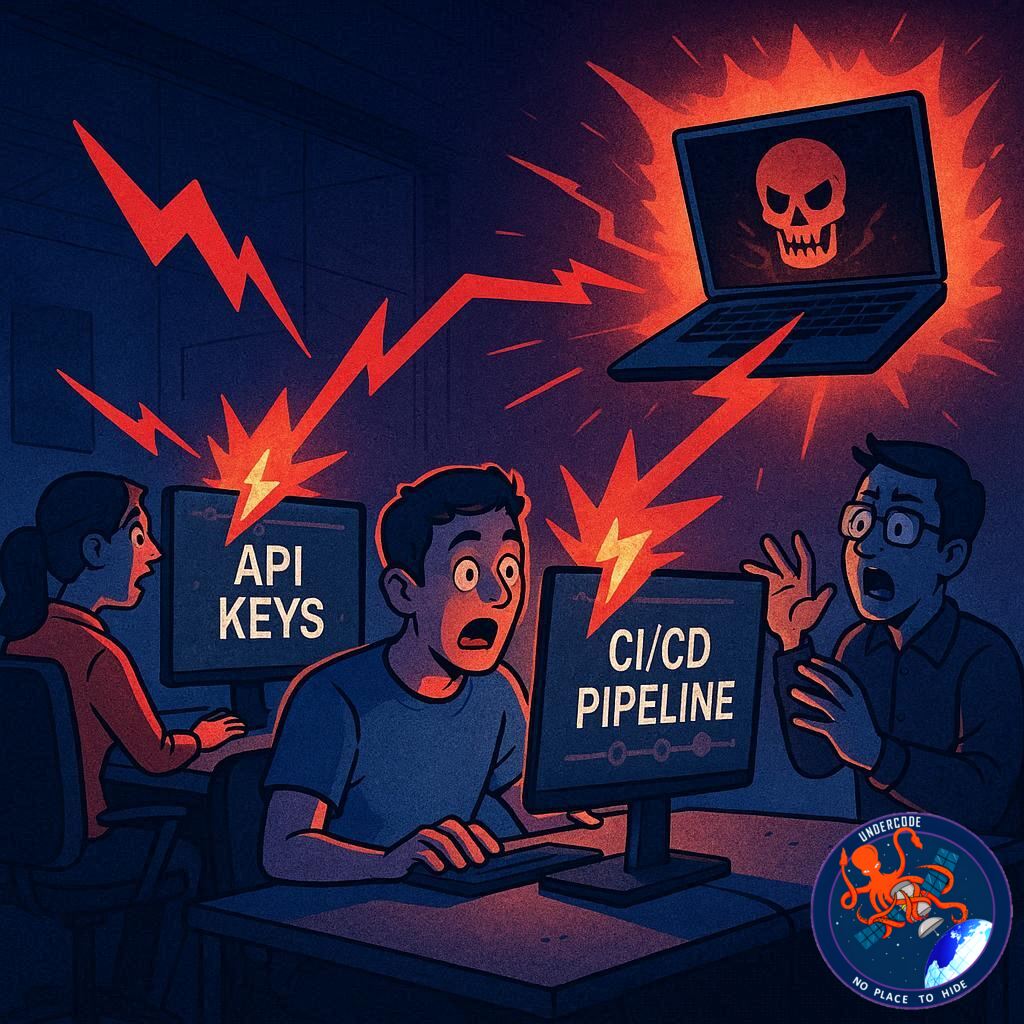
Developer workstations and CI/CD pipelines have become high-value targets in modern supply chain warfare.
Recent campaigns like TeamPCP and Shai-Hulud highlight a disturbing trend of credential theft at scale.
API keys, SSH credentials, cloud tokens, and sensitive access secrets are now prime objectives.
These attacks demonstrate how software development infrastructure has become the new battlefield of cyber conflict.
Even trusted automation pipelines are being silently weaponized against organizations.
The result is a cybersecurity crisis that directly impacts software integrity worldwide.
the Original
Cybersecurity reports reveal a growing threat targeting developer environments and CI/CD pipelines.
Attackers are increasingly focusing on supply chain infiltration instead of direct system breaches.
Campaigns such as TeamPCP and Shai-Hulud are linked to large-scale credential theft operations.
These operations specifically target API keys, SSH credentials, cloud access tokens, and authentication secrets.
Developer workstations are being compromised as entry points into broader enterprise systems.
CI/CD pipelines, once considered secure automation tools, are now high-risk attack surfaces.
Threat actors are embedding malicious components into software workflows.
Stolen credentials are being used to escalate privileges across cloud infrastructure.
The attacks highlight weaknesses in modern DevOps security practices.
Supply chain security is now a top concern for global cybersecurity teams.
Even minor breaches in development environments can lead to full-scale system compromise.
Ransomware groups are increasingly leveraging stolen credentials for lateral movement.
Organizations in multiple industries are being affected simultaneously.
A UK-based print services firm, Printroom, reportedly faced ransomware disruption.
The attack caused operational downtime and potential data exposure.
Such incidents demonstrate the real-world impact of supply chain vulnerabilities.
Cybercriminal groups are actively monetizing stolen developer access.
Security researchers warn that these attacks are becoming more frequent and coordinated.
The boundary between development and production security is disappearing.
Companies relying on CI/CD automation are especially exposed.
Credential theft remains the most efficient entry point for attackers.
Modern cyberattacks now prioritize stealth over immediate destruction.
The ecosystem of software development is now deeply interconnected and vulnerable.
Attackers exploit this connectivity to spread across systems rapidly.
Security gaps in open-source ecosystems are also being targeted.
npm-based supply chain attacks are part of this growing trend.
The scale of compromise is expanding across global infrastructures.
Cybersecurity defenses are struggling to keep pace with evolving tactics.
Experts emphasize the need for stronger identity and access management.
The software supply chain is now one of the most critical attack surfaces today.
What Undercode Says:
The New Battlefield of Software Development Security
The shift from traditional hacking to supply chain infiltration marks a major evolution in cyber warfare.
Developer environments are no longer isolated workspaces but interconnected gateways to production systems.
Attackers targeting CI/CD pipelines are effectively bypassing perimeter defenses entirely.
Once API keys or cloud credentials are exposed, entire infrastructures become instantly vulnerable.
This creates a cascading failure model where a single compromised developer machine can impact hundreds of systems.
The rise of campaigns like TeamPCP and Shai-Hulud shows coordination and long-term planning.
Instead of random attacks, we are seeing structured espionage-style operations.
The objective is persistence, stealth, and access—not immediate disruption.
This makes detection significantly harder for traditional security tools.
The battlefield has quietly shifted inside the development lifecycle itself.
Credential Theft as the Core Weapon of Modern Attacks
API keys, SSH credentials, and cloud tokens have become more valuable than malware payloads.
These credentials allow attackers to impersonate trusted systems and bypass authentication layers.
Once inside CI/CD pipelines, malicious actors can inject code before deployment.
This means compromised software can reach end users directly without detection.
The automation nature of DevOps amplifies the speed of propagation.
A single leaked token can unlock cloud databases, storage, and deployment pipelines.
Attackers prefer this method because it avoids noisy exploitation patterns.
Instead of breaking systems, they are simply logging in as legitimate users.
This shift reflects a broader trend toward identity-based cyberattacks.
Security now depends more on credential hygiene than perimeter defense.
Ransomware and Supply Chain Convergence
The involvement of ransomware groups like those targeting Printroom shows convergence of attack strategies.
Supply chain breaches are no longer isolated from ransomware operations.
Stolen credentials are often sold or reused for later extortion campaigns.
This creates a multi-layered cybercrime economy based on access resale.
Even smaller organizations become entry points into larger corporate ecosystems.
The damage is no longer limited to data theft but includes operational paralysis.
Ransomware groups now prioritize stealth infiltration before encryption deployment.
This hybrid model increases both profitability and attack success rates.
Industries relying on legacy infrastructure are especially at risk.
The blending of supply chain attacks with ransomware marks a dangerous escalation.
DevOps Security Blind Spots and Systemic Risks
CI/CD pipelines were designed for speed, not adversarial resistance.
This creates inherent blind spots in modern DevOps workflows.
Secrets stored in environments or scripts are often insufficiently protected.
Attackers exploit misconfigurations in automation tools and repositories.
Once inside a pipeline, they can manipulate build processes silently.
This undermines trust in software integrity at a fundamental level.
Organizations often underestimate the exposure of developer endpoints.
Security monitoring tools lag behind fast-moving pipeline executions.
As a result, breaches are often discovered after deployment.
The systemic risk lies in automation itself becoming an attack vector.
🔍 Fact Checker Results
✔ Developer workstations are increasingly targeted in supply chain attacks.
✔ CI/CD pipeline exploitation is a documented modern cybersecurity risk.
✔ Credential theft remains the primary method used in these campaigns.
📊 Prediction
Cybersecurity threats targeting software supply chains will continue to intensify.
Future attacks will likely focus even more on identity systems and automation tools.
CI/CD pipelines will become primary defensive investment areas for enterprises.
Organizations without strong secret management will face escalating breach risks.
Credential-less authentication systems may become the next major security shift.
🕵️📝Let’s dive deep and fact‑check.
References:
Reported By: x.com
Extra Source Hub (Possible Sources for article):
https://www.medium.com
Wikipedia
OpenAi & Undercode AI
Image Source:
Unsplash
Undercode AI DI v2
Bing
🔐JOIN OUR CYBER WORLD [ CVE News • HackMonitor • UndercodeNews ]
📢 Follow UndercodeNews & Stay Tuned:
𝕏 formerly Twitter 🐦 | @ Threads | 🔗 Linkedin | 🦋BlueSky | 🐘Mastodon


