
Listen to this Post
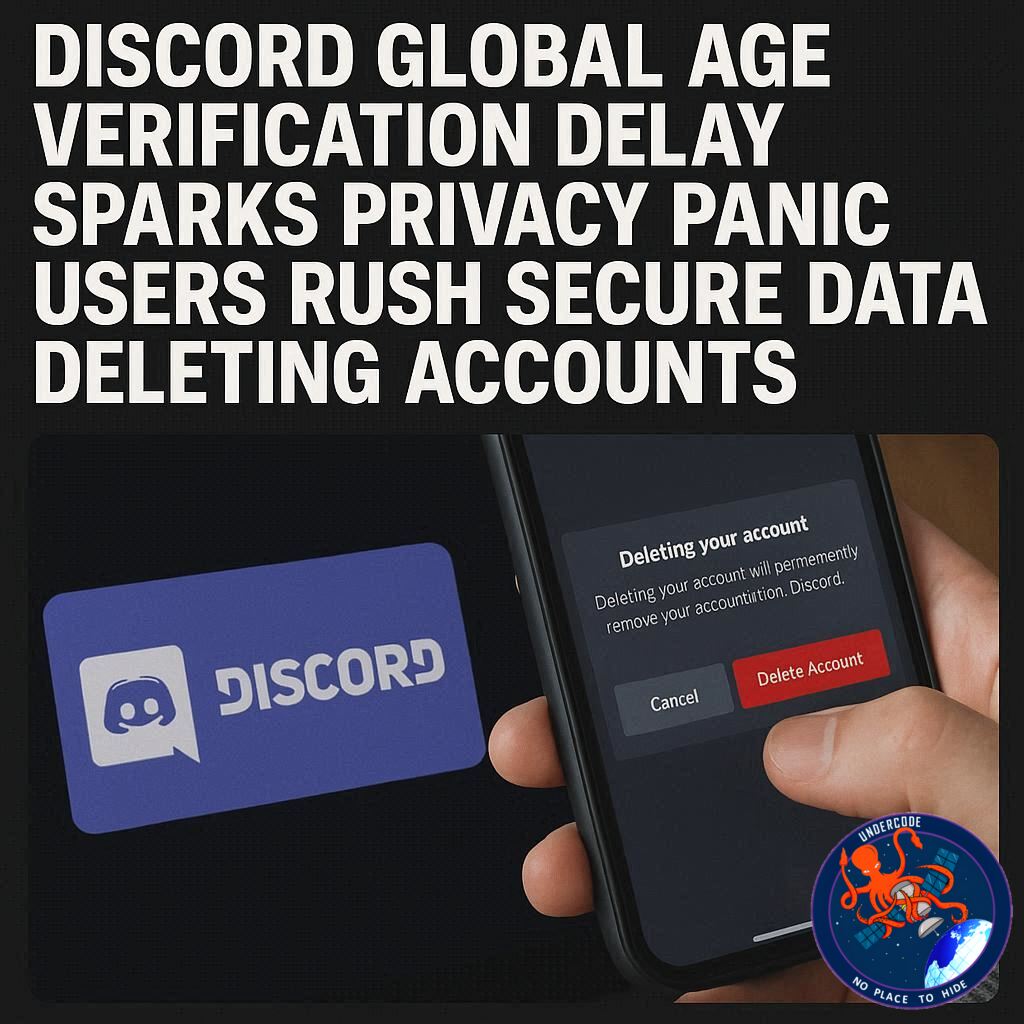 A Platform at a Crossroads as Trust and Privacy Collide
Discord, once celebrated as the digital living room for gamers, creators, remote teams, and tight-knit communities, now finds itself navigating one of its most turbulent chapters. The company recently confirmed it will proceed with enforcing global age verification across its platform, though the rollout has been pushed back to the second half of 2026. While the delay may appear strategic, the announcement has intensified frustration rather than calming it. Many users fear a looming loss of privileges, tighter restrictions, and most critically, potential exposure of personal data. The controversy has triggered a noticeable rise in people exploring alternatives such as Stoat and platforms developed by Valour Software, reflecting a growing appetite for privacy-centric communication spaces.
Summary: Why Discord Users Are Considering Leaving and What They Must Do First
Discord’s decision to enforce age verification worldwide has ignited serious backlash, even though implementation has been postponed until late 2026. The requirement stems from regulatory pressures in certain countries, yet Discord has opted to apply it globally instead of limiting it to specific regions. This broad enforcement has unsettled users who worry about surrendering sensitive identification data. Concerns escalated further after public reports of data breaches involving both Discord and its identity verification partner, Persona. For many, the issue is no longer just compliance, but trust.
The delay in rollout has not reassured users. Instead, it has given them time to reconsider their loyalty to the platform. Some fear that failure to verify their age may restrict features or limit access to certain servers. Others are uneasy about submitting identification documents to third-party verification systems. The broader question hovering over the platform is whether privacy concessions are becoming the new cost of participation in online communities.
Despite the frustration, many users hesitate to leave because Discord’s ecosystem is deeply embedded in their digital lives. Years of accumulated chats, shared media, gaming communities, work collaborations, and friend groups make migration difficult. Alternative platforms may promise stronger privacy policies, but they cannot instantly replicate the network effect Discord has built over time.
However, for those determined to delete their accounts, there is a critical step that must not be overlooked. Deleting a Discord account does not automatically erase all messages sent to others. Conversations remain visible to recipients, meaning personal information shared in the past continues to exist beyond the account’s deletion. This detail is frequently misunderstood and can pose long-term privacy risks.
To address this, users are encouraged to manually remove their message history before closing their accounts. One widely discussed method involves using a Google Chrome extension called Discrub, which allows bulk deletion of messages and attachments. Instead of deleting thousands of messages individually, Discrub provides batch options to erase or export chat history efficiently. By logging into Discord through Chrome and activating the extension, users can systematically remove conversations, significantly reducing residual digital footprints.
This step becomes even more important in light of previous data security incidents. If private details, identification numbers, personal photos, or sensitive discussions remain stored in chats, they may still be accessible to others even after the original account disappears. Account deletion, therefore, is not synonymous with data erasure.
The unfolding controversy reflects a deeper tension between regulatory compliance and user trust. While governments in some jurisdictions require age verification to protect minors online, enforcing such measures globally raises questions about proportionality. Critics argue that Discord may be overextending its compliance strategy in ways that alienate users who are not subject to those laws.
Whether the company’s leadership will adjust its approach remains uncertain. For now, uncertainty is fueling user migration. Even those who plan to remain are re-evaluating how much personal information they share moving forward.
Privacy Risks Behind Persistent Messages and Data Breaches
The core issue lies in how digital communication platforms store and display messages. On Discord, when a user sends a message in a private chat or server channel, that message becomes part of a shared conversation thread. Deleting an account removes the user’s profile, but the content they contributed may remain visible to others. In practical terms, this means personal disclosures survive independently of the sender’s account status.
The added layer of concern comes from past security incidents involving Discord and Persona. Data breaches, regardless of scale, erode confidence. Even if breaches are contained and investigated, they amplify user anxiety around identity verification. When platforms request official identification documents, the stakes are significantly higher than standard email-password authentication.
Age verification systems typically require uploading government-issued ID or biometric verification. While such systems aim to prevent underage access to restricted content, they also centralize sensitive identity data. If compromised, the consequences extend far beyond social platform embarrassment; identity theft risks become real.
Network Effects and the Emotional Cost of Leaving
Discord’s dominance is not accidental. It thrives on community gravity. Gamers coordinate raids. Developers host project discussions. Content creators manage subscriber groups. Friends maintain private servers as digital diaries of their shared lives. Leaving such a space is not merely switching apps; it often means abandoning a social infrastructure built over years.
This explains why many users are conflicted. They distrust the direction of policy but hesitate to fragment their communities. Competing platforms may advertise privacy, yet they lack the established networks that make Discord indispensable to many.
The Strategic Gamble Behind a Delayed Rollout
Delaying enforcement until 2026 appears, at first glance, to be a concession. In reality, it may function as a strategic buffer. The company buys time to refine technical processes, negotiate regulatory frameworks, and manage public perception. However, extended delays can backfire. Instead of reducing backlash, they prolong uncertainty.
Users now have a clear timeline to explore alternatives, evaluate privacy policies elsewhere, and gradually migrate communities. Momentum lost during this interim period may not easily be regained.
What Undercode Say:
Discord’s global age verification strategy reveals a deeper shift in how digital platforms perceive risk. It is no longer just about growth metrics or engagement time; it is about regulatory survival. Governments worldwide are tightening online safety laws, particularly for minors. Companies operating internationally must either tailor compliance regionally or adopt universal standards. Discord has chosen the latter.
From a business perspective, global enforcement simplifies infrastructure. Maintaining different verification systems across jurisdictions introduces complexity and liability. A unified policy reduces legal ambiguity. Yet simplicity for executives often translates into friction for users.
The true battleground is not age verification itself but trust architecture. Users might tolerate identity checks if they had unwavering confidence in data protection. However, recent breaches weaken that confidence. Trust, once fractured, is difficult to repair. Transparency reports and encryption claims may not suffice when identification documents are involved.
Another overlooked dimension is digital permanence. The Discrub recommendation highlights a structural flaw common to many social platforms. Users often assume deletion equals disappearance. In reality, digital ecosystems are collaborative. Once information is shared, control diffuses. Platforms rarely emphasize this nuance during onboarding. The result is a generation of users with incomplete understanding of data persistence.
The migration to alternatives such as Stoat or solutions built by Valour Software suggests a market opportunity. Privacy-first communication tools could experience accelerated adoption, especially if they combine encryption with minimal data retention policies. However, these challengers face the same regulatory pressures. Age verification requirements may eventually follow them as well.
There is also a strategic risk for Discord in underestimating symbolic backlash. Even if only a minority leave, public perception can influence advertisers, partners, and investors. Social platforms depend on reputation as much as on user count.
The most rational response for users is not panic migration but deliberate digital hygiene. Bulk message deletion, careful review of shared content, and reevaluation of privacy settings are practical steps. Blind loyalty and impulsive exodus are equally flawed strategies.
Ultimately, Discord’s predicament represents a broader industry shift. The era of anonymous, frictionless online communities is narrowing. Identity verification, content moderation, and compliance frameworks are redefining digital citizenship. The question is not whether age checks will exist, but how securely and transparently they will be implemented.
Fact Checker Results
✅ Discord has confirmed plans for global age verification with implementation delayed until the second half of 2026.
✅ Deleting a Discord account does not automatically remove all messages visible to other users.
❌ There is no official confirmation that all users will permanently lose core features if they refuse verification; details remain subject to policy updates.
Prediction
📊 Increasing regulatory pressure will push more platforms toward universal identity checks by 2027.
📊 Privacy-centric competitors will gain short-term user growth but face similar compliance demands.
📊 Discord’s long-term stability will depend on transparent data handling and breach prevention improvements.
▶️ Related Video (72% Match):
🕵️📝✔️Let’s dive deep and fact‑check.
References:
Reported By: www.techradar.com
Extra Source Hub (Possible Sources for article):
https://www.discord.com
Wikipedia
OpenAi & Undercode AI
Image Source:
Unsplash
Undercode AI DI v2
Bing
🔐JOIN OUR CYBER WORLD [ CVE News • HackMonitor • UndercodeNews ]
📢 Follow UndercodeNews & Stay Tuned:
𝕏 formerly Twitter 🐦 | @ Threads | 🔗 Linkedin | 🦋BlueSky | 🐘Mastodon


