
Listen to this Post
Introduction: The Hidden Danger Behind Outsourced Support
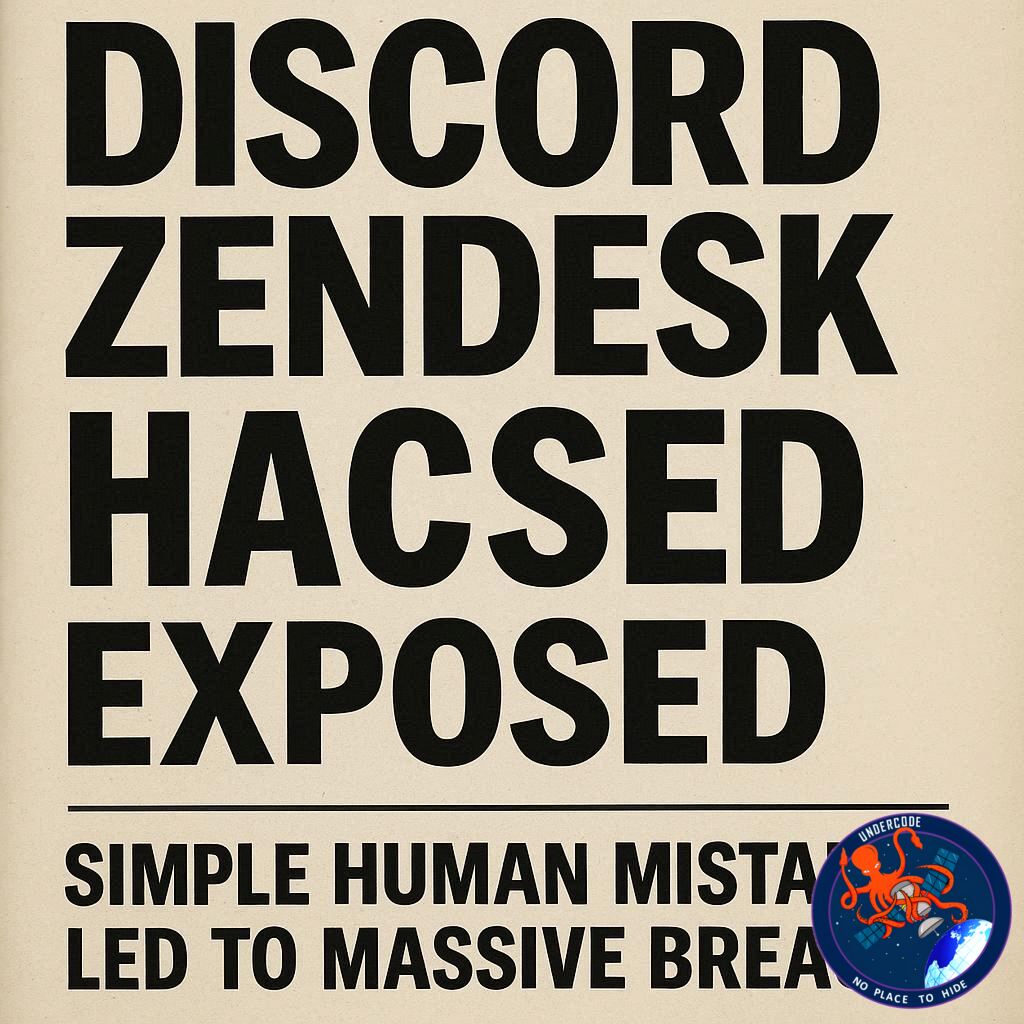
In today’s fast-moving digital age, cybercriminals are no longer just exploiting software vulnerabilities — they’re exploiting people. A recent incident involving Discord’s Zendesk support platform has sparked massive discussions on X (formerly Twitter), revealing how a single breach in outsourced customer support can compromise millions of users. This event, brought to light by cybersecurity expert Troy Hunt and threat intel group vx-underground, shows the growing threat of social engineering attacks targeting Business Process Outsourcing (BPO) agents.
the Original Incident
A shocking revelation surfaced on X when vx-underground disclosed that Discord’s Zendesk system was compromised after attackers gained access through a BPO agent — an outsourced support employee. Although the hackers didn’t specify exactly how they infiltrated the agent’s account, the breach highlights a major cybersecurity flaw in third-party support systems.
Troy Hunt, a respected voice in cybersecurity, added context by sharing a recent conversation with an executive whose company was also hit by a similar ransomware attack. According to him, the breach stemmed from offshore call center staff being socially engineered — meaning hackers tricked employees into revealing sensitive information or granting access without realizing the risk.
This pattern is becoming alarmingly common. Many corporations rely heavily on outsourced customer support, often located overseas, where technical safeguards and security training may not match internal standards. This creates a weak link — and hackers are quick to exploit it.
In the Discord case, the attackers reportedly spoke with vx-underground to boast about their access, revealing that compromising “a BPO agent” was enough to get into a major company’s support system. This points to an unsettling truth: even tech giants are only as secure as their least protected vendor.
The post drew thousands of views and responses on X, sparking concerns among cybersecurity professionals and users alike. It raises the question: how secure are our personal details when handled by third-party support agencies scattered across the globe?
💡 What Undercode Say: Deep Analysis of the Breach
The Discord Zendesk breach underscores a critical shift in cybersecurity warfare — the human factor has become the prime target. While companies spend millions on firewalls, encryption, and endpoint protection, the real vulnerability often lies in social engineering tactics that manipulate human psychology.
In this case, the attackers likely used phishing or pretexting techniques, impersonating internal staff or creating convincing fake portals to steal login credentials. Once they gained entry into the BPO system, the hackers could access sensitive support tickets, user communications, and potentially internal documentation.
This isn’t an isolated event. The 2023 MGM Resorts ransomware attack also began with a simple phone call to helpdesk staff. Within hours, hackers controlled hotel systems, slot machines, and even digital keys. The similarity to the Discord Zendesk hack is striking — both stemmed from manipulating human trust.
From a security standpoint, this breach demonstrates the urgent need for Zero Trust Architecture (ZTA) — an approach that assumes no user or device is inherently trustworthy. Under ZTA, every access request is verified, even from legitimate employees or contractors.
Furthermore, outsourced support centers often lack the same cybersecurity maturity as the parent organization. In many cases, offshore agents work on shared terminals or unsecured Wi-Fi, and training programs focus more on customer interaction than on data protection. These vulnerabilities create an ideal environment for social engineering exploits.
Companies like Discord must now re-evaluate their vendor risk management strategies, ensuring all third-party providers follow the same security standards as internal teams. This includes:
Mandatory multi-factor authentication (MFA)
Continuous phishing awareness training
Strict network segmentation
Regular penetration testing of vendor systems
The psychological aspect is also crucial. Cybercriminals exploit fear, urgency, and trust — emotions that override logic. When a call center agent receives what appears to be an “urgent internal request,” they might comply without verifying the source. This makes security culture as important as technology.
Another key takeaway: incident transparency. By publicly acknowledging the compromise and engaging experts like Troy Hunt, Discord demonstrates a commitment to accountability — something many companies still struggle with. Openness about breaches not only rebuilds trust but also helps others learn and fortify their defenses.
In the long run, the cyber community must recognize that the weakest password isn’t always digital — it’s human. The future of cybersecurity will depend on how well organizations integrate human training with technical resilience.
✅ Fact Checker Results
The information about the breach comes from verified cybersecurity sources, including vx-underground and Troy Hunt.
The compromise of Discord’s Zendesk via a BPO agent has been publicly confirmed by multiple experts.
No evidence currently suggests user data leaks, but investigations are ongoing.
🔮 Prediction
In the coming months, we can expect a sharp rise in social engineering attacks targeting outsourced customer support centers. Companies like Discord, Zoom, and other SaaS platforms will likely invest heavily in zero-trust frameworks and AI-driven anomaly detection tools to prevent similar breaches. Governments may also introduce stricter compliance regulations for offshore BPO operations to ensure data protection parity with in-house systems.
The Discord Zendesk hack is not just a warning — it’s a wake-up call for every organization relying on external support. The next major breach might already be brewing in the inbox of a distracted helpdesk agent.
🕵️📝✔️Let’s dive deep and fact‑check.
References:
Reported By: x.com
Extra Source Hub:
https://www.reddit.com/r/AskReddit
Wikipedia
OpenAi & Undercode AI
Image Source:
Unsplash
Undercode AI DI v2
🔐JOIN OUR CYBER WORLD [ CVE News • HackMonitor • UndercodeNews ]
📢 Follow UndercodeNews & Stay Tuned:
𝕏 formerly Twitter 🐦 | @ Threads | 🔗 Linkedin | 🦋BlueSky | 🐘Mastodon


