
Listen to this Post
Introduction: Safety First, Trust Later
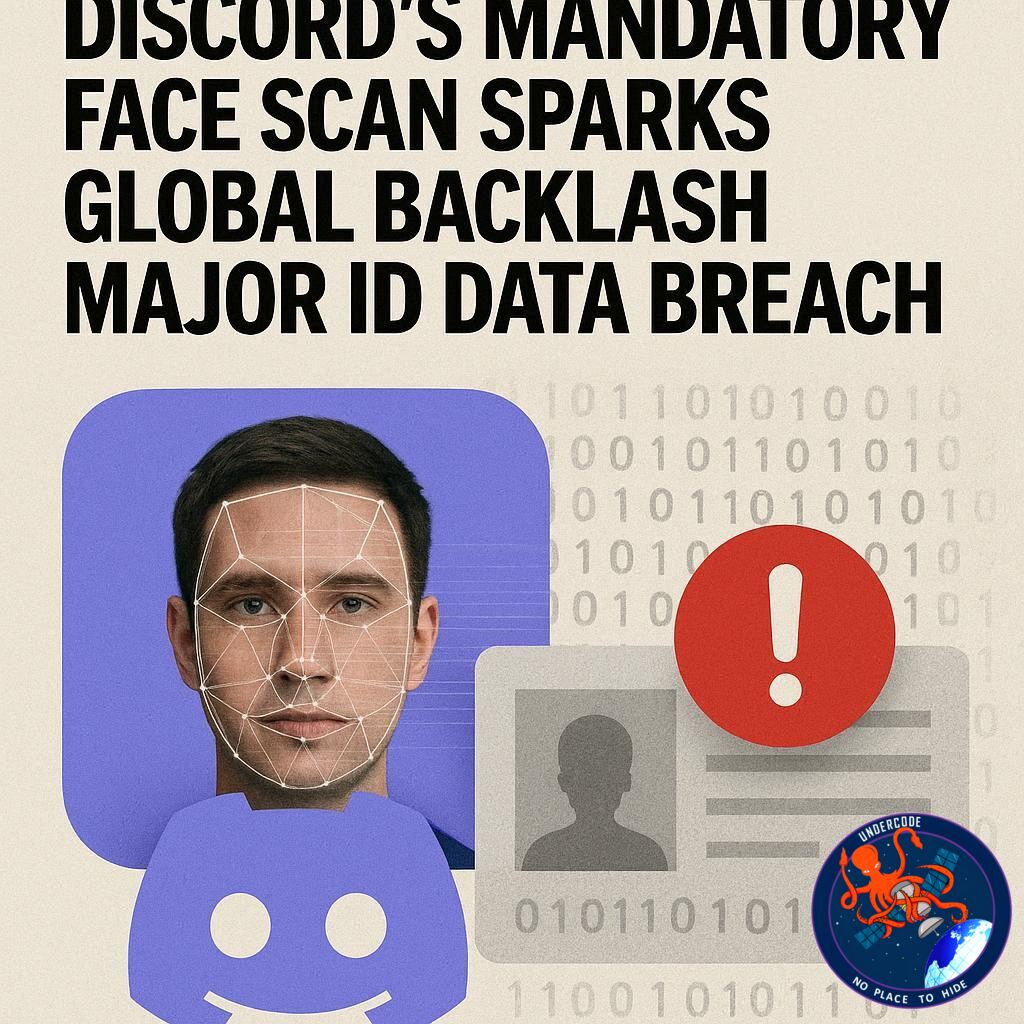
Discord is preparing one of its most controversial platform-wide changes to date: mandatory age verification for all users, enforced through facial scans or government-issued identification. The company says the move is about protecting teenagers and creating safer online spaces. But the timing could not be worse. Fresh in users’ memories is a serious data breach involving stolen ID images—exactly the kind of data Discord is now asking millions more people to submit. As the rollout approaches, the gap between Discord’s safety promises and user trust is widening fast.
Mandatory Age Verification Goes Global
Discord has officially announced that it will introduce mandatory age verification for all users worldwide. By early March, every account will default to a “teen” status unless the user verifies their age. This marks a major shift for a platform long praised for its relatively open and pseudonymous culture.
From Regional Compliance to Global Policy
Previously, Discord had limited mandatory age checks to specific regions such as the United Kingdom and Australia, where national regulations required stricter online child safety measures. The new announcement confirms that these rules will now apply globally, regardless of local laws or cultural expectations.
Safer Internet Day as the Launch Pad
The company deliberately chose to announce the policy ahead of Safer Internet Day, observed on February 10. The symbolism is clear: Discord wants the change framed as a proactive safety initiative rather than regulatory pressure or damage control.
Teen Accounts by Default
Under the new system, all accounts will initially be classified as teen accounts. Users must actively prove they are adults to unlock unrestricted access. This flips the platform’s long-standing assumption of user maturity on its head.
How Age Verification Will Work
Users will be asked to verify their age using either a government-issued ID—such as a passport or driver’s license—or a facial scan/selfie. Discord claims this data will be processed quickly and deleted afterward, but the technical specifics remain vague.
Personalized Experience Based on Age
Discord says verified age data will allow it to tailor the user experience more precisely. Features will change depending on age classification, including content visibility, interaction permissions, and safety alerts.
Content Filters for Younger Users
Teen accounts will be subject to stricter content filters. Age-restricted servers and channels will be hidden or blocked entirely, reducing exposure to adult or sensitive content.
Limits on Social Interactions
Additional safeguards include friend request alerts and tighter controls on who can message or interact with younger users. Discord presents this as a way to reduce grooming, harassment, and exploitation risks.
India’s Massive User Base in Focus
According to World Population Review, India has nearly 41.9 million Discord users, making it the platform’s third-largest market. Any global policy change at this scale will disproportionately affect countries with young, mobile-first populations.
The Discord Teen Council Announcement
Alongside the verification rollout, Discord unveiled a new “Discord Teen Council.” This advisory group consists of 10–12 teenagers who will contribute feedback on policy decisions and platform features.
Youth Voices in Platform Governance
Discord says the council will provide a “fresh perspective” on safety measures and product decisions. The company frames this as meaningful youth participation rather than token representation.
Backlash Begins to Build
Despite these announcements, the reaction from users has been overwhelmingly skeptical. The pushback is not primarily about age safety—it is about data security and trust.
The Shadow of the October 2025 Data Breach
In October 2025, Discord confirmed that one of its third-party customer support providers, 5CA, had been compromised. The breach allegedly resulted in the theft of at least 70,000 images of government-issued IDs.
Sensitive Documents Exposed
The stolen data reportedly included passports, driver’s licenses, and other official identification documents submitted for age verification purposes. For many users, this incident permanently changed how they view Discord’s ability to safeguard sensitive data.
Third-Party Risk Comes Into Focus
Although Discord itself was not directly hacked, the breach highlighted the risks of outsourcing sensitive data handling to external vendors. Users remain unclear about which parties can access their verification data.
“Quick Processing” and “Deletion” Promises
Discord has repeatedly stated that age verification data will be processed quickly and deleted afterward. However, the company has not publicly detailed retention timelines, audit mechanisms, or independent oversight.
User Trust at an All-Time Low
For many users, assurances are no longer enough. The idea of uploading facial scans or IDs to the same ecosystem that recently lost tens of thousands of such images feels like an unacceptable gamble.
Privacy Versus Protection Debate
The controversy has reignited a familiar debate: how much privacy should users sacrifice in the name of online safety, and who decides where that line is drawn?
What Undercode Say: Discord Is Solving the Right Problem the Wrong Way
Discord’s intention—to protect younger users—is difficult to argue against. Online platforms are under growing pressure from governments, parents, and advocacy groups to address real harms. But execution matters, and here Discord is walking into a credibility crisis.
Centralizing Sensitive Data Raises the Stakes
Mandatory age verification transforms Discord into a centralized repository of highly sensitive biometric and identity data. Even if processed briefly, the collection itself creates new attack surfaces and legal liabilities.
The Timing Could Not Be Worse
Rolling out facial scans months after a major ID leak is a strategic miscalculation. Trust, once broken, does not reset on a product roadmap timeline.
Teen Safety Should Not Require Biometric Surrender
There are alternative age-assurance models—behavioral signals, parental verification, or device-level controls—that do not require storing facial data or official IDs at scale.
Third-Party Vendors Are the Weakest Link
The 5CA incident demonstrates that security is only as strong as the weakest contractor. Expanding verification globally multiplies the number of systems and partners involved.
Teen Council Does Not Offset Structural Risks
While involving teenagers in advisory roles is positive, it does little to address core technical and governance concerns. Representation cannot substitute for robust data protection architecture.
Regulatory Pressure Is Driving Design
Discord’s shift mirrors a broader trend: platforms redesigning themselves to satisfy regulators first and users second. Compliance-driven UX often sacrifices trust and transparency.
Global Rollouts Ignore Regional Context
Applying the same verification model worldwide ignores differences in legal protections, digital literacy, and cultural attitudes toward identity sharing.
Data Deletion Claims Need Proof, Not Promises
Without independent audits, verifiable deletion logs, or third-party oversight, users are being asked to trust a black box—again.
Younger Users Bear the Highest Risk
Ironically, the very users Discord claims to protect—teenagers—face the greatest harm if biometric or ID data is ever misused or leaked.
Platform Identity Is Shifting
Discord is evolving from a casual, pseudonymous communication tool into a tightly regulated identity-verified platform. That shift will permanently change its user culture.
Trust Is a Feature, Not a Statement
Security is not built through blog posts or themed announcements. It is built through restraint, transparency, and minimizing data collection wherever possible.
Fact Checker Results
Claim: Discord will require mandatory age verification globally — ✅ Confirmed
Claim: A third-party breach exposed ID images used for verification — ✅ Confirmed
Claim: Discord has published detailed, audited deletion timelines — ❌ Not publicly available
Prediction
Discord will proceed with the rollout, but adoption will be uneven 🌍
Privacy-focused users will abandon or reduce platform usage 🔒
Regulators may push for safer alternatives to biometric verification 📜
🕵️📝✔️Let’s dive deep and fact‑check.
References:
Reported By: www.deccanchronicle.com
Extra Source Hub (Possible Sources for article):
https://www.linkedin.com
Wikipedia
OpenAi & Undercode AI
Image Source:
Unsplash
Undercode AI DI v2
Bing
🔐JOIN OUR CYBER WORLD [ CVE News • HackMonitor • UndercodeNews ]
📢 Follow UndercodeNews & Stay Tuned:
𝕏 formerly Twitter 🐦 | @ Threads | 🔗 Linkedin | 🦋BlueSky | 🐘Mastodon


