
Listen to this Post
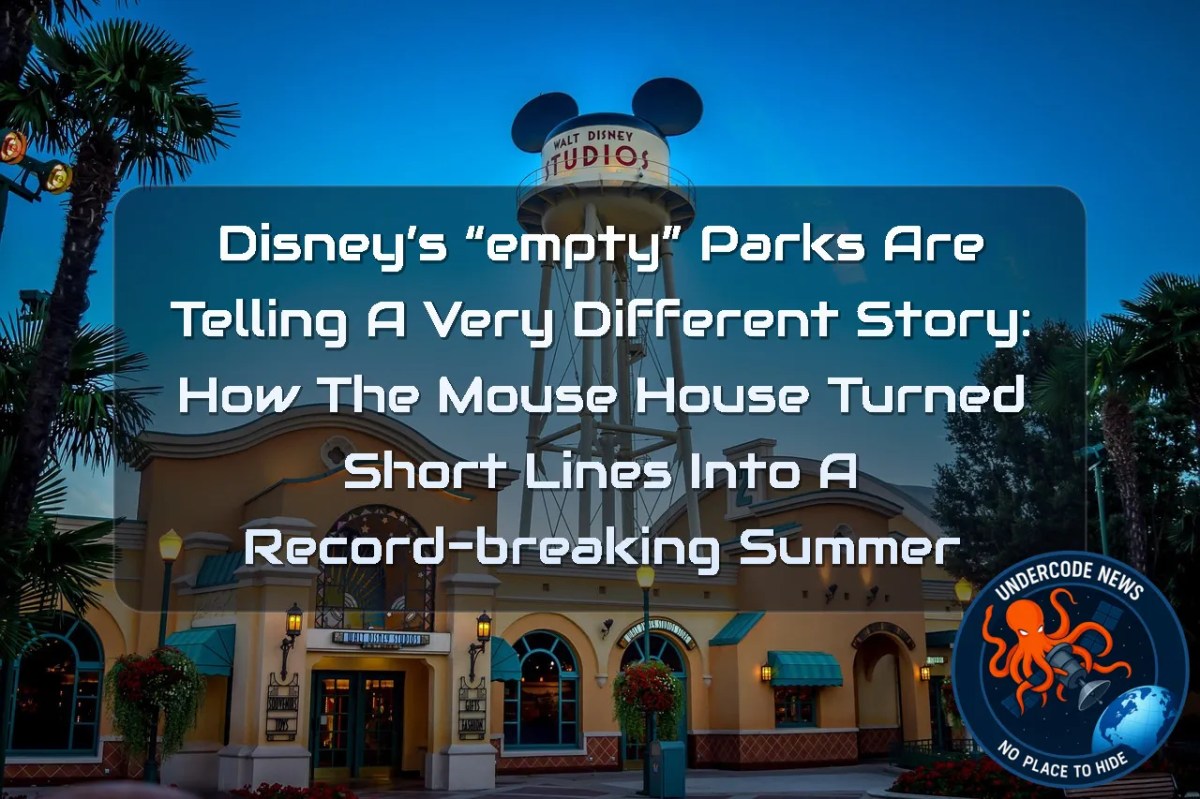
A Quiet Park, a Loud Warning
This summer, social media has been filled with scenes that seem almost impossible for Disney fans to believe: wide-open walkways, surprisingly short attraction queues, and visitors filming nearly empty sections of some of the world’s most famous theme parks.
At first glance, those videos appeared to tell a simple story. Disney parks looked quieter than expected, so perhaps consumers were finally pulling back from expensive vacations.
But the financial numbers tell a very different story.
Disney’s parks and cruise business delivered a powerful quarter, with revenue rising 10% year over year, the strongest increase in two years. Global park attendance increased 4%, spending per guest climbed, and occupancy at Disney’s domestic resort hotels reached an extraordinary 91%.
The apparent contradiction is what makes Disney’s latest performance so interesting.
The parks may look quieter from a guest’s perspective, but Disney has become increasingly sophisticated at controlling how, when, and where visitors spend their time and money. Rather than simply trying to fill every attraction queue, the company has been using discounts, new entertainment, refreshed attractions, improved ride operations, targeted marketing, and carefully managed capacity to make the entire resort experience more valuable.
In other words, the empty-looking walkway may not be evidence of a struggling Disney.
It may actually be evidence that Disney has become much better at managing the crowds it does have.
The Social Media Illusion
Theme park videos are powerful because they capture something real, but they rarely capture the entire picture.
A creator such as Kel Warner, who posts as @themeparkmomlife, filmed a relatively quiet Disneyland during the summer and described the experience as surprising because the weather was perfect and the park was not crowded.
For viewers scrolling through TikTok, Instagram, or YouTube, that kind of footage can easily become a narrative: Disney is empty, therefore Disney is struggling.
The problem is that theme park attendance cannot be accurately measured by a handful of walkways or attractions at a particular moment.
A park can have fewer people standing in queues while still generating strong revenue.
Visitors might be eating, shopping, watching shows, using reservations, exploring newly activated spaces, staying inside hotels, enjoying cruises, or moving between attractions more efficiently.
Disney’s latest results suggest exactly that kind of transformation is taking place.
Disney Is Selling More Than Admission
Disney’s biggest advantage is that it does not simply sell a theme park ticket.
It sells an ecosystem.
A guest may purchase a hotel room, park ticket, dining package, merchandise, premium attraction access, transportation, special-event experiences, and other services during the same vacation.
That means Disney does not necessarily need every attraction to be packed from opening until closing to produce strong financial results.
The more efficiently the company moves guests through the resort, the more opportunities those guests have to spend money elsewhere.
That is an important distinction.
A visitor standing in a three-hour queue is not necessarily a better customer for Disney than a visitor who spends 45 minutes in a queue and then has time to buy lunch, visit a store, watch a show, explore an entertainment area, and purchase merchandise.
Disney appears to be increasingly focused on the second experience.
The Discount Strategy Is More Sophisticated Than It Looks
Disney has responded to a cautious consumer environment with a broad range of discounts.
But this is not simply a matter of slashing prices across the board.
The company has targeted specific groups and behaviors.
Disneyland offered $50 single-day Park Hopper tickets for children ages 3 through 9 during the summer, dramatically below typical adult pricing and designed specifically to attract families with younger children.
Disney World also offered incentives involving dining plans, while promotional pricing targeted guests staying at Disney-owned hotels.
Disney+ subscribers could find Disney World value-level hotel rooms beginning at $99 per night during the summer, compared with standard rates that could be substantially higher.
The strategy is important because Disney can reduce the effective cost of a vacation without permanently resetting the perceived value of its products.
That distinction matters.
Disney Is Not Becoming Cheap
Travel experts have pointed out that Disney remains an expensive destination.
That has not fundamentally changed.
Instead, the company is trying to make consumers feel that their money is producing more value.
Beci Mahnken of MEI-Travel and Mouse Fan Travel described the strategy as giving consumers more choices and value without fundamentally damaging the Disney experience.
That is a much more sustainable strategy than simply announcing permanent price reductions.
If Disney cut prices aggressively across every product, it could damage margins and train customers to wait for cheaper tickets.
Targeted promotions are different.
They allow Disney to identify where demand is weak and stimulate it without necessarily discounting everything for everyone.
The Summer Problem Disney Helped Create
There is an interesting historical twist behind
Summer was once the obvious peak season for American theme parks.
Families were out of school, workers were taking vacations, and Disney’s parks could become extremely crowded.
But Disney spent years encouraging visitors to travel during other parts of the calendar.
Holiday events, Halloween celebrations, Christmas programming, food festivals, seasonal entertainment, and special events helped spread attendance throughout the year.
That strategy reduced the extreme dependence on summer.
But it also created a new problem.
If Disney successfully convinces consumers that almost any month can be a good time to visit, summer loses some of its traditional advantage.
The company now has to work harder to attract families during the months when school vacations traditionally create the strongest opportunity.
Bluey Changes the Equation
Disney has also discovered that it does not always need to spend billions creating a completely new land to create excitement.
Sometimes, the better investment is much simpler.
A dormant theater can become a new entertainment destination.
An existing attraction can receive a major refurbishment.
A familiar character can become the centerpiece of a new show.
That is exactly what happened with
The production took over an existing theater space and generated significant demand.
A similar Bluey production at Disney World also proved highly successful.
The lesson is bigger than Bluey.
Disney can refresh the guest experience without rebuilding the entire resort.
Old Attractions Can Become New Attractions
Disney World has also refreshed attractions such as Buzz Lightyear’s Space Ranger Spin and Big Thunder Mountain Railroad.
The former Rock ‘n’ Roller Coaster received a new Muppets theme.
From the
From
That is particularly important in an environment where consumers are sensitive to vacation costs and companies are under pressure to control capital spending.
Disney can therefore create the perception of novelty while protecting the value of investments it has already made.
The Real Secret May Be Shorter Waiting
Perhaps the most interesting part of
It is operational efficiency.
Disney’s Lightning Lane system has been evolving for years, and the company has continued refining how it handles ride availability, guest demand, and attraction capacity.
The result can be counterintuitive.
Visitors may see fewer people waiting in line and assume fewer people are visiting.
But better queue management can produce exactly the same visual result.
If Disney moves guests through attractions faster, the physical queues become shorter even when attendance remains healthy.
That changes the psychology of the vacation.
A guest who spends less time waiting has more time to explore.
The Value of Every Minute
Theme park economics are ultimately about more than tickets.
They are about time.
A family has a limited number of hours during a vacation.
Every hour spent standing in a queue represents time that cannot be spent eating, shopping, watching entertainment, visiting another attraction, or simply enjoying the environment.
Disney therefore has a financial incentive to reduce unnecessary waiting.
Operational efficiency can improve customer satisfaction while simultaneously increasing the number of commercial opportunities available during the day.
That is a rare business advantage.
The same improvement can benefit both the customer and the company.
Empty Walkways Can Actually Be Good News
One of the most fascinating details in the story is Disney’s use of previously underutilized spaces.
The Walt Disney Studio Lot courtyard in Florida reportedly went from feeling underused to becoming one of the resort’s busiest areas.
Guests moving through these spaces are not necessarily lost revenue.
They may be eating.
They may be shopping.
They may be watching entertainment.
They may be waiting for a show rather than an attraction.
Most importantly, they are not necessarily standing in an attraction queue.
This creates a more distributed version of crowd management.
Disney Is Designing Movement
The modern theme park is becoming less about moving everyone toward the most popular ride and more about distributing people across the entire property.
That requires careful planning.
Entertainment can pull guests toward one area.
Food can pull them toward another.
Refurbished attractions can redirect demand.
New shows can activate spaces that previously sat empty.
Premium queue systems can regulate attraction access.
The result is a park that may feel calmer even when the total number of visitors remains strong.
This is not an accident.
It is operational design.
The Anniversary Advantage
Disney has another weapon that competitors cannot easily replicate: nostalgia.
The company has turned anniversaries, festivals, character celebrations, seasonal events, and limited-time experiences into major attendance drivers.
The emotional connection between Disney and its customers can span generations.
A parent may remember visiting Disneyland as a child.
Years later, that same parent brings their own children.
Eventually, those children may bring their children.
That creates something extraordinarily valuable for a consumer brand: inherited loyalty.
Universal Faces a Different Challenge
The comparison with Universal is revealing.
Universal’s newest Epic Universe park has generated strong interest, but the company’s older Orlando parks experienced softer attendance during the period.
Universal’s parks business still grew revenue, but the attendance picture was less consistent.
That illustrates an important distinction.
A new attraction can generate enormous excitement, but maintaining demand across an entire portfolio is harder.
Disney has spent decades building an ecosystem around its parks.
Universal is aggressively expanding that ecosystem, but the competitive battle is no longer simply about who has the newest roller coaster.
It is increasingly about who can keep customers engaged across an entire vacation.
SeaWorld Shows the Consumer Pressure
United Parks and Resorts, the company behind SeaWorld and Busch Gardens, experienced an even more difficult quarter.
Attendance declined 2.9% year over year while revenue fell 1.4%.
That suggests consumers remain selective.
People are still willing to spend on entertainment, but they are increasingly demanding value from expensive leisure experiences.
Disney’s success therefore cannot simply be explained by saying consumers are suddenly spending freely.
The better explanation is that Disney appears to be capturing a larger share of the spending that consumers are still willing to make.
The Consumer Is Still Choosing Carefully
This may be the most important economic lesson in Disney’s numbers.
A strong quarter does not necessarily mean consumers are ignoring inflation, travel costs, or economic uncertainty.
It may mean consumers are concentrating their spending on brands they trust.
For a family, a Disney vacation can be expensive enough that it becomes a major annual decision.
Once the decision is made, families may be reluctant to replace the trip with a cheaper alternative if Disney is perceived as delivering a unique experience.
Disney’s job is therefore to convince customers that the vacation remains worth the price.
The Mouse House Is Selling Memory
Disney’s strongest product is difficult to quantify.
It is memory.
The company sells experiences that parents can share with children, grandparents can share with grandchildren, and longtime fans can revisit with a sense of nostalgia.
That emotional connection is a competitive moat.
A roller coaster can be copied.
A hotel can be built.
A themed land can be challenged.
But a family tradition is much harder to replicate.
What Undercode Say:
Disney’s Quiet Summer Is More Complicated Than It Looks
The social media narrative of empty Disney parks is incomplete.
Short lines do not automatically equal weak attendance.
Revenue Matters More Than Viral Walkway Videos
The financial results provide a much broader picture than isolated videos.
Disney parks and cruises revenue increased 10% year over year.
Disney Is Optimizing Revenue Per Visitor
The company appears increasingly focused on how much value each guest generates rather than simply maximizing raw attendance.
More Guests Are Not Always Better
A packed park can create frustration, congestion, poor dining experiences, and long queues.
Disney has an incentive to avoid that extreme.
Operational Efficiency Is Becoming a Competitive Weapon
Lightning Lane optimization and improved attraction maintenance can increase capacity without physically expanding every ride.
Time Has Become a Product
Disney is effectively selling families more usable vacation time.
Reducing unnecessary waiting makes the same ticket feel more valuable.
Discounting Does Not Necessarily Mean Distress
Targeted promotions can be a sophisticated demand-management tool.
The key question is whether Disney can preserve margins while attracting incremental customers.
Disney Is Learning Who Needs an Incentive
Children’s ticket promotions, hotel deals, dining offers, and subscriber benefits allow Disney to target specific customer groups.
This Is Better Than Universal Pricing Everything Down
Broad discounts can weaken brand perception.
Targeted incentives are more controllable.
Disney Is Protecting Its Premium Image
The company can offer value without telling customers that the Disney experience itself is worth less.
Refurbishment Is a Financial Weapon
Refreshing existing attractions can create excitement at a lower cost than constructing new rides.
Bluey Demonstrates the Power of Existing Infrastructure
An unused or underused theater can become a major attraction with the right intellectual property.
Disney Has an Extraordinary Character Portfolio
Few companies can activate recognizable characters across rides, shows, merchandise, food, hotels, and marketing.
Nostalgia Creates Repeat Demand
Disney’s customer relationship can begin in childhood and continue throughout adulthood.
Generational Loyalty Is a Moat
Parents who grew up with Disney can become customers because they want their children to experience the same memories.
The Experience Is Larger Than the Ride
Disney is increasingly designing the park as a complete entertainment ecosystem.
Every Square Foot Can Generate Value
Underused courtyards and spaces can become entertainment, dining, or retail destinations.
Empty Queues Can Be Positive
A shorter line can mean operational efficiency rather than a lack of customers.
Better Flow Can Increase Spending
Guests who spend less time waiting have more time available for other activities.
Disney Is Managing Human Movement
Entertainment programming can distribute guests across the property.
Capacity Management Matters
The goal is not necessarily maximum crowd density.
The goal is maximum guest satisfaction and commercial productivity.
Seasonal Events Are Strategic Assets
Disney’s festivals and celebrations provide recurring reasons to return.
Disney Has Created Its Own Attendance Calendar
The company has successfully encouraged visits beyond traditional summer months.
That Success Created a New Summer Challenge
Disney now has to make summer feel special again.
Targeted Discounts Address That Problem
The company can stimulate demand without undermining the entire pricing structure.
Disney Is Playing a Long Game
Short-term promotions can support a larger strategy built around lifetime customer value.
The Cruise Business Adds Another Layer
Disney’s experiences business is no longer dependent entirely on theme park attendance.
Hotels Are Critical
High hotel occupancy demonstrates that guests can remain strongly committed to the broader Disney vacation.
The 91% Occupancy Figure Is Particularly Significant
Strong hotel occupancy suggests that the apparent quietness of some park areas should not be interpreted as a simple collapse in demand.
Competitors Are Fighting for the Same Consumer Dollar
Universal, SeaWorld, Busch Gardens, and other attractions face the same economic pressures.
Disney’s Brand Gives It Pricing Power
That does not mean Disney can charge anything.
It means consumers may tolerate higher prices when they believe the experience is unique.
Consumer Sentiment Still Matters
Travel costs and household budgets remain meaningful constraints.
Disney Cannot Become Complacent
Strong results can hide vulnerabilities if consumers eventually decide the vacation is no longer worth the price.
The Biggest Risk Is Value Perception
If guests feel that
The Biggest Opportunity Is Efficiency
Disney can potentially increase satisfaction without constructing enormous numbers of new attractions.
The Future May Be Less About Bigger Parks
It may be more about smarter parks.
Technology Will Become Even More Important
Reservation systems, queue management, predictive analytics, and guest-flow technology can reshape how visitors experience the parks.
Disney’s Real Advantage Is Integration
Tickets, hotels, cruises, dining, entertainment, characters, merchandise, and experiences all reinforce one another.
The “Empty Disney” Story Misses the Bigger Picture
A quiet-looking walkway is only one frame of a much larger financial and operational machine.
Disney Has Not Eliminated the Crowds
It may simply have become much better at moving them.
Deep Analysis
Monitor Disney-Related News From the Command Line
For analysts and researchers tracking
curl -L "https://www.google.com/search?q=Disney+parks+revenue+attendance" -o disney_search.html
Search Downloaded Information
grep -iE "revenue|attendance|occupancy|Disneyland|Disney World" disney_search.html
Extract Relevant Lines
grep -i "attendance" disney_search.html | head -20
Build a Simple Monitoring Workflow
mkdir -p disney-monitor
cd disney-monitor
touch attendance.txt revenue.txt promotions.txt
Record Quarterly Changes
printf "Revenue growth: 10%%
Attendance growth: 4%%
Hotel occupancy: 91%%
" >> quarterly_metrics.txt
Why This Matters
The important analytical exercise is not simply asking whether Disney parks look busy.
Researchers should compare several variables at the same time.
Attendance measures volume.
Revenue measures monetization.
Hotel occupancy measures vacation commitment.
Per-guest spending measures customer value.
Wait times measure operational efficiency.
Discounts measure demand stimulation.
Taken together, these metrics provide a far better picture of Disney’s health than social media footage.
Revenue and Attendance
✅ Disney’s parks and cruises revenue rose 10% year over year in the quarter described, while global parks attendance increased 4%.
Hotel Performance
✅ Domestic Disney resort hotel occupancy reached 91%, supporting the argument that the business was performing strongly despite reports of quieter park areas.
Competitive Comparison
✅ The
Prediction
(+1) Disney Will Continue Using Targeted Discounts
Disney is likely to maintain highly targeted promotions rather than return to indiscriminate discounting. The company has strong incentives to stimulate specific segments while protecting its premium positioning.
(+1) Operational Efficiency Will Become More Important
Expect Disney to continue investing in attraction maintenance, queue management, guest-flow optimization, and technology that reduces unnecessary waiting.
(+1) Existing Attractions Will Receive More Attention
Refurbishing familiar attractions will remain financially attractive because it can create renewed excitement without the cost and construction timelines associated with entirely new lands.
(+1) Character-Based Entertainment Will Expand
Characters such as Bluey demonstrate how Disney can use popular intellectual property to activate existing spaces and attract younger families.
(-1) Disney Cannot Rely on Discounts Forever
If consumers become accustomed to promotional pricing, the company could face pressure to offer increasingly aggressive incentives.
(-1) Premium Pricing Could Become a Vulnerability
Disney’s greatest strength can become a weakness if families eventually decide that the cost of the vacation exceeds the emotional and experiential value they receive.
The Real Meaning Behind the “Empty Disney” Videos
The biggest lesson from this summer may be that modern theme park economics are becoming harder to judge with the naked eye.
A park does not need to look packed to be financially successful.
Disney appears to be experimenting with a more sophisticated model in which visitors are distributed across attractions, entertainment, restaurants, retail areas, hotels, and other experiences.
That creates an unusual situation.
A guest may spend less time waiting while Disney still generates more revenue.
A family may see fewer lines while the company sees stronger spending.
A walkway may look quiet while a hotel is 91% occupied.
A refurbished attraction may look familiar while producing a completely new reason to visit.
The apparent contradiction is the story.
Disney is not necessarily winning because it has filled every square foot of its parks with people. It may be winning because it has become better at deciding where those people should be, what they should experience, and how much value can be created from every hour of their vacation.
That is a very different business strategy from simply chasing crowds.
And for Disney, it could be the key to keeping the Mouse House at the center of the global theme park industry even when consumers are thinking twice before opening their wallets.
▶️ Related Video (68% Match):
🕵️📝Let’s dive deep and fact‑check.
🎓 Live Courses & Certifications:
Join Undercode Academy for Verified Certifications
🚀 Request a Custom Project:
Secure, high-velocity infrastructure and disruptive technological engineering. Contact our engineering team for high-tier development and proprietary systems:
[email protected]
💎 Smart Architecture | 🛡️ Secure by Design | ⭐ Trusted by Thousands
References:
Reported By: edition.cnn.com
Extra Source Hub (Possible Sources for article):
https://www.medium.com
Wikipedia
OpenAi & Undercode AI
Image Source:
Unsplash
Undercode AI DI v2
🔐JOIN OUR CYBER WORLD [ CVE News • HackMonitor • UndercodeNews ]
📢 Follow UndercodeNews & Stay Tuned:
𝕏 formerly Twitter 🐦 | @ Threads | 🔗 Linkedin | 🦋BlueSky | 🐘Mastodon | 📺Youtube


