
Listen to this Post
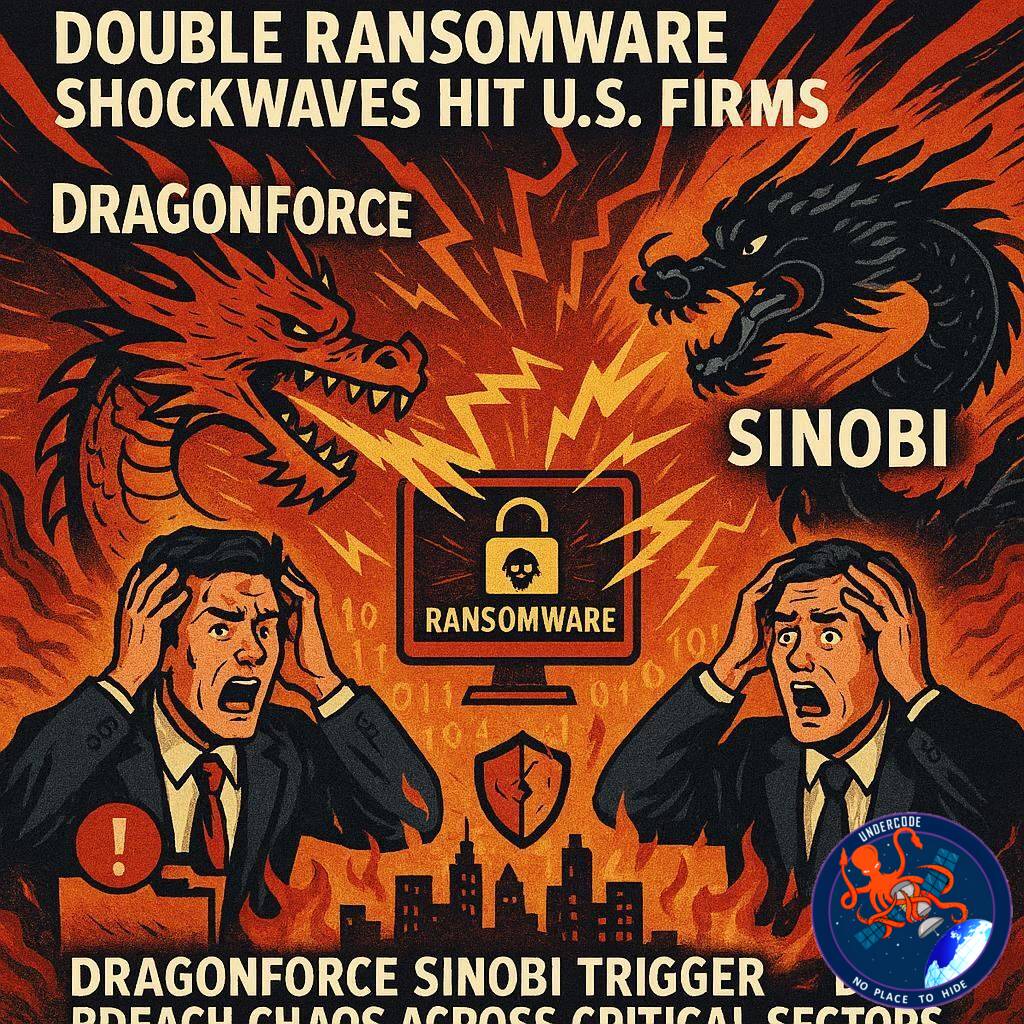 🧠 Breaking Cybersecurity Reality: How Two Separate Ransomware Attacks Are Disrupting US Industry Stability
A new wave of ransomware activity has struck multiple organizations in the United States, exposing how vulnerable essential sectors remain to coordinated cybercriminal operations. In one incident, CF Evans Construction was reportedly targeted by the DragonForce ransomware group, leading to the exposure of sensitive corporate materials including contracts, financial documentation, HR records, and internal password data. This breach highlights how construction firms—often overlooked in cybersecurity discussions—store high-value operational and employee data that can be exploited for financial leverage and industrial disruption.
In a separate but equally alarming event, Neurotrials Research Inc, a clinical research facility based in Atlanta, was hit by ransomware linked to the Sinobi group. The attack disrupted ongoing medical operations involving more than 2,500 volunteers participating in clinical trials. This incident raises serious concerns about the vulnerability of healthcare-adjacent research institutions, where data integrity and operational continuity are critical not only for business but also for patient safety and scientific progress. Together, these attacks illustrate a widening threat landscape where cybercriminal groups are targeting both industrial and medical ecosystems with increasing precision and impact.
📊 Global Ransomware Attacks Across Industry and Healthcare Systems
CF Evans Construction in the United States was recently impacted by a ransomware attack attributed to the DragonForce group, resulting in the exposure of highly sensitive internal corporate data including financial documents, contracts, human resources files, and password repositories, which significantly increases operational and security risks for the organization, while also raising concerns about downstream partner exposure and supply chain vulnerability across the construction sector, which is often under-protected digitally despite handling large-scale infrastructure projects and sensitive client data.
At the same time, Neurotrials Research Inc, a clinical research facility based in Atlanta, experienced a ransomware attack linked to the Sinobi group, which disrupted ongoing clinical trial operations involving more than 2,500 volunteers, creating immediate operational challenges and potential risks to research continuity, data integrity, and patient monitoring systems, especially in a sector where time-sensitive medical trials depend heavily on uninterrupted access to secure digital environments.
Both incidents demonstrate a growing trend of ransomware groups diversifying their targets beyond traditional financial institutions, instead focusing on industries where disruption alone can generate pressure for ransom payments, regardless of whether the victim is part of critical infrastructure or private-sector operations, thereby expanding the overall attack surface across the United States.
The attacks also highlight the continued effectiveness of ransomware-as-a-service ecosystems, where groups like DragonForce and Sinobi operate through decentralized cybercriminal networks that specialize in infiltration, encryption, and data exfiltration, making attribution and defense significantly more complex for cybersecurity teams.
What Undercode Say:
The simultaneous emergence of ransomware attacks on both construction and healthcare research sectors reveals a strategic evolution in cybercrime targeting patterns that goes beyond opportunistic hacking and moves toward calculated economic disruption.
DragonForce’s breach of CF Evans Construction signals a clear focus on industries with high-value contractual ecosystems, where stolen financial and HR data can be monetized directly or used for secondary extortion against business partners and subcontractors.
Construction companies often underestimate cybersecurity risks due to their physical-first operational mindset, yet they manage large-scale digital procurement systems, project blueprints, and payroll infrastructures that are extremely valuable on dark web marketplaces.
On the other hand, the Sinobi-linked attack on Neurotrials Research Inc exposes a far more sensitive dimension of cyber risk: medical research disruption. Clinical trials involving thousands of participants rely on continuous data logging, regulatory compliance systems, and patient monitoring networks that cannot afford downtime without serious scientific consequences.
This type of targeting suggests that ransomware groups are increasingly optimizing for “operational pain points” rather than just data theft, aiming to maximize urgency and pressure for ransom payment by destabilizing real-world processes.
The healthcare research sector is particularly vulnerable because it sits at the intersection of patient trust, regulatory oversight, and time-bound scientific progress, making it more likely to face urgent ransom negotiation scenarios compared to other industries.
Furthermore, the dual nature of these attacks highlights a fragmented cybersecurity maturity landscape in the US, where large enterprises in finance and tech invest heavily in defense, while construction and mid-sized research organizations often lag behind in threat detection and incident response readiness.
Another critical observation is the growing specialization of ransomware groups like DragonForce and Sinobi, which indicates an ecosystem where cybercriminal operations are becoming more structured, with distinct roles such as initial access brokers, encryption specialists, and negotiation teams.
This professionalization of cybercrime increases the difficulty of prevention, as attacks are no longer random but instead engineered with intelligence gathering, reconnaissance, and industry-specific exploitation strategies.
If this trend continues, ransomware incidents may shift from isolated disruptions to coordinated economic pressure campaigns targeting entire sectors simultaneously.
The broader implication is that cybersecurity can no longer be treated as an IT department function alone; it is now a core operational risk issue affecting supply chains, healthcare outcomes, and national infrastructure stability.
🔍 Fact Checker Results
CF Evans Construction Attack Attribution
The reported attribution of the breach to DragonForce aligns with known ransomware naming conventions, but independent verification of full technical forensic confirmation is still required.
Neurotrials Research Disruption Impact
The claim that operations involving 2,500+ volunteers were disrupted is consistent with typical clinical trial scale, though official institutional confirmation would be necessary for precise validation.
Overall Threat Landscape Assessment
The characterization of increasing ransomware targeting across industries is supported by broader cybersecurity trends, though specific group motivations may vary depending on internal intelligence reports.
📊 Prediction
Ransomware activity is likely to intensify in mid-2026, with increased targeting of mid-sized industrial firms and healthcare research institutions that lack enterprise-grade cybersecurity infrastructure. Attack groups are expected to continue refining their specialization, focusing on sectors where operational disruption creates immediate financial and regulatory pressure. If defensive measures do not evolve at the same pace, future incidents may shift from isolated breaches to coordinated multi-sector ransomware campaigns designed to destabilize entire supply chains simultaneously.
🕵️📝Let’s dive deep and fact‑check.
References:
Reported By: x.com
Extra Source Hub (Possible Sources for article):
https://stackoverflow.com
Wikipedia
OpenAi & Undercode AI
Image Source:
Unsplash
Undercode AI DI v2
Bing
🔐JOIN OUR CYBER WORLD [ CVE News • HackMonitor • UndercodeNews ]
📢 Follow UndercodeNews & Stay Tuned:
𝕏 formerly Twitter 🐦 | @ Threads | 🔗 Linkedin | 🦋BlueSky | 🐘Mastodon


