
Listen to this Post
Introduction
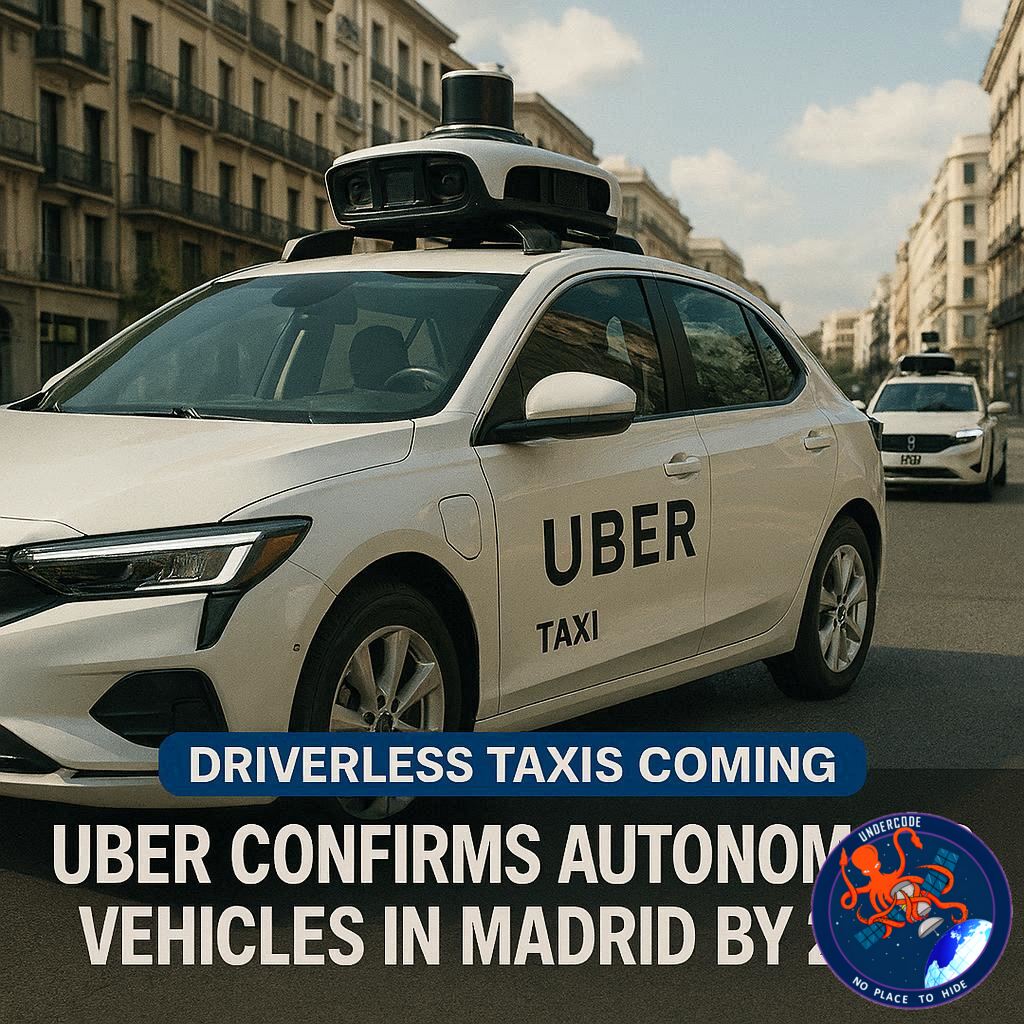
Madrid is preparing for a major leap into the future of urban mobility. Uber has confirmed plans to deploy autonomous vehicles in the Spanish capital before the end of 2026, positioning the city among the first in Europe to host operational driverless taxi services. What once felt like science fiction is now edging closer to everyday reality, as global technology companies push autonomous driving from controlled trials into real city streets. For Madrid, this announcement signals not just a new transport option, but a potential transformation in how residents move, work, and interact with the city.
the Original
Uber’s announcement marks a significant milestone for Spain’s mobility landscape, as Madrid could soon become one of Europe’s earliest capitals to see driverless taxis operating on public roads. The company revealed that it is already in discussions with Madrid’s local authorities to define the legal, regulatory, and operational framework needed to support autonomous vehicle services. The goal is clear: users will be able to request a self-driving car directly from the Uber app, with no human driver behind the wheel.
Robotaxis are not entirely new on the global stage, as similar services are already operating in several cities worldwide. However, their arrival in Madrid represents a qualitative shift for the Spanish market, which has not yet experienced autonomous vehicles at this scale. These vehicles will rely on advanced technology, including sensors, cameras, and radar systems, all working together with artificial intelligence to analyze traffic conditions, detect pedestrians, and respond to unexpected situations in real time.
Uber has not yet specified which areas of Madrid will host the initial rollout, nor whether safety drivers will be present during early phases. What has been emphasized is that deployment will be gradual and closely supervised by regulators. Alongside Madrid, Uber has also announced plans to introduce robotaxis in other major cities such as London and Los Angeles, underlining the global scope of its autonomous driving ambitions.
This move fits into Uber’s broader international strategy to scale autonomous mobility solutions. Competition in the driverless transport sector has intensified, with both technology firms and automotive manufacturers investing billions into research, development, and testing. For Uber, Madrid is a strategically important market. Spain has seen rapid growth for the platform, and the capital’s dense, complex urban environment offers an ideal testing ground. In 2025 alone, Uber reported a 50 percent increase in turnover in the Spanish market.
Despite the excitement, the arrival of autonomous vehicles raises serious questions. Supporters argue they could reduce accidents, improve efficiency, and support sustainability goals. Critics, however, worry about regulatory readiness, public safety, and the potential impact on employment in the transport sector. Social acceptance remains a challenge, as many people are still uneasy about the idea of vehicles navigating city streets without a human driver. Even so, the direction of change seems undeniable, and Madrid may soon witness a future where ordering a driverless car is as normal as hailing a taxi today.
What Undercode Say:
Uber’s decision to bring autonomous vehicles to Madrid is less about novelty and more about strategic positioning in a rapidly evolving mobility market. Madrid is not just another European city; it is a dense, high-traffic, culturally complex urban environment that can stress-test autonomous driving systems in ways suburban trials never could. Narrow streets, aggressive traffic patterns, unpredictable pedestrian behavior, and mixed transport infrastructure make the city an ideal proving ground for real-world autonomy.
From a business perspective, Uber’s timing is calculated. Spain’s strong growth figures show that user adoption is already high, which lowers the friction for introducing new services. By integrating robotaxis directly into the existing Uber app, the company avoids the challenge of educating users from scratch. For customers, the experience may feel less like adopting a new technology and more like selecting a different ride option.
Regulation will be the decisive factor. Europe has traditionally taken a cautious approach to autonomous vehicles, prioritizing safety and accountability over rapid deployment. Uber’s early engagement with Madrid authorities suggests it understands that success will depend as much on policy alignment as on technical capability. A phased rollout, possibly starting with limited zones and time windows, would help build public trust while giving regulators room to adapt.
There is also a broader economic dimension. Autonomous taxis could significantly reduce operating costs for ride-hailing platforms in the long term, as driver-related expenses account for a large share of current pricing. If savings are passed on to consumers, prices could drop, increasing demand and potentially reshaping urban transport habits. However, this efficiency comes with social trade-offs, particularly for professional drivers who may see reduced opportunities over time.
Public perception will be another hurdle. High-profile incidents involving autonomous vehicles in other countries have shown how quickly trust can erode. For Madrid, early performance will matter more than marketing. A single serious accident could slow adoption dramatically, while a strong safety record could accelerate acceptance across Spain and beyond.
Ultimately, Uber’s move signals that autonomous mobility in Europe is shifting from experimentation to execution. Madrid’s role could set a precedent for other cities watching closely. If successful, this deployment may redefine not only Uber’s future, but also how European cities think about transport, congestion, and the role of artificial intelligence in everyday life.
Fact Checker Results
Uber has officially confirmed plans to deploy autonomous vehicles in Madrid before the end of 2026.
Discussions with local authorities are ongoing, indicating regulatory processes are not yet finalized.
No specific operational zones or safety driver requirements have been publicly detailed so far.
Prediction
If regulatory approval progresses smoothly, Madrid is likely to see limited robotaxi operations begin in controlled areas by late 2026, with gradual expansion afterward. Public acceptance will hinge on safety performance in the first year. Success in Madrid could accelerate similar rollouts across other major European cities, turning autonomous taxis from a novelty into a mainstream urban service within the next decade.
🕵️📝✔️Let’s dive deep and fact‑check.
References:
Reported By: www.euronews.com
Extra Source Hub (Possible Sources for article):
https://www.discord.com
Wikipedia
OpenAi & Undercode AI
Image Source:
Unsplash
Undercode AI DI v2
Bing
🔐JOIN OUR CYBER WORLD [ CVE News • HackMonitor • UndercodeNews ]
📢 Follow UndercodeNews & Stay Tuned:
𝕏 formerly Twitter 🐦 | @ Threads | 🔗 Linkedin | 🦋BlueSky | 🐘Mastodon


