
Listen to this Post
Introduction: A Rapid Response to a Growing Cyber Threat
Cyberattacks against government institutions are no longer rare, but how organizations respond often defines the true impact of such incidents. The recent phishing attack targeting the Dutch National Police highlights both the persistence of modern cybercriminals and the importance of fast detection systems. While the breach initially raised concerns about sensitive data exposure, early findings suggest that the situation was quickly contained, preventing serious damage.
Summary: What Happened and What We Know So Far
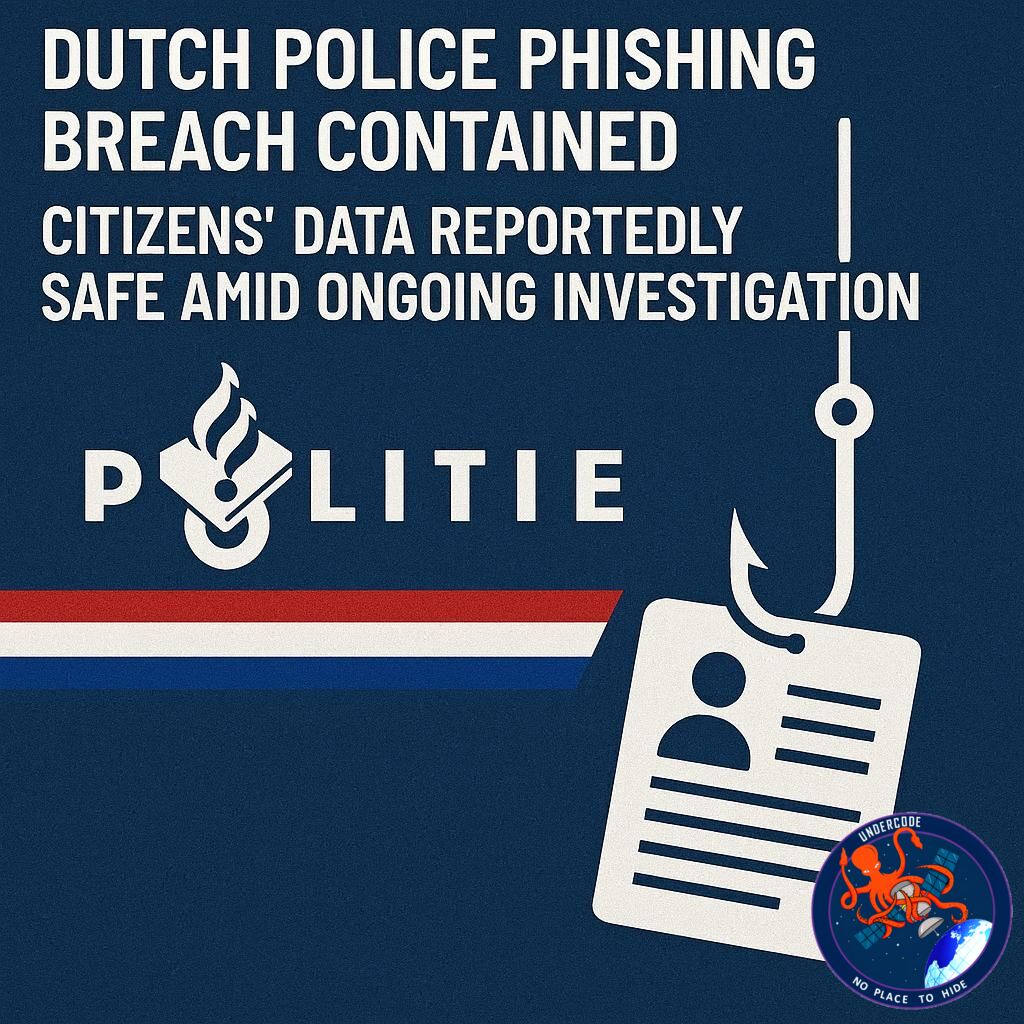
The Dutch National Police confirmed that it recently fell victim to a phishing attack, which allowed unauthorized access to certain internal systems. However, according to official statements, the breach had only a limited impact. The organization emphasized that no citizen data or investigative records were accessed or exposed during the incident.
The attack was detected almost immediately by the police’s internal Security Operations Center, which acted swiftly to block the attackers’ access. This rapid response appears to have played a critical role in minimizing potential harm. Despite this, authorities have not disclosed the exact timeline of when the breach occurred or how long the attackers had access before being cut off.
At this stage, the investigation remains ongoing. Security experts within the police force are still assessing the scope of the incident, including which systems may have been compromised and whether any employee data was exposed. Details regarding affected accounts or internal damage have not yet been made public.
This is not the first cybersecurity incident faced by the Dutch police. In September 2024, the agency disclosed another breach tied to a suspected state-sponsored actor. That earlier attack resulted in the theft of work-related contact information belonging to multiple police officers, including names, email addresses, phone numbers, and, in some cases, private data.
The follow-up investigation into that earlier breach is still ongoing, with authorities yet to attribute it to a specific threat group or reveal the precise attack method used. In response to that incident, the police implemented stronger cybersecurity measures, including enhanced monitoring systems and more frequent use of two-factor authentication for officer accounts.
More recently, in February, Dutch authorities arrested a 40-year-old suspect linked to an extortion attempt involving confidential police documents that had been mistakenly shared. This highlights an ongoing pattern of cybersecurity and data handling challenges within the organization.
Despite the latest phishing incident being described as limited in impact, it underscores the continued targeting of law enforcement agencies by cybercriminals and potentially state-backed actors. As investigations continue, further details are expected to emerge regarding the methods used and any internal vulnerabilities that may have been exploited.
What Undercode Say: The Real Story Behind “Limited Impact”
The phrase “limited impact” is often used in early-stage breach disclosures, but it deserves closer scrutiny. In cybersecurity communications, such wording can mean anything from truly minimal damage to a still-uncertain situation where the full extent has yet to be uncovered.
In this case, the Dutch National Police appears to have benefited from strong detection capabilities. The immediate identification of the phishing attack by the Security Operations Center suggests that monitoring tools and response protocols are functioning effectively. This is a positive signal, especially for a national law enforcement body that handles sensitive data daily.
However, phishing attacks are rarely isolated incidents. They often rely on human error, which means at least one user interaction likely enabled the breach. Whether credentials were stolen, malware deployed, or session tokens hijacked remains unclear. These details are critical because they determine how deeply attackers may have penetrated internal systems.
Another key concern is lateral movement. Even if initial access was blocked quickly, sophisticated attackers can sometimes establish persistence within seconds. Without detailed transparency, it is difficult to fully assess whether the threat was completely neutralized or merely contained at an early stage.
The historical context also matters. The 2024 breach linked to a suspected state actor suggests that the Dutch police are already a high-value target. When an organization faces repeated attacks, it raises questions about systemic vulnerabilities, threat visibility, and internal security culture.
The introduction of stronger measures such as enhanced monitoring and two-factor authentication is a step in the right direction. However, phishing-resistant authentication methods, such as hardware security keys or zero-trust architectures, may be necessary to counter increasingly advanced threats.
Additionally, the mention of a separate extortion case involving mishandled confidential documents points to another layer of risk: internal data governance. Cybersecurity is not just about external threats; it also involves how information is stored, shared, and protected within the organization.
From an operational standpoint, the lack of detailed disclosure is understandable during an active investigation. However, transparency plays a crucial role in public trust, especially for law enforcement agencies. Clear communication about what happened, even in stages, helps maintain credibility and reassures citizens.
This incident also reflects a broader trend. Cybercriminals are shifting toward low-cost, high-success attack methods like phishing rather than complex exploits. These attacks exploit human behavior rather than technical vulnerabilities, making them harder to eliminate entirely.
Ultimately, while the immediate damage may indeed be limited, the long-term implications depend on what the ongoing investigation uncovers. The real test will be whether this incident leads to deeper structural improvements or becomes another entry in a growing list of cyber incidents.
Fact Checker Results
✅ The Dutch National Police confirmed a phishing attack with limited impact and no citizen data exposure.
✅ Authorities stated that access was quickly detected and blocked by their Security Operations Center.
❌ Full technical details, including affected systems and potential employee data exposure, remain undisclosed.
Prediction
🔮 Phishing attacks targeting government agencies will continue to rise due to their low cost and high success rate.
🔐 Law enforcement organizations will increasingly adopt phishing-resistant authentication methods beyond standard two-factor systems.
⚠️ Future disclosures may reveal that even “limited impact” incidents carry deeper operational or intelligence risks than initially reported.
🕵️📝✔️Let’s dive deep and fact‑check.
References:
Reported By: www.bleepingcomputer.com
Extra Source Hub (Possible Sources for article):
https://www.reddit.com
Wikipedia
OpenAi & Undercode AI
Image Source:
Unsplash
Undercode AI DI v2
Bing
🔐JOIN OUR CYBER WORLD [ CVE News • HackMonitor • UndercodeNews ]
📢 Follow UndercodeNews & Stay Tuned:
𝕏 formerly Twitter 🐦 | @ Threads | 🔗 Linkedin | 🦋BlueSky | 🐘Mastodon


